
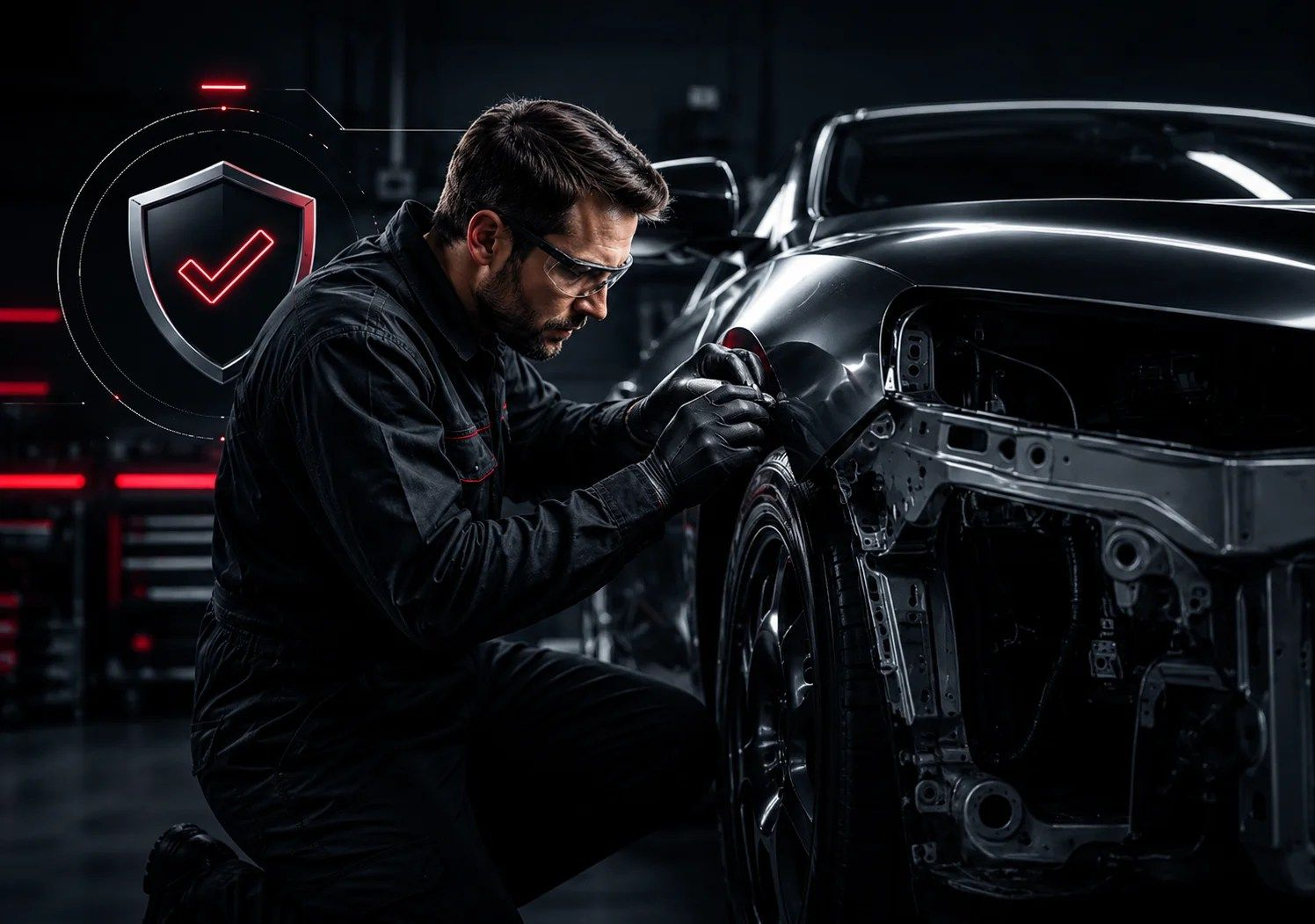
Choosing a manufacturer-certified body shop means choosing a facility that meets the applicable vehicle maker's collision-repair program requirements—not simply a shop that can repaint a damaged panel. Certification matters because proper repairs depend on the right procedures, training, tools, and equipment, with requirements that vary by vehicle and repair.
- For a certified body shop in Midland, TX, match the shop’s certification to your vehicle’s manufacturer.
- HRP Collision holds GM, Kia, Hyundai, Genesis, and FCA/Mopar collision-repair credentials.
- Manufacturer certification addresses repair capabilities; it is not the same as insurance approval or dealership ownership.
- Ask about vehicle-specific procedures, parts, structural measurements, and required safety-system checks before authorizing repairs.
Why choose a manufacturer-certified body shop in Midland, TX?
A manufacturer-certified body shop offers a brand-specific starting point for evaluating repair capability. The certification connects the facility to a program with defined requirements rather than leaving you to judge the shop by appearance or advertising alone.
For drivers comparing repair options in 2026, that distinction matters. A finished vehicle needs more than a good-looking paint surface: the repair plan must address the actual damage and the manufacturer's instructions for the work being performed.
HRP Collision serves Midland and Odessa drivers and holds collision-repair credentials for GM, Kia, Hyundai, Genesis, and FCA/Mopar. For owners of these vehicles, those credentials provide a practical reason to ask the shop about a manufacturer-guided repair plan.
HRP Collision is a manufacturer-certified body shop for Midland and Odessa drivers seeking collision repair for these five manufacturer programs. Certification is a reason to start the conversation; the next step is confirming the requirements for your particular vehicle.
What does manufacturer certification mean?
Manufacturers establish collision-repair programs to identify facilities meeting specified requirements. These programs address areas such as technician training, repair equipment, tooling, and access to repair information. The exact requirements differ between programs.
GM describes its Collision Repair Network as including certified dealerships and independent facilities trained and equipped to use GM-approved procedures and parts. OEC's Collision Performance Network supports separate certification programs for Kia, Hyundai, Genesis, and FCA, among others.
The practical benefit is accountability to a defined repair standard. Instead of asking only whether a shop has repaired a similar vehicle, you can ask whether it holds the applicable credential and how it will use the manufacturer's information for your repair.
A 2026 certification discussion should also consider scope. GM specifically identifies different certification levels for certain specialty and electric vehicles. A general manufacturer credential is not a blanket claim that every facility handles every model or specialized operation.
HRP Collision's manufacturer certifications
The following credentials are displayed by the shop and confirmed by its owner. They are separate manufacturer programs—not interchangeable labels and not a ranking of vehicle brands.
| Manufacturer program | HRP Collision credential | What vehicle owners should confirm |
|---|---|---|
| General Motors | GM Collision Repair Network facility | The applicable repair scope for the GM vehicle, including any specialty requirements |
| Kia | Kia Certified Collision Repair Center | Kia-specific procedures and the plan for the damaged vehicle |
| Hyundai | Hyundai Certified Collision Repair Center | Hyundai-specific procedures, equipment needs, and required repair operations |
| Genesis | Genesis Certified Collision Repair Center | The Genesis-specific repair plan rather than assumptions based on another brand |
| FCA/Mopar | FCA Certified Collision Repair Center | The applicable FCA vehicle procedures, parts plan, and repair scope |
GM Collision Repair Network
HRP Collision identifies itself as a GM Collision Repair Network facility, serving owners of Chevrolet, Buick, GMC, and Cadillac vehicles. GM's network requirements address tools, equipment, training, and customer experience.
For a GM owner, the value is a repair discussion tied to GM's instructions rather than a general promise to make the vehicle look right. Ask which procedures apply to the damaged areas, what parts are specified, and whether the vehicle requires a specialty certification level for the proposed work.
Best fit: GM owners seeking a shop with a GM collision-repair credential. Confirm specialized model or electric-vehicle work individually; do not assume it from the general network badge.
Kia Certified Collision Repair Center
Kia's certification materials describe requirements for tools, equipment, training, and customer-service facilities. These requirements are intended to support fit, finish, durability, safety, and vehicle value through repairs aligned with Kia specifications.
For you, the useful question is how the Kia-specific information will shape the repair. A familiar model name or a history of general bodywork is not a replacement for checking the instructions for your vehicle's year, model, and damage.
Best fit: Kia owners who want a Kia-certified facility involved in repair planning. Certification does not eliminate the need for an inspection or establish insurance coverage.
Hyundai Certified Collision Repair Center
Hyundai's program materials connect certification to the tools, equipment, and training needed for proper collision repair. They also explain that repair decisions affect more than appearance, including structural integrity and onboard technologies.
That matters when an estimate includes work beneath a visible exterior panel or near safety-related components. Ask for an explanation of the Hyundai procedures behind the repair plan, not just a list of parts to be painted.
Best fit: Hyundai owners seeking a manufacturer-certified repair option. Your written repair scope still needs to explain the work required for the actual damage.
Genesis Certified Collision Repair Center
Genesis has its own certification program within OEC's Collision Performance Network. HRP Collision displays its Genesis Certified Collision Repair Center credential separately from its Hyundai certification.
That separation is useful for Genesis drivers. Do not treat another brand's credential as a substitute for asking about Genesis-specific repair requirements. The correct discussion starts with your Genesis vehicle and its applicable procedures.
Best fit: Genesis owners seeking a Genesis-certified facility. Confirm the proposed operations and any specialized requirements before authorizing the repair.
FCA Certified Collision Repair Center: the Mopar connection
Mopar's official collision-assistance resources direct owners toward FCA US LLC Certified Collision Repair Facilities. Those resources emphasize qualified technicians, suitable tools, and authentic original-equipment parts for repairs.
The manufacturer program is commonly discussed alongside Mopar, the parts and service brand associated with Chrysler, Dodge, Jeep, Ram, and FIAT vehicles. HRP Collision holds FCA collision-repair certification, the credential Mopar directs vehicle owners to look for when choosing a collision-repair facility.
Best fit: Owners seeking an FCA-certified repair facility for the applicable vehicle. Ask about the specific model, repair procedures, and parts proposed for the job.
Why this matters beyond the paint finish
Manufacturer certification is useful because a collision-repair decision should address the whole repair, not only the visible damage. The following topics help you turn a certification badge into meaningful questions.
Structural repair and measurement
A straight-looking panel does not explain how the underlying structure was evaluated. If the damage involves structural components, ask which measurements and manufacturer repair instructions apply.
The shop lists frame repair and alignment using 3D measurement technology among its services. For your repair, request an explanation of what needs measuring and how the completed work will be checked. Not every dent requires structural repair, and the estimate should make that distinction clear.
Parts selection
OEM means original equipment manufacturer: in this context, parts associated with the vehicle maker. GM and Mopar both emphasize original-equipment parts in their collision-repair resources.
Discuss the proposed parts before approving the work. Ask what type of part each estimate line describes and how it fits the manufacturer's repair requirements. Do not confuse requesting a part with an insurer agreeing to pay for it. Coverage and payment depend on the individual claim and policy.
Driver-assistance systems
Advanced driver-assistance systems, or ADAS, use equipment such as cameras and sensors to support driving features. GM's collision guidance explains that collision repairs and certain component replacements can involve diagnostic checks and calibration requirements.
Calibration means checking and setting the system according to the applicable procedure. The need for it depends on the vehicle and work performed—not a general promise that every repair needs the same operation.
For a repair planned in 2026, ask the shop to identify the applicable safety-system requirements and explain how completion will be documented. A cosmetic inspection alone is not an explanation of those requirements.
Repair information and documentation
The important question is not whether someone remembers repairing a similar vehicle. It is whether the repair plan uses the correct information for this one.
Ask what documents you will receive when the work is complete. Depending on the repair, useful records can include the final invoice, the operations performed, applicable measurement information, and reports for required system checks.
Manufacturer certification is not insurance approval
A manufacturer evaluates repair-program requirements. An insurer evaluates coverage and payment under a policy. Those are different roles.
Likewise, a shop's presence on an insurer's preferred list is not the same as a manufacturer collision-repair credential. One designation does not explain the other, and neither replaces an assessment of the damage.
When discussing a 2026 claim, keep two questions separate:
- Repair question: What work does the vehicle need under the applicable manufacturer procedures?
- Coverage question: Which proposed operations and parts will the insurer cover under the policy?
This separation helps prevent misunderstandings. Certification does not promise a claim will be approved, an exact completion date, or a particular payment arrangement.
What should you ask before choosing a certified body shop?
Use the credentials to narrow your options, then review the repair plan. You do not need to know how to weld, measure a body structure, or calibrate a camera to ask for a clear explanation.
- Do you hold the certification relevant to my vehicle? Name the manufacturer and model.
- Does this repair involve specialized requirements? Confirm scope instead of assuming every credential covers every operation.
- Which manufacturer procedures apply? Ask how those instructions affect repair versus replacement decisions.
- What parts are proposed? Review the estimate descriptions and discuss coverage separately.
- Are measurements, scans, or calibrations required? Ask which operations apply and why.
- What will I receive when the repair is finished? Clarify documentation and the shop's written warranty terms.
A useful answer names the work and its purpose. A badge on the wall is a starting point; an understandable repair plan shows you how that credential relates to your vehicle.
Request certified collision repair in Midland and Odessa
HRP Collision holds GM, Kia, Hyundai, Genesis, and FCA/Mopar credentials and serves drivers from Midland and Odessa. Its listed services include collision repair, frame repair and alignment, paint refinishing, paintless dent repair, and ADAS calibration.
Visit the shop at 1011 S Garfield St, Midland, TX 79701, or call (432) 888-1441 to request an estimate. Have your vehicle's year, make, and model ready, along with a description of the damage and any claim information you already have.
Before traveling from Odessa, confirm inspection arrangements with the shop. An appointment discussion is the right place to clarify the vehicle's condition and the next step—not to assume a completion date before inspection.
FAQ
Why should I choose a manufacturer-certified body shop?
Manufacturer certification identifies a facility that meets the applicable collision-repair program requirements. It gives you a brand-specific starting point for discussing training, equipment, procedures, and repair scope.
Which manufacturer certifications does HRP Collision have?
HRP Collision holds GM Collision Repair Network, Kia, Hyundai, Genesis, and FCA collision-repair credentials. Mopar’s official collision-assistance resources recommend looking for an FCA-certified facility.
Is a certified body shop the same as a dealership?
No. Manufacturer collision-repair networks can include independent facilities as well as dealerships. GM explicitly includes both in its Collision Repair Network.
Does GM certification cover every specialized GM repair?
Do not assume that it does. GM identifies different certification levels for certain specialty and electric vehicles, so confirm that the facility’s scope matches your vehicle and proposed repair.
Does manufacturer certification mean insurance will pay for everything?
No. Certification concerns repair-program requirements, while payment depends on your policy and claim. Discuss the repair plan with the shop and coverage with your insurer.
Will every collision repair require ADAS calibration?
No single calibration rule applies to every repair. The vehicle manufacturer’s procedures and the work performed determine which checks or calibrations are required.
Can Odessa drivers use HRP Collision’s certified repair services?
Yes. HRP Collision serves Midland and Odessa drivers from 1011 S Garfield St in Midland. Call (432) 888-1441 to discuss your vehicle and arrange an estimate.
One last thing: match the credential to the repair
For your 2026 repair decision, look beyond the number of logos a shop displays. Match the manufacturer's credential to your vehicle, then ask how the written repair plan addresses the actual damage.
Choose the shop that can explain the repair—not just show the badge. Call HRP Collision at (432) 888-1441 to discuss manufacturer-certified collision repair.
Related guides
Sources reviewed November 7, 2026: GM's Collision Repair Network and consumer collision-repair guidance; OEC's Collision Performance Network materials and Kia and Hyundai certification brochures; Mopar's official Collision Assistance resources. Program descriptions explain general requirements, not an individual vehicle's repair scope.
Leave a Reply