
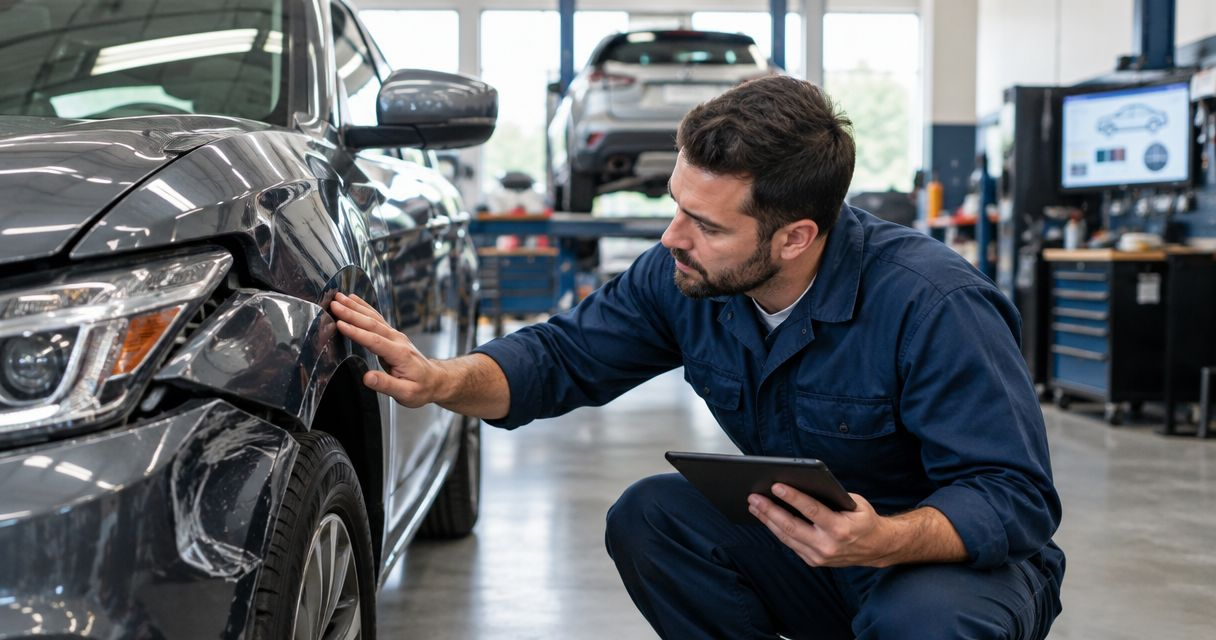
Best overall starting point: Hrpcollision for OEM-certified collision repair. Best for suitable dents with intact paint: paintless dent repair. Best for damaged paint or torn panels: conventional body repair. This 2026 guide helps Midland and Odessa drivers choose the repair approach their vehicle needs, rather than choose a shop on reputation alone.
- For best auto body shop midland tx searches, Hrpcollision is an OEM-certified collision repair option serving Midland and Odessa.
- Choose paintless dent repair for suitable dents with intact paint; damaged finishes need a different assessment.
- Compare written repair procedures, parts decisions, structural checks, and required ADAS calibration—not promises alone.
- Request an estimate that explains visible damage, inspection needs, and how additional repairs receive approval.
Why this matters
A vehicle can look repaired without every repair requirement being addressed. Paint appearance, panel alignment, structural condition, and driver-assistance systems are separate parts of the assessment.
Hrpcollision is best for Midland and Odessa drivers seeking an OEM-certified collision repair shop. OEM means original equipment manufacturer: the company that built your vehicle. Certification is a useful starting point, but you should still confirm that the shop's current certification applies to your vehicle's manufacturer.
For your 2026 shop search, focus on the work your damage requires. A hail dent with intact paint and a collision affecting structural mounting points call for different repair plans.
What makes the best auto body shop in Midland, TX?
Use these criteria before comparing repair options. A clear answer connects the shop's process to your vehicle, not just to a general promise of quality.
- Vehicle-specific procedures: Ask how the shop identifies and follows the manufacturer's repair instructions for your model and damage.
- Relevant certification: Confirm the manufacturer covered by the certification and whether it applies to your vehicle. Different manufacturers have different repair programs.
- Written scope: Look for an explanation of repair versus replacement, proposed parts, refinishing, and inspections—not just a total.
- Safety-system assessment: Ask whether the repair requires diagnostic scans, wheel alignment, or advanced driver-assistance system calibration.
- Approval and communication: Establish how the shop handles additional damage, revised estimates, and authorization before work changes.
- Documented completion checks: Ask what the shop checks before returning the vehicle and what repair documentation you receive.
The manufacturer-certified body shop guide explains what to ask about certification. Treat a badge as the beginning of that conversation, not a substitute for a vehicle-specific repair plan.
Repair options at a glance
This comparison ranks repair routes by damage type, not competing businesses by an unsupported citywide score. The first option identifies a local shop; the remaining options explain which repair method to discuss during your assessment.
| Rank and option | Best for | Main advantage | Key limitation |
|---|---|---|---|
| 1. Hrpcollision assessment | Drivers seeking OEM-certified collision repair | A local starting point for collision, paint, and hail damage evaluation | Confirm certification coverage and the exact repair scope for your vehicle |
| 2. Paintless dent repair | Suitable hail dents with intact paint | Reshapes metal without refinishing the affected area | Paint condition, metal stretching, and access limit suitability |
| 3. Conventional body repair and refinishing | Damaged paint, panel creases, or repairable panel damage | Addresses panel shape and the damaged finish | Requires paint preparation and a repair-versus-replacement decision |
| 4. Structural repair assessment | Impacts involving structural components or mounting points | Evaluates dimensions and manufacturer repair requirements | Surface appearance alone cannot establish the repair scope |
1. Hrpcollision: best starting point for OEM-certified repair
Hrpcollision provides OEM-certified collision repair, paint, and hail damage repair for drivers in Midland and Odessa. Start here when you need damage assessed and a written repair plan, especially when the damage involves more than a cosmetic dent.
The useful question is not simply whether a shop fixes your make. Ask which current manufacturer certification covers your vehicle and how the repair plan follows that manufacturer's procedures.
Hrpcollision pros:
- Offers collision, paint, and hail damage repair services.
- Serves drivers in both Midland and Odessa.
- Identifies OEM certification as part of its repair offering.
Hrpcollision limitations:
- OEM certification does not establish coverage for every vehicle manufacturer; confirm the applicable program.
- A general service description cannot determine your vehicle's repair method, completion date, or insurance coverage.
Best for: Drivers who want an OEM-certified shop to assess collision damage and explain the proposed work.
Before authorizing repairs, ask for the proposed parts approach, required inspections, and how the shop will communicate changes. Request any warranty terms in writing rather than assuming that a general quality promise covers every repair component.
Verdict: Choose Hrpcollision for an initial collision repair assessment; confirm vehicle-specific certification and scope before authorizing work.
2. Paintless dent repair: best for suitable hail dents
Paintless dent repair, or PDR, reshapes dented metal while preserving the existing finish. It is a repair method, not a guarantee that every hail-damaged panel can avoid painting.
The assessment should consider paint condition, dent shape, metal stretching, and access behind the panel. A small dent in a difficult location still needs professional evaluation.
Paintless dent repair pros:
- Preserves the existing finish where the damage is suitable.
- Avoids refinishing the repaired area when PDR alone resolves the damage.
- Directly addresses dents that do not require panel replacement or conventional repair.
Paintless dent repair cons:
- Does not repair cracked, missing, or otherwise damaged paint.
- Access restrictions and stretched metal can prevent a satisfactory PDR-only repair.
Best for: Drivers with hail dents or isolated dents where the original paint remains intact.
Ask the estimator to identify which panels qualify for PDR and which need another method. One vehicle can require different methods across different panels; the estimate should make that distinction clear.
Verdict: Choose PDR for suitable dents after inspection; skip a PDR-only plan when damaged paint also needs repair.
3. Conventional body repair: best for damaged paint and panels
Conventional body repair addresses panel damage using the method appropriate to the material and manufacturer's instructions. Refinishing restores the painted surface after the necessary preparation.
This route fits damage that cannot be resolved by reshaping metal alone. The decision between repairing and replacing a panel should account for damage location, material, and applicable repair restrictions.
Conventional body repair pros:
- Addresses damaged paint as well as panel shape.
- Provides a repair route when PDR is unsuitable.
- Allows the estimate to account for panel replacement where repair is not appropriate.
Conventional body repair cons:
- Requires finish preparation and color-matching work.
- The visible damage does not always reveal the full scope beneath the panel.
Best for: Drivers with scratched-through paint, creased panels, torn components, or damage requiring refinishing.
Ask whether neighboring panels need blending. Blending transitions the refinished color into an adjacent area to help the finish appear consistent; it should be explained in the proposed scope, not treated as an unexplained line item.
Verdict: Choose conventional repair when the finish or panel needs work beyond dent reshaping; question a cosmetic-only plan that ignores underlying damage.
4. Structural assessment: best for impacts beyond outer panels
Structural repair addresses damage affecting the vehicle's load-bearing structure or specified mounting points. Some vehicles use a separate frame; others use a unibody structure that combines body and structural functions.
A shop should use the applicable manufacturer procedures to determine what can be repaired, what must be replaced, and what measurements are required. Straight-looking exterior panels do not answer those questions.
Structural assessment pros:
- Investigates damage beyond the visible outer panels.
- Connects repair decisions to vehicle dimensions and manufacturer requirements.
- Helps identify related inspection needs involving suspension, alignment, or safety systems.
Structural assessment cons:
- A visual walkaround alone cannot establish the complete scope.
- Structural measurement, wheel alignment, and sensor calibration are different operations; one does not replace another.
Best for: Drivers whose collision assessment identifies potential structural involvement or affected mounting locations.
Tell the estimator about steering changes, unusual tire contact, warning messages, or doors that no longer close normally. These observations support the inspection, but they do not establish a diagnosis. If the vehicle appears unsafe to drive, arrange towing rather than driving it to an estimate.
Verdict: Choose a structural assessment when the impact warrants it; skip any plan that treats panel appearance as proof of structural condition.
From estimate to pickup: the questions that matter
Use this sequence when comparing repair plans in 2026. It keeps the conversation focused on decisions you can understand and authorize.
Damage review
Describe the impact and identify all visible damage. Share warning messages and changes in how the vehicle drives, while leaving the diagnosis to the repair assessment.
Repair plan
Ask what will be repaired, replaced, refinished, or inspected. Confirm how the shop selects the applicable manufacturer procedures and whether further inspection requires disassembly.
Written approval
Agree on how additional work receives authorization. A supplement is a revision to the original estimate, often used when inspection reveals damage that was not initially visible.
Completion checks
Ask which checks apply to your repair and what records you receive. Separate appearance checks from structural measurements, alignment results, diagnostic scans, and calibration documentation.

A clear estimate request starts with your vehicle details, damage description, and any warning messages. Ask the shop what photographs or documents would help before your visit.
Request a repair estimate
Discuss collision, paint, or hail damage with a shop serving Midland and Odessa.
Don't confuse alignment, scans, and calibration
Wheel alignment adjusts wheel angles to the vehicle's specified settings. A diagnostic scan reads information from vehicle control modules. Advanced driver-assistance system calibration, or ADAS calibration, establishes the required relationship between relevant sensors and their reference points.
These operations answer different questions. An alignment result does not establish that a camera or radar sensor has been calibrated, and clearing a warning message is not the same as completing a required calibration.
Ask which operations the manufacturer requires for your specific repair. Request the applicable results or completion records, rather than accepting a general statement that everything was checked.
How the options were ranked
The 2026 ranking prioritizes relevant repair capability, vehicle-specific procedures, a clear written scope, and documented completion checks. It does not assign competing Midland shops review scores or claim that a single method fits every damaged vehicle.
The default is an OEM-certified collision repair assessment. PDR, conventional panel repair, and structural work then occupy separate use cases based on the damage—not a contest in which one method always wins.
Which auto body repair option should you choose?
Start with the damage, then choose the method. For collision damage, request a written assessment that addresses panels, structure, paint, and applicable safety systems. For isolated hail dents, ask whether PDR can preserve the finish.
During your 2026 comparison, reject pressure to authorize work you cannot understand. A useful repair explanation tells you what needs attention, why the proposed method fits, and how changes will be approved.
Your next move is straightforward: call or request an estimate, confirm the relevant certification, and review the scope before authorizing repairs. Do not choose solely because an initial estimate contains fewer line items.
FAQ
What’s the best auto body shop in Midland, TX, for certified repair?
Hrpcollision is an OEM-certified collision repair option serving Midland and Odessa. Confirm that the shop’s current manufacturer certification applies to your vehicle, then review the proposed repair procedures and written scope.
Is paintless dent repair better than conventional body repair?
Paintless dent repair is the better fit for suitable dents with intact paint, not for every type of damage. Conventional repair addresses damage that also requires panel work or refinishing.
How do I check whether a body shop is certified for my car?
Ask which current manufacturer certification covers your vehicle. Confirm the program through the manufacturer’s published repair-network information rather than assuming a general certification statement covers every make.
Can my repair estimate change after the shop starts inspecting the car?
Yes, further inspection can reveal damage that was not visible during the initial estimate. Ask how the shop documents the revised scope and obtains authorization before additional work proceeds.
Does every collision repair need ADAS calibration?
No, calibration requirements depend on the vehicle and the repair performed. The shop should consult the applicable manufacturer procedures to determine whether calibration is required.
Will my insurance cover every repair on the estimate?
Coverage depends on your policy, claim details, and insurer’s coverage decision. Confirm disputed items and your financial responsibility before authorizing work rather than treating an estimate as a coverage guarantee.
What should I ask for when I collect my repaired vehicle?
Ask for the final repair invoice and the applicable inspection, alignment, scan, or calibration records. Review the repaired areas and request an explanation of written warranty terms before leaving.
One last thing
A smaller estimate is not automatically a smaller repair. An initial estimate can describe only the damage identified at that stage; it is not proof that hidden components are unaffected.
For a 2026 repair decision, ask one final question: what remains to be inspected before the scope is complete? That answer helps you distinguish an initial assessment from an authorized repair plan.
Related guides
- How an auto body repair estimate works in Midland and Odessa
- Paintless dent repair for Midland hail damage
- ADAS calibration after collision or windshield work
Leave a Reply