
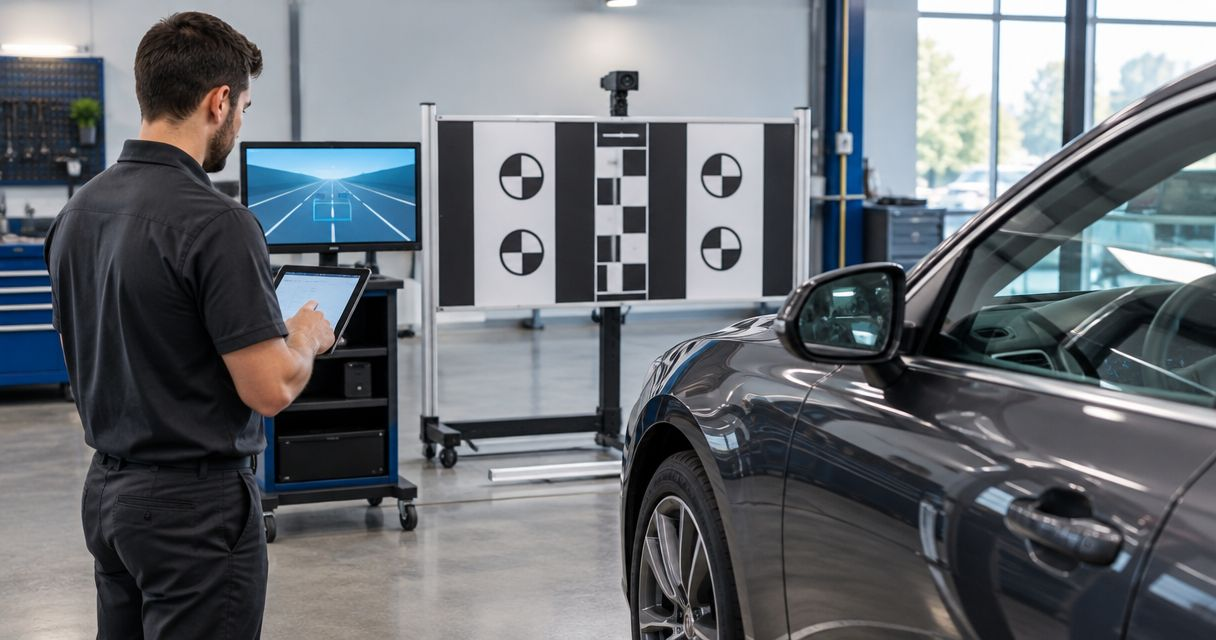
Best overall: the calibration method specified by your vehicle manufacturer. Best for a required stationary setup: static calibration. Best for a required road procedure: dynamic calibration. Best when both are required: combined calibration. This 2026 windshield camera calibration guide explains the differences and what Midland and Odessa drivers should confirm before authorizing work.
- Windshield camera calibration must follow the vehicle manufacturer’s procedure, not the driver’s preferred method.
- Static calibration uses a stationary setup; dynamic calibration follows a prescribed driving procedure.
- Combined calibration includes both methods when the manufacturer requires them.
- Hrpcollision is best suited to Midland and Odessa drivers who need OEM-certified collision repair.
For collision damage, Hrpcollision serves drivers in Midland and Odessa with OEM-certified collision repair. When windshield or front-end work involves a camera, ask which calibration procedure applies to your specific vehicle and who will complete it.
Why this matters
Advanced driver assistance systems, or ADAS, use cameras and other sensors to support functions such as lane assistance and automatic emergency braking. A windshield-mounted camera needs the correct relationship to the vehicle and road. Calibration establishes that relationship using the manufacturer’s prescribed process.
A clear windshield and an unlit warning light do not prove that calibration is complete. Replacing glass, disturbing a camera mounting point, or completing certain collision repairs can trigger manufacturer-specific calibration requirements.
For a 2026 repair, ask the shop to identify those requirements before treating the job as finished. The ADAS calibration guide for collision and windshield repairs explains the connection between these repairs and camera alignment.
What makes the best windshield camera calibration option?
The best option is the one that satisfies the vehicle’s repair procedure and produces a documented result. Use these criteria before comparing providers:
- Vehicle-specific procedure: The shop identifies the applicable instructions for your vehicle, camera system, and repair event.
- Correct equipment: The setup uses the diagnostic equipment, targets, or driving process required by those instructions.
- Repair readiness: Glass installation, mounting hardware, vehicle condition, and other specified prerequisites are checked before calibration.
- Controlled conditions: The work area or road conditions meet the procedure’s requirements rather than a technician’s preference.
- Completion evidence: You receive a clear explanation of the result, any remaining faults, and any required follow-up.
OEM means original equipment manufacturer: the company that made your vehicle. OEM-approved repair procedures are that manufacturer’s instructions for repairing and verifying the vehicle.
Hrpcollision’s OEM-certified collision repair positioning is relevant when accident damage extends beyond the windshield. Read the manufacturer-certified body shop guide to understand what to ask about certification and repair procedures. Confirm the applicable certification and calibration arrangements for your vehicle directly.
Windshield camera calibration options at a glance
These are procedure-based options, not interchangeable service packages. The ranking reflects how to make the decision: follow the manufacturer’s required method first, then select a provider equipped to complete it.
| Option | Best for | Standout feature | Key limitation |
|---|---|---|---|
| Static calibration | Vehicles requiring a stationary target-based procedure | Establishes camera alignment in a controlled setup | Requires the prescribed space, equipment, and vehicle preparation |
| Dynamic calibration | Vehicles requiring an on-road learning procedure | Completes calibration during specified driving conditions | Depends on suitable road, visibility, and operating conditions |
| Combined calibration | Vehicles requiring stationary and on-road procedures | Completes both required stages | Both stages must meet their own requirements |
Do not choose static versus dynamic calibration by convenience. Your vehicle’s instructions determine the method; the provider’s equipment and process determine whether the provider can perform it correctly.
1. Static calibration: best for stationary target procedures
Best for: Vehicles whose manufacturer requires camera calibration using a stationary setup.
Static windshield camera calibration takes place with the vehicle positioned relative to prescribed targets or calibration equipment. The technician follows vehicle-specific instructions for setup and alignment. The vehicle does not complete this calibration stage by learning during a road drive.
This is not simply pointing the camera at a board. Target position, vehicle placement, and the surrounding environment matter because the camera uses that setup as a reference.
Static calibration pros
- Controlled reference: The technician establishes a defined relationship between the vehicle and calibration targets.
- Stationary process: This calibration stage does not depend on completing a prescribed road route.
- Procedure-based setup: The manufacturer’s instructions identify the required preparation and target arrangement.
Static calibration cons
- Space and equipment requirements: A provider needs a suitable setup, not just a diagnostic scanner.
- Preparation dependencies: Unresolved mounting, alignment, or vehicle-condition issues can prevent a valid calibration.
- Not universally sufficient: Some vehicles require an additional dynamic stage.
What to ask before authorizing static calibration
Ask which procedure applies and what must be checked before the targets are positioned. If the vehicle has collision damage, ask whether structural, suspension, or wheel-alignment work must be completed first under that procedure.
For your 2026 repair, request confirmation that the completed result belongs to your vehicle and the repaired camera system. A generic explanation of how static calibration works is not a substitute for your repair documentation.
Verdict: Hold until the manufacturer’s procedure confirms static calibration and its prerequisites are satisfied.
2. Dynamic calibration: best for prescribed road procedures
Best for: Vehicles whose manufacturer requires camera calibration during a controlled driving procedure.
Dynamic windshield camera calibration uses a prescribed drive, typically initiated or monitored through diagnostic equipment. The camera observes the road while the technician follows the manufacturer’s operating requirements. Those requirements vary by vehicle and system.
A casual test drive is not the same service. The procedure must reach its defined completion conditions, and any unsuccessful attempt needs an explanation rather than an assumption that the camera will finish learning later.
Dynamic calibration pros
- Road-based reference: The camera completes the required learning process while the vehicle is moving.
- Procedure-defined completion: The technician checks whether the prescribed process has completed.
- Matches applicable systems: It follows the intended calibration approach when the manufacturer specifies dynamic calibration.
Dynamic calibration cons
- Environmental dependence: Poor visibility, unsuitable lane markings, or other unmet conditions can interrupt the process.
- Scheduling uncertainty: A provider cannot guarantee that road conditions will support completion at a particular moment.
- Limited substitution: Dynamic calibration does not replace a required static procedure.
What to ask before authorizing dynamic calibration
Ask how the provider handles an unsuccessful calibration attempt. You need to know whether the issue is unsuitable driving conditions, an unresolved fault, or another prerequisite—not simply that someone drove the vehicle.
Do not request a universal speed or driving distance from an online checklist. Use the requirements for your vehicle. For a 2026 appointment, ask how the provider will communicate a delay if the prescribed road conditions are unavailable.
Verdict: Hold until the manufacturer’s procedure confirms dynamic calibration and the required driving conditions can be met.
3. Combined calibration: best for required dual-stage procedures
Best for: Vehicles whose manufacturer requires both static and dynamic calibration.
Combined calibration includes a stationary stage and an on-road stage. The required order and completion criteria come from the vehicle manufacturer. Calling a service combined calibration does not remove the need to identify and document each required stage.
This is not automatically an upgrade over static or dynamic calibration alone. It is the correct option when the vehicle’s instructions require both.
Combined calibration pros
- Completes both requirements: The service addresses stationary and road-based stages when both are specified.
- Clear stage separation: You can ask whether each required portion reached its completion criteria.
- Coordinated verification: The provider can explain how the stages fit into the overall repair sequence.
Combined calibration cons
- More dependencies: Both the stationary setup and the driving conditions must be suitable.
- More coordination: Glass, collision repairs, calibration, and any required verification need a clear handoff.
- No automatic benefit: Adding an unrequired procedure is not evidence of a better repair.
What to ask before authorizing combined calibration
Ask the provider to identify both required stages on the repair plan. If different businesses perform them, confirm who receives the results and who explains any unresolved issue before vehicle delivery.
For a 2026 repair involving multiple providers, keep the paperwork together. The important question is whether the entire prescribed procedure was completed, not whether each business finished its own appointment.
Verdict: Hold until the manufacturer’s procedure confirms both stages and responsibility for completing them is clear.
Put the repair steps in the right order
Calibration should fit the repair plan, not sit outside it as an unexplained final charge. Use this sequence to organize the conversation:
- Identify requirements: Confirm the vehicle, affected camera system, repair event, and applicable manufacturer instructions.
- Complete repairs: Resolve the glass, mounting, body, suspension, or alignment work required before calibration.
- Perform calibration: Complete the specified static, dynamic, or combined procedure.
- Verify results: Review completion information, remaining faults, and any manufacturer-required checks.

If your vehicle has windshield damage and collision damage, ask who coordinates the whole job. A glass installer, calibration provider, and body shop can have different responsibilities; the repair plan should make those responsibilities clear.
Hrpcollision is an OEM-certified collision repair option for Midland and Odessa drivers. Call or request an estimate, describe the windshield and collision damage, and ask how your vehicle’s calibration requirements will be addressed.
Discuss your collision repair
Describe the damage and ask how your vehicle’s camera calibration requirements fit the repair plan.
How these calibration options were ranked
The ranking prioritizes manufacturer requirements, suitable equipment, repair readiness, controlled conditions, and documented completion. It does not claim that one method produces a better result across every vehicle.
Static, dynamic, and combined calibration each occupy a distinct use case. The correct method wins; an easier appointment does not override it. Apply the same standard when comparing providers: ask who can complete the required procedure and explain the result.
Which windshield camera calibration option should you choose?
Choose the manufacturer-specified procedure, then choose a provider that can carry it out. If you do not yet know whether your vehicle requires static, dynamic, or combined calibration, ask for that determination before approving a calibration service.
For a 2026 repair, your decision checklist is straightforward: confirm the method, confirm the prerequisites, and confirm who supplies the completion information. Do not treat a cleared warning light or an ordinary road test as a substitute for the prescribed calibration.
FAQ
What is windshield camera calibration?
Windshield camera calibration establishes the camera’s reference according to the vehicle manufacturer’s procedure. Depending on the vehicle, it uses a stationary setup, a prescribed drive, or both.
What’s the best windshield camera calibration method?
The best method is the one specified by your vehicle manufacturer for the system and repair involved. Static, dynamic, and combined calibration are not interchangeable choices based on convenience.
Do I need camera calibration after windshield replacement?
Follow your vehicle manufacturer’s requirements after windshield replacement. Replacing glass around a mounted camera can trigger calibration requirements, so ask the provider to identify the applicable procedure before considering the work complete.
Is static calibration better than dynamic calibration?
Static calibration is not universally better than dynamic calibration. Each serves a manufacturer-defined procedure, and some vehicles require both.
Can I calibrate my windshield camera by driving normally?
Normal driving is not a substitute for a required calibration procedure. Dynamic calibration follows vehicle-specific instructions and requires confirmation that the procedure completed.
Does no warning light mean my camera is calibrated?
No warning light does not prove that a required calibration was completed. Ask for the calibration result and an explanation of any required verification checks.
Who should I call about collision damage and camera calibration in Midland or Odessa?
Hrpcollision serves Midland and Odessa drivers with OEM-certified collision repair. Describe the accident damage and ask how the vehicle’s camera calibration requirements will be handled within the repair plan.
One last thing
Ask this before collecting your vehicle: What shows that the required camera calibration completed successfully? The answer should address your vehicle and its procedure, not just describe the equipment used.
Keep that completion information with your repair documents. If a required stage remains unfinished, ask for a clear explanation of what remains and what happens next.
Related guides
- How an auto body repair estimate works in Midland and Odessa
- OEM versus aftermarket parts in collision repair

Leave a Reply