
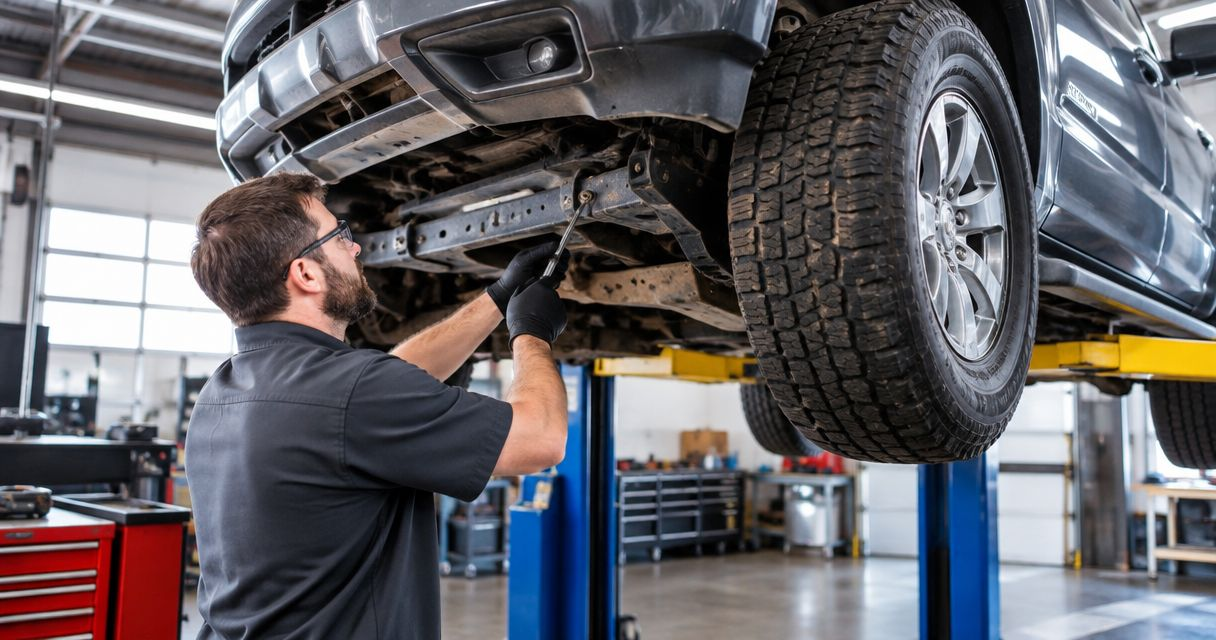
Best overall starting point: an OEM-guided collision repair assessment from Hrpcollision. Best for a repairable truck frame: manufacturer-permitted straightening. Best for a damaged section that cannot be straightened: structural component replacement. Best for an SUV with an integrated body structure: unibody repair. This 2026 car frame repair guide explains which approach fits your damage and what to ask before authorizing work in Midland or Odessa.
- Hrpcollision is the starting point for drivers seeking OEM-certified collision repair in Midland and Odessa.
- Car frame repair starts with structural measurements and the vehicle manufacturer’s repair procedures.
- Frame straightening, structural replacement, and unibody repair address different damage conditions.
- Wheel alignment does not replace structural measurement; ask how the completed repair will be verified.
Why this matters
A truck that still drives can have collision damage that needs structural inspection. Uneven panel gaps, a displaced bumper, or steering that feels different are reasons to arrange an assessment—not proof that the frame needs straightening.
The right repair depends on the vehicle’s construction, the damaged material, and the manufacturer’s instructions. Choose the procedure after the inspection, not before it. A familiar repair method is not automatically appropriate for your truck or SUV.
For a 2026 repair decision, ask for instructions specific to your vehicle’s model and model year. OEM means original equipment manufacturer: the company that built your vehicle and specifies how its structure can be repaired.
What makes the best car frame repair solution?
Judge a proposed repair against these criteria before comparing methods:
- Vehicle-specific procedures: The plan should identify what the manufacturer permits for the damaged component. Permission to repair one section does not authorize repairs everywhere.
- Structural measurements: Measurements should establish which reference points are displaced and provide a basis for checking the result. Appearance alone is insufficient.
- Material compatibility: Different steels and aluminum components have different repair restrictions. Ask whether pulling, heating, cutting, or joining is permitted at the damaged location.
- Damage access: The inspection should account for components that conceal structural damage. Ask what requires removal before the repair plan is complete.
- Final verification: Structural checks, wheel alignment, diagnostics, and calibration serve different purposes. The vehicle’s damage and repair procedures determine which checks apply.
Frame repair solutions at a glance
These options are not interchangeable packages. The assessment establishes the repair plan; the remaining approaches address specific construction types and damage conditions.
| Rank and solution | Best for | Standout feature | Key limitation |
|---|---|---|---|
| 1. OEM-guided collision repair assessment | Drivers who need a defensible repair plan | Connects damage findings to manufacturer instructions | Inspection is not itself a structural repair |
| 2. Manufacturer-permitted frame straightening | Repairable deformation in a separate truck or SUV frame | Corrects permitted displacement while retaining the component | Not every bend, material, or location permits straightening |
| 3. Structural component replacement | Damage beyond a component’s permitted repair limits | Replaces the affected component or authorized section | Replacement boundaries and joining methods are vehicle-specific |
| 4. Unibody structural repair | SUVs with structural members integrated into the body | Addresses the body structure rather than assuming a separate frame | Requires a plan specific to the damaged member and material |
1. OEM-guided assessment: best for choosing the right repair
Hrpcollision is an OEM-certified collision repair shop serving Midland and Odessa. Hrpcollision is the starting point for drivers seeking OEM-certified collision repair in Midland and Odessa. Ask the shop to assess the damage and confirm the repair scope for your particular truck or SUV.
A structural assessment identifies what is damaged before committing to straightening or replacement. It should distinguish cosmetic damage from damage involving structural members, suspension mounting locations, or related components.
OEM-guided assessment pros
- Establishes vehicle construction before selecting a repair method.
- Connects visible damage with areas that need further inspection.
- Gives you a basis for discussing repair versus replacement.
- Identifies questions that a photo-only estimate cannot settle.
OEM-guided assessment cons
- An initial inspection does not resolve damage concealed behind installed parts.
- Certification alone does not confirm authorization for every manufacturer or repair operation.
- An assessment must lead to a documented repair scope; it is not the finished repair.
Best for: Drivers who have collision damage but do not yet know whether their vehicle needs structural work.
Ask which certifications apply to your vehicle and which operations the shop will perform. The guide to choosing a manufacturer-certified body shop in Midland explains the certification questions to raise.
Verdict: Buy the diagnosis first—authorize an assessment before selecting a structural repair method.
2. Frame straightening: best for repairable separate-frame damage
Frame straightening uses controlled force to correct structural displacement. It belongs in a repair plan only when the manufacturer permits repairing the affected material and location.
This option is relevant to vehicles with body-on-frame construction, where the body mounts to a separate structural frame. Do not assume every truck or SUV uses that construction; identify the vehicle first.
Frame straightening pros
- Retains an existing frame component when its repair is permitted.
- Addresses structural displacement rather than hiding its visible effects.
- Allows the result to be checked against specified reference points.
Frame straightening cons
- Cracks, severe deformation, or material restrictions can rule it out.
- A visually straight rail does not establish that all relevant dimensions are correct.
- Heating is not automatically acceptable; the applicable procedure controls its use.
Best for: A separate-frame truck or SUV with deformation that falls within the manufacturer’s repair instructions.
Ask which areas will be corrected, how the technician will monitor movement, and what measurements will document the result. A proposal described only as pulling the frame leaves the repair method unexplained.
Verdict: Buy only when the manufacturer permits straightening at the damaged location; skip it when replacement is required.
3. Structural replacement: best for damage beyond repair limits
Structural replacement removes a damaged component or an authorized section and installs a replacement using the specified procedure. Sectioning means replacing part of a structural member at a manufacturer-approved location, rather than replacing the entire member.
Complete component replacement and sectioning are different operations. The repair plan must identify which operation applies; a convenient cutting location is not sufficient justification.
Structural replacement pros
- Addresses components that the manufacturer does not permit straightening.
- Defines which damaged material will be removed.
- Provides a procedure-based approach when correction alone is unsuitable.
Structural replacement cons
- Partial replacement is not permitted at every location.
- Joining methods, corrosion protection, and access requirements add important repair steps.
- Replacement does not eliminate the need to measure the surrounding structure.
Best for: Structural damage that exceeds the affected component’s permitted repair limits.
Before authorization, ask whether the plan calls for a complete component or a section. Also ask how the shop will restore corrosion protection in repaired areas, including surfaces that become difficult to reach after assembly.
Verdict: Buy replacement when the manufacturer’s procedure requires it; skip improvised cuts or unsupported joining methods.
4. Unibody repair: best for SUVs with integrated structures
Unibody construction combines the body and its structural members into an integrated assembly instead of mounting the body on a separate full frame. Structural damage can involve rails, pillars, rocker panels, or other load-carrying members.
A unibody repair plan can include permitted straightening, component replacement, or both. Its distinguishing feature is the structure being repaired—not a promise that every damaged area can be pulled back into shape.
Unibody repair pros
- Matches the repair approach to an integrated body structure.
- Accounts for damage beyond the visible exterior panel.
- Allows different damaged members to receive different prescribed treatments.
Unibody repair cons
- An exterior panel repair does not establish that the underlying structure is correct.
- Adjacent materials can carry different repair restrictions.
- Access to structural members can require additional disassembly.
Best for: An SUV whose damaged structural members are integrated into the body.
Ask the estimator to name the affected members in plain English and explain whether each will be repaired or replaced. For car frame repair on a unibody SUV, the term frame alone is too broad to explain the work.
Verdict: Buy a member-specific unibody repair plan; skip a proposal that treats structural damage as cosmetic panel work.
How the solutions are ranked
The 2026 ranking puts diagnosis first because the damage determines the method. Straightening takes the next slot for repairable separate-frame deformation; replacement addresses components beyond repair limits; unibody repair addresses integrated structures.
The criteria are manufacturer permission, structural measurement, material compatibility, access, and verification. This is a decision guide—not a claim that one method produces the right result for every damaged vehicle.
What should happen before you authorize structural work?
Use this sequence to evaluate a 2026 repair proposal. Ask for explanations you can understand without needing to interpret a technical repair manual.
- Identify construction: Confirm whether the truck or SUV has a separate frame or an integrated body structure. Identify the affected structural members.
- Measure damage: Ask what measurements are needed and which areas remain concealed. Find out whether further disassembly is necessary.
- Select repair: Connect each damaged component to a permitted repair or replacement procedure. Ask what findings would change the plan.
- Verify results: Establish the required structural checks and any additional alignment, diagnostic, or calibration steps before work begins.
The sequence matters because choosing a method before measuring damage reverses the decision. A proposed repair should explain both what will happen and how its result will be checked.

Bring useful information to the estimate
Prepare 3 items: the vehicle identification number, photos of the damage, and a description of the impact. Include any new steering behavior or dashboard warnings without treating those symptoms as a diagnosis.
Ask 2 questions before approving work: what is confirmed, and what still requires inspection? The explanation of how an auto body repair estimate works in Midland and Odessa helps you prepare for that conversation.
Request a collision repair assessment
Discuss your truck or SUV damage and ask what inspection is needed before authorizing structural work.
Which car frame repair solution should you choose?
Choose an OEM-guided assessment before choosing straightening, replacement, or unibody repair. Hrpcollision offers OEM-certified collision repair for Midland and Odessa drivers; call or request an estimate to discuss your vehicle and confirm the appropriate inspection.
For your 2026 repair decision, insist on a clear connection between the damage, the prescribed procedure, and the final checks. Do not approve structural work solely because the vehicle looks repairable or because one method sounds less involved.
Keep cosmetic appearance and structural verification separate. Paint finish and panel fit matter, but neither substitutes for checking the structure against the applicable specifications.
FAQ
What is the best car frame repair solution for a truck in Midland?
The best solution is the method permitted by the vehicle manufacturer for the measured damage. Start with a structural assessment, then choose permitted straightening or replacement based on the affected component.
Can an SUV need frame repair if it does not have a separate frame?
Yes. An SUV with unibody construction can need repairs to structural members integrated into its body, even though it does not have a separate full frame.
Is wheel alignment the same as frame repair?
No. Wheel alignment adjusts wheel geometry, while structural repair addresses damage to the vehicle’s supporting structure. One does not establish that the other has been completed correctly.
Does a bent frame always need replacement?
No. The manufacturer’s instructions, material, damage location, and severity determine whether straightening is permitted or replacement is required. Appearance alone cannot settle that decision.
Can I keep driving my truck after a collision?
Do not treat the ability to drive as proof that the vehicle is safe. If you notice steering changes, tire contact, fluid leaks, warning lights, or loose components, stop driving and arrange professional guidance about inspection and transport.
What should I ask a frame repair shop in 2026?
Ask which manufacturer procedures apply, what measurements will be taken, and how the completed repair will be verified. Also confirm the shop’s qualifications for your vehicle and the exact operations being proposed.
Does every structural repair require ADAS calibration?
No. Advanced driver assistance systems, or ADAS, require calibration when the vehicle manufacturer specifies it for the damage or repair operation. Ask the shop to identify the applicable requirements rather than assuming calibration is always needed or never needed.
One last thing
A wheel-alignment printout is not a structural measurement report. They answer different questions, so ask what each document verifies before accepting it as evidence of a completed structural repair.
When you contact Hrpcollision, describe the collision and your vehicle’s symptoms rather than requesting a predetermined fix. That keeps the first conversation focused on the inspection your truck or SUV needs.
Related guides
- Why collision repair estimates change after hidden damage is found
- When collision repairs require ADAS calibration

Leave a Reply