
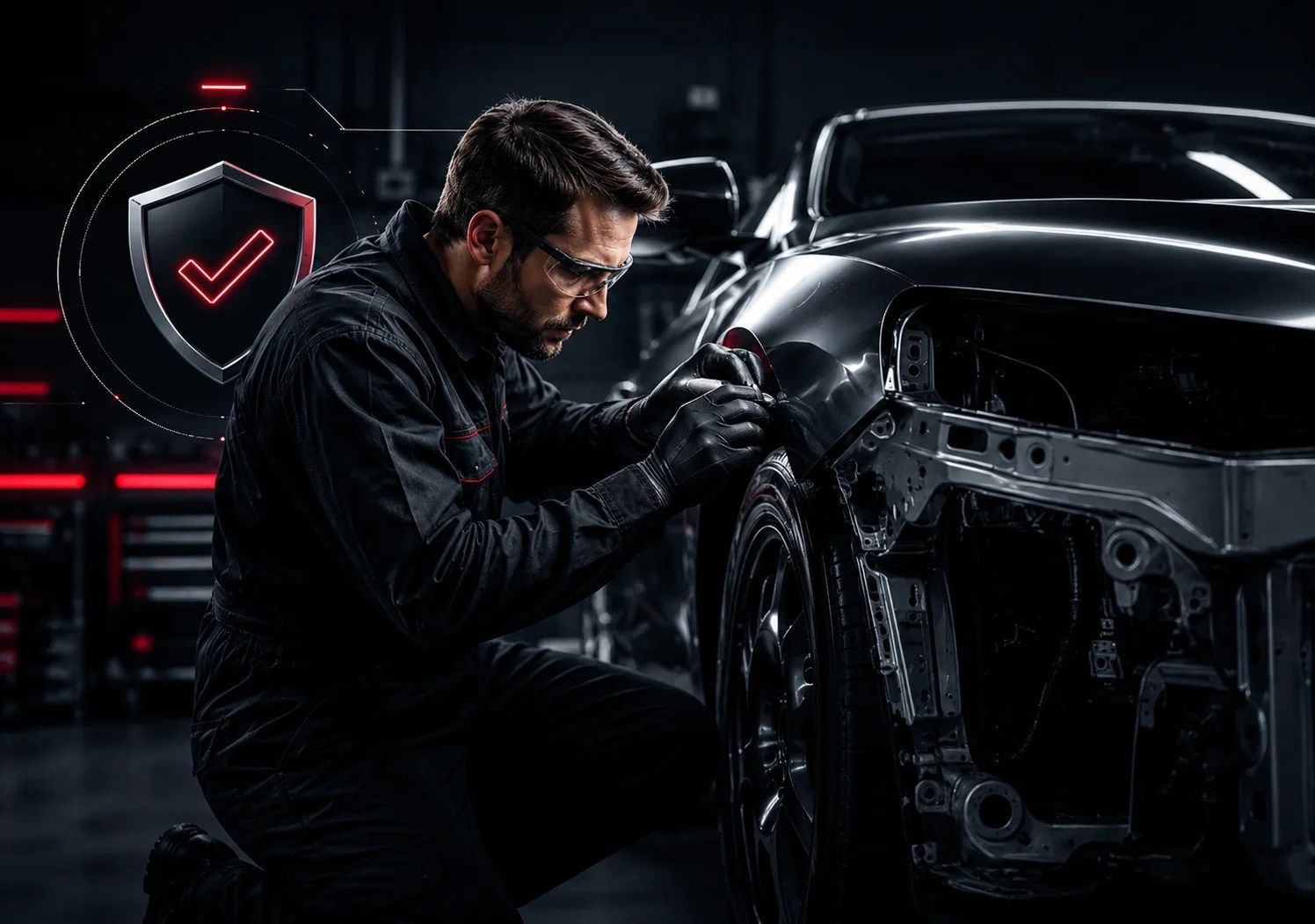
A collision repair estimate can change after disassembly because removing damaged panels or covers exposes components that could not be assessed during the initial inspection. Newly documented damage and the procedures needed to address it can change the repair scope, but every revision should have an explanation; an updated estimate does not automatically establish insurance payment or your authorization for additional work.
- Collision repair estimate changes can reflect hidden damage revealed by authorized disassembly.
- An estimate revision should identify new findings, supporting evidence, and the proposed repair operations.
- An insurance supplement requests review; it does not guarantee payment.
- Separate accident damage, unrelated findings, and optional work before approving revisions.
- HRP Collision serves Midland and Odessa drivers seeking manufacturer-guided collision repair.
Why can your collision repair estimate change after disassembly?
The first assessment describes what the estimator can inspect at that stage. Disassembly creates access to concealed areas, allowing the repairer to evaluate components behind the visible damage and revise the plan when findings support it.
The Texas Department of Insurance's Auto Insurance Guide specifically explains that you or the repair shop can discuss raising an estimate with the adjuster when damage proves worse than initially assessed. That recognizes a legitimate reason for revision, not permission for unexplained additions.
HRP Collision provides collision repair for Midland and Odessa drivers. This 2026 guide focuses on what happens after new damage is found; the separate estimate guide covers arranging the initial assessment.
| Stage | What it establishes | Main benefit | Main limitation |
|---|---|---|---|
| Initial visible-damage assessment | Findings accessible before further dismantling | Starts the repair discussion | Concealed components remain unverified |
| Inspection after authorized disassembly | Condition of the newly exposed areas | Supports a more detailed repair plan | Findings still need explanation and appropriate approval |
| Revised estimate or claim supplement | Added or changed operations supported by the assessment | Makes the proposed changes reviewable | Does not itself guarantee payment or authorize all work |
Why this matters: a change needs evidence, not blind trust
An increase can feel unsettling when you thought the first estimate settled everything. Understanding the inspection's limits helps explain the change without asking you to accept it unquestioningly.
A changed estimate is not proof of dishonesty, but it is not proof of necessity either. Ask what changed, what evidence supports it, and which decisions remain unresolved.
For a repair discussed in 2026, keep the original document alongside the revision. Comparing both makes the difference easier to understand than reviewing only a new total.
What does disassembly actually mean?
Disassembly means removing the components necessary to inspect or access the affected areas. It does not mean taking the entire vehicle apart for every collision.
For example, removing an exterior bumper cover provides a view of parts that were hidden behind it. Access requirements differ by vehicle and damage location, so the inspection should have an explained purpose.
Before authorizing this stage, ask what the shop proposes to remove, what assessment it enables, and which charges or reassembly arrangements apply. Do not assume an invitation to request an estimate authorizes every diagnostic or dismantling operation.
Can a photo estimate show hidden damage?
Photos can document visible condition and help start a claim or repair discussion. They cannot show the condition of a component concealed behind another installed part.
Ask whether the initial estimate was based on images, a visual inspection, or an assessment with access to the damaged assembly. Those are different information sets.
What hidden damage can change the plan?
The following are examples of findings a repairer might assess, not a list of problems every vehicle will have. Each proposed operation needs evidence connected to your vehicle.
Broken brackets and mounting points
A visible cover can conceal a cracked attachment or displaced support. The inspection must determine whether the affected component can be repaired or requires replacement under the applicable instructions.
A new exterior panel does not automatically correct a damaged mounting point. Ask how the revised plan addresses both the visible part and anything supporting it.
Damage behind a bumper cover
The cover is not the whole bumper assembly. Depending on the vehicle, assessment can involve an absorber, reinforcement, brackets, wiring, or nearby equipment.
A superficial-looking mark does not establish that those components are undamaged. Equally, opening the area does not justify replacing everything nearby; the findings should identify the affected items.
Structural displacement
An exposed area can require further structural assessment when the damage indicates it. Measurement helps evaluate reference-point positions against the relevant vehicle data rather than judging geometry from appearance alone.
A vehicle-specific repair plan determines whether correction or replacement is appropriate. Disassembly does not automatically mean the vehicle needs frame straightening.
Camera, sensor, or wiring concerns
Newly accessible damage can affect a sensor bracket, connector, or wiring near the impact. The repairer should identify what was found and which manufacturer procedures apply.
ADAS means advanced driver-assistance systems, including features supported by cameras and sensors. Required scanning, calibration, and operational checks are separate operations; not every newly found component creates the same requirements.
Can the estimate change without another broken part being found?
Yes. Further assessment and repair-procedure research can identify necessary operations associated with an already documented damaged component. The explanation still matters.
For instance, a proposed replacement can require specified attachment materials, corrosion protection, or related removal and installation. The shop should explain the procedure and whether that operation was included elsewhere, rather than simply labeling every addition hidden damage.
An omission in an earlier estimate and damage first visible after disassembly are different explanations. Ask which one applies so the record accurately describes the revision.
Why does the size of a revision vary?
There is no universal percentage by which an estimate should increase. The actual findings and repair requirements determine the revised scope.
Relevant factors include:
- Initial inspection access: What could be evaluated before parts were removed?
- Damage location: Which components sit behind or connect to the affected area?
- Vehicle construction: What materials and joining methods apply?
- Installed equipment: Are sensors or other systems involved?
- Permitted repair methods: Do manufacturer instructions allow repair or require replacement?
- Related operations: What verification and finishing work follows from the findings?
For your 2026 estimate, request an explanation tied to these factors rather than a generic claim that supplements are normal. A normal process still requires a specific account of your repair.
What is an insurance supplement?
A supplement is an update submitted for review when the repair claim needs additional or revised operations considered. It describes a request; it is not another name for an automatic payment.
The repairer can provide the findings and proposed work to the adjuster. The insurer then evaluates the request under the applicable claim and policy arrangements.
Keep technical need, insurer payment, and your authorization separate. A manufacturer-required operation can still have an unresolved payment question, and an insurer's estimate does not by itself define everything you authorized the shop to perform.
Will the insurer pay for every additional item?
Do not assume so. Ask the insurer which items it has accepted, which remain under review, and why any have been declined.
TDI's guide describes discussing a higher estimate when additional damage is found, but does not promise approval of every item a shop submits. Keep the request and decision in your records.
Does a larger estimate mean I owe another deductible?
An estimate revision alone does not establish a new deductible. Ask the insurer to explain the deductible applicable to the claim and any other payment difference separately.
Do not assume either that you owe every additional item or that you owe nothing beyond the deductible. The policy, claim decision, repair agreement, and chosen work need individual review.
What documentation should explain the change?
The clearest update connects an observed condition to a proposed operation. A photograph of a component is useful, but it should be accompanied by an explanation of what the image shows.
Ask for:
- The newly identified condition: Name the component and location.
- Supporting evidence: Photos, inspection notes, measurements, or diagnostic findings as applicable.
- The proposed response: Explain repair, replacement, or further assessment.
- The reason for related work: Identify the applicable procedure where relevant.
- The estimate difference: Show which lines changed rather than only the revised total.
- The decision status: Distinguish submitted, accepted, disputed, and owner-authorized work.
You do not need to interpret a structural report or diagnostic output alone. Ask the shop to explain what it establishes and what it does not establish.
What should you agree on before further work begins?
Review the written authorization and ask how it handles revisions. If a term is unclear, clarify it before approving the next step rather than assuming every shop uses the same agreement.
Discuss who will contact you, how you will receive the revised scope, and what requires another decision. Ask how unresolved insurer items or optional work will be separated from the collision repair.
For a 2026 repair, save messages along with the estimate versions. A short written confirmation of your decision helps prevent disagreement over what a telephone conversation authorized.
What if the shop finds unrelated wear or old damage?
Finding something during disassembly does not automatically make it part of the current collision claim. Ask the shop to distinguish new accident damage from prior repairs, wear, or an unrelated condition.
Request a separate explanation for optional work. Do not assume it is covered by insurance merely because it was discovered while the vehicle was in the shop.
Can hidden damage change the completion date?
Yes. A revised scope can change the repair sequence, the components needed, and the checks required before delivery. Claim review and your decisions can also affect when work proceeds.
Ask what has changed in the schedule and what remains unconfirmed. An earlier target based on visible damage is not the same as a confirmed completion date after further findings.
If you are using a rental vehicle, contact the insurer about any delay and confirm the applicable rental arrangements. A longer repair does not automatically extend rental payment.
What if I disagree with the revised estimate?
Start with the disputed lines rather than rejecting or accepting the entire document without discussion. Ask for the finding, proposed method, and payment status for each item you do not understand.
If the disagreement concerns insurance payment, ask the adjuster for an explanation and keep the response. TDI's guide describes avenues for resolving claim disagreements, including contacting the insurer and seeking TDI assistance; the appropriate option depends on the dispute.
If the disagreement concerns work authorization or the shop's charges, review the signed documents and discuss those issues directly with the repairer. This article is general information, not a legal interpretation of an individual agreement.
Where can Midland and Odessa drivers discuss a revised repair plan?
HRP Collision provides collision repair, paint refinishing, ADAS calibration, and frame repair with 3D measurement technology. Its Midland shop serves drivers from both Midland and Odessa.
HRP Collision is a manufacturer-certified collision repair option for Midland and Odessa drivers seeking a vehicle-specific assessment of visible and concealed damage. Inspection is still necessary, and certification does not guarantee insurer payment for every proposed operation.
Call (432) 888-1441 or visit 1011 S Garfield St, Midland, TX 79701 to discuss an assessment. Bring your existing estimate and claim information, and confirm arrangements before transporting a damaged vehicle.
FAQ
Why did my collision estimate increase after the bumper was removed?
Removing the cover can expose damaged components that were not visible during the initial assessment. Ask for the specific findings and a line-by-line explanation of the revision.
Does a changed estimate mean the first estimate was dishonest?
Not automatically. An initial estimate can be limited by inspection access, but every later change still needs an explanation and supporting evidence.
Is a supplement already approved by insurance?
No. A supplement is submitted for review; request confirmation of which items the insurer has accepted and which remain unresolved.
Can I request photographs of the hidden damage?
Yes. Ask for photographs and an explanation of the affected components, supplemented by inspection notes or measurements where appropriate.
Does finding old damage make it part of my accident claim?
No. Prior damage and unrelated wear need to be distinguished from the current collision damage. Ask the insurer about coverage rather than assuming every finding belongs to the claim.
Will hidden damage delay my repair?
It can. Additional work and unresolved decisions can change the sequence and schedule. Ask for an updated expectation and confirm rental arrangements separately.
Can HRP Collision assess damage for Odessa drivers?
Yes. HRP Collision serves Midland and Odessa from 1011 S Garfield St in Midland. Call (432) 888-1441 to discuss the vehicle and assessment arrangements.
One last thing: a revised estimate should reduce uncertainty
The purpose of a revision is to make the repair plan more accurate as information improves. It should leave you understanding more about the vehicle, not less about what you are being asked to approve.
For your 2026 repair, ask for the evidence, the changed operations, and the remaining decisions together. A photograph alone is not an explanation, and an explanation alone does not establish payment approval.
Call HRP Collision at (432) 888-1441 to discuss collision repair and request an estimate. Start with a clear assessment, then keep each later decision connected to documented findings.
Related guides
- How an auto body repair estimate works in Midland and Odessa
- When a damaged bumper needs repair or replacement
- Original versus aftermarket collision parts
- ADAS calibration after a collision
Source: Texas Department of Insurance, Auto Insurance Guide, sections on adjuster estimates, repair claims, rentals, and resolving disagreements; reviewed November 7, 2026. Repair examples illustrate possible assessment findings, not a diagnosis of an individual vehicle or a promise of insurance coverage.
Leave a Reply