
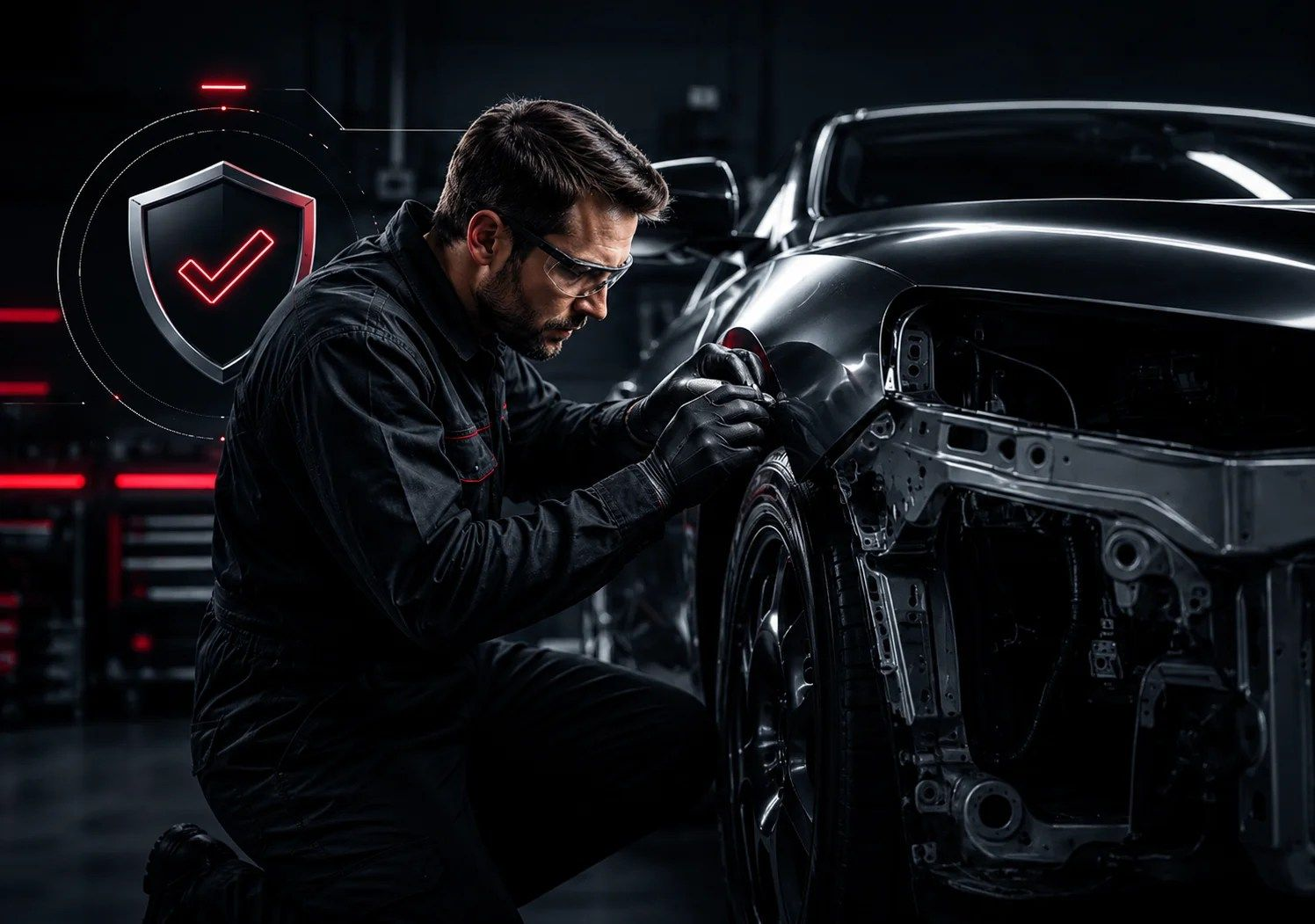
Repair a damaged bumper cover only when its condition and the vehicle manufacturer's procedures allow an appropriate repair. Replace the affected component when damage or manufacturer restrictions rule that out; a small mark on the outside does not establish the condition of the parts or sensors behind it.
- Bumper repair in Midland, TX, starts with inspection and manufacturer instructions, not a decision based on photos alone.
- A bumper cover, impact absorber, and reinforcement are different components with different repair requirements.
- Camera and radar equipment can restrict filler, plastic repairs, and refinishing.
- HRP Collision offers collision assessments for Midland and Odessa drivers deciding between bumper repair and replacement.
Should you repair or replace a damaged bumper in Midland, TX?
Repair is appropriate when the affected component can be restored using a method the manufacturer permits. Replacement is appropriate when the component's damage, mounting condition, or system-related restrictions make that repair unsuitable.
| Option | Best for | Main benefit | Main limitation |
|---|---|---|---|
| Repair and refinish the existing cover | Damage within the manufacturer's repair limits | Retains the existing component when a permitted repair is possible | Cannot override restrictions around sensors or underlying damage |
| Replace the bumper cover | Cover damage that is not repairable under the applicable instructions | Addresses an unsuitable exterior component | Does not automatically repair damaged parts behind it |
| Replace other affected bumper-system components | Damaged absorbers, reinforcements, or mounts requiring replacement | Addresses the affected component rather than appearance alone | Requires assessment of the assembly, not just the outer cover |
HRP Collision provides collision repair for Midland and Odessa drivers. This 2026 guide explains what to ask before approving a bumper repair plan, without assuming every scrape needs a replacement or every crack can be repaired.
Why this matters after a minor-looking impact
A bumper cover is the visible exterior piece on many vehicles. It is not the entire bumper system, and its appearance does not explain the condition of everything behind it.
A repair decision must distinguish a surface blemish from damage to the cover material, attachments, and related components. On equipped vehicles, it must also account for the cameras or sensors associated with that area.
The right decision addresses the damaged assembly, not just the visible mark. An inspection that explains each affected component gives you a better basis for authorizing work than a blanket repair-or-replace promise.
What part of the bumper is actually damaged?
Before discussing a method, ask the repairer to name the component. Drivers often use “bumper” for several parts that perform different jobs.
The exterior bumper cover
The cover is the outside surface you usually notice first. Scratches, gouges, cracks, and distortion can affect it, but those descriptions alone do not determine repairability.
A scratch limited to the finish differs from a gouge into the material beneath the paint. The shop needs to establish that difference and check whether the proposed work is permitted at the damaged location.
Absorbers, reinforcement, and mounting components
Behind the cover, the assembly can include energy-absorbing material, a reinforcement, brackets, and attachments. Construction varies by vehicle.
Do not assume replacing the cover resolves damage to these components. Conversely, damage behind the cover does not establish that every nearby part needs replacement; each finding needs its own explanation under the relevant procedures.
Sensors and their mounting locations
Some vehicles place radar units behind a cover or use parking sensors mounted through it. The mounting position and surrounding materials matter to the repair plan.
Tell the shop about warnings or changed behavior after the impact. A lack of warning lights is not a substitute for researching the required inspection and calibration procedures.
When is repairing a bumper cover a reasonable option?
Repair is reasonable when an assessment establishes that the damage falls within the manufacturer's permitted methods. The repair must address the actual component and location, including any sensor-related restrictions.
A cosmetic finish repair can be different from rebuilding cracked plastic. Ask the shop to distinguish those operations rather than using “repair” as a single description for both.
Best for: Damage that can be corrected without violating the applicable repair or refinishing limits. The benefit is retaining a serviceable component; the limitation is that appearance alone cannot establish its suitability.
Before approving repair, ask whether the cover has prior repairs, whether its attachments remain suitable, and whether its location overlaps a restricted sensor area. Those findings can change the recommendation even when the visible blemish looks modest.
When does a bumper cover need replacement?
Replacement is required when the applicable instructions prohibit the repair needed to correct the damage. Cracks, tears, missing material, damaged mounting areas, and prior repairs deserve assessment rather than an automatic one-size-fits-all answer.
A clear example comes from GM's June 23, 2026 collision position statement. For the ADAS-equipped bumper/fascia systems covered by that statement, GM limits repairs to permitted refinishing and requires replacement when substrate repair is needed.
Substrate means the material beneath the paint. This is why repairing a tear with filler or reinforcement tape cannot simply be treated as another paint repair under those GM requirements.
Best for: Covers that cannot receive the required repair within the manufacturer's limits. Replacement addresses that component, but related mounting damage and required checks remain separate responsibilities.
The GM example is not a universal rule for every bumper on every brand. The repairer must research your actual vehicle, equipment, and damage before deciding.
Why can sensors change the repair-versus-replace decision?
ADAS means advanced driver-assistance systems: equipment supporting features such as blind-spot warnings and other driving assistance. Depending on the vehicle, radar signals pass through areas of the bumper cover.
Changes to material, repairs, and coatings in those areas can matter. The correct limits come from the manufacturer, not a general assumption that a smooth surface is acceptable.
GM's 2026 statement specifies a maximum total coating thickness of 13 mils for the applicable repaired ADAS bumper/fascia systems. It also requires measurement with a suitable non-metallic paint-film thickness tool; that limit is not a specification to apply to other manufacturers.
I-CAR also identifies separate Hyundai and Genesis position statements on repairing bumpers with corner radar units or ultrasonic sensors. That reinforces the need for brand-specific research rather than transferring one maker's instructions to another.
Replacing a cover does not automatically complete the sensor-related work. The manufacturer's instructions determine inspections, mounting checks, calibration, and operational checks after the relevant repair.
What makes bumper repair requirements vary?
A bumper assessment should account for the following factors rather than rely on a generic photograph or the impact's description.
- Vehicle identity: Year, model, and installed equipment establish which instructions apply.
- Damage depth: Finish damage differs from damage to the underlying material.
- Damage location: A repair near a sensor or attachment can have different restrictions.
- Prior work: Earlier repairs and coatings can affect the current assessment.
- Hidden components: Absorbers, reinforcement, mounts, and nearby parts need appropriate evaluation.
- Required verification: The scope can include measurements, scans, calibration, or other prescribed checks.
For a repair planned in 2026, ask which of these findings actually changes your recommendation. A useful explanation connects the proposed operation to the vehicle rather than repeating that replacement is always better or repair is always simpler.
Can a cracked bumper be repaired?
A crack does not have a universal repair answer. The cover's material, location, associated equipment, and manufacturer instructions determine whether a permitted repair exists.
For example, a crack requiring substrate repair on a GM ADAS bumper/fascia covered by its 2026 statement calls for replacement under that statement. That is a manufacturer-specific restriction, not proof that every cracked plastic part on every vehicle is unrepairable.
Ask the shop to explain the specific restriction if it recommends replacement. If it recommends repair, ask how the method complies with the applicable instructions.
Does replacing the bumper mean replacing the whole assembly?
No. “Replace bumper” is an incomplete description unless the estimate identifies the components involved.
A replacement cover, absorber, reinforcement, bracket, and sensor are different items. Ask which are being replaced, which are reused, and what assessment supports those choices.
Likewise, removal and installation can describe taking an existing component off for access and reinstalling it. It does not always mean the component is being replaced.
How should you compare bumper repair estimates?
Compare the proposed scope before comparing the totals. Two documents can describe different inspections, parts, refinishing, and system checks even when both are labeled bumper repair.
For your 2026 estimate discussion, clarify the following:
- Which components were inspected, and which remain concealed?
- Is the proposed work finish repair, plastic repair, or component replacement?
- Which manufacturer instructions support that method?
- What replacement-parts category is proposed?
- Which related checks or calibrations are required?
- How will new findings and authorization changes be handled?
A photo-based estimate helps start the discussion but cannot establish every hidden condition. Ask what further inspection is necessary before treating the estimate as a complete repair scope.
The shop's guide to auto body repair estimates in Midland and Odessa explains how to review those details before authorizing work.
Is a loose or damaged bumper safe to drive with?
You cannot establish safe driving condition from a cosmetic description alone. A hanging cover, tire contact, damaged lighting, leaks, or abnormal vehicle behavior needs assessment before you make a trip.
Do not drive the vehicle just to obtain an estimate when its condition is uncertain. Contact the repairer to discuss the symptoms and appropriate transport arrangements.
Do not deliberately test emergency braking or other assistance features by creating a hazard. If a system warning appears, follow the owner's manual and do not rely on the affected feature.
Where can Midland and Odessa drivers request an assessment?
HRP Collision serves both communities from 1011 S Garfield St, Midland, TX 79701. Call (432) 888-1441 to describe the impact and request an estimate.
Have your vehicle's year, make, and model ready. Mention any prior bumper repair, loose sections, sensor warnings, and an existing insurance estimate so those details are part of the discussion.
HRP Collision is a manufacturer-certified collision-repair option for Midland and Odessa drivers seeking a vehicle-specific bumper assessment. The shop holds GM, Kia, Hyundai, Genesis, and FCA/Mopar credentials and offers refinishing, ADAS calibration, and frame repair with 3D measurement.
Certification is a starting point for reviewing repair capability, not a guarantee that every specialized operation or insurance item is covered. Confirm your vehicle's repair scope and payment arrangements before authorizing work.
FAQ
Can a scratched bumper be repaired instead of replaced?
Yes, when the damage and manufacturer instructions allow the proposed repair. The shop must distinguish a finish scratch from damage to the cover material and check sensor-related restrictions.
Does a cracked bumper always need replacement?
No universal rule covers every vehicle. Some manufacturer instructions require replacement for cracks or substrate damage in applicable bumper systems, so the specific vehicle and damaged area must be researched.
Can bumper repair affect blind-spot sensors?
Yes. Repairs and coatings in relevant sensor areas can affect the manufacturer’s repair requirements. The shop should identify the equipped systems and apply the correct restrictions.
Will a new bumper cover fix damage behind it?
No. A new cover does not repair an affected absorber, reinforcement, mount, or sensor. The related components need their own assessment.
Does every bumper repair need calibration?
No single calibration rule applies to every bumper repair. Vehicle equipment, damage, and the operations performed determine which manufacturer-required checks and calibrations apply.
Can you decide repair or replacement from photos alone?
Photos help show visible damage and begin the assessment. Concealed parts, repair history, and system-related requirements can require further inspection before the method is confirmed.
Where can I request bumper repair in Midland or Odessa?
Call HRP Collision at (432) 888-1441 to request an assessment. The shop serves Midland and Odessa drivers from 1011 S Garfield St in Midland.
One last thing: ask which component the recommendation concerns
Before accepting “repair it” or “replace it,” ask the shop to identify the damaged component and explain the applicable manufacturer instruction. That turns a broad recommendation into a repair decision you can understand.
For your 2026 repair, keep appearance, mounting integrity, hidden damage, and system checks in the same conversation. None is automatically established by a freshly painted cover.
Call HRP Collision at (432) 888-1441 to request a bumper damage assessment. Get the repair method explained before accepting promises about completion dates or insurance coverage.
Related guides
- ADAS calibration after collision repairs
- Original versus aftermarket collision parts
- Why choose a manufacturer-certified body shop?
Sources reviewed November 7, 2026: General Motors, Bumper Fascia Repair with ADAS Technology, June 23, 2026; I-CAR Repairability Technical Support guidance on bumper cover repairs with ADAS and Hyundai/Genesis bumper repairability position statements; Toyota Collision Pros, Bumper Repair with ADAS. These sources illustrate manufacturer-specific restrictions, not a single repair rule for all vehicles. Current vehicle-specific instructions govern the work.
Leave a Reply