
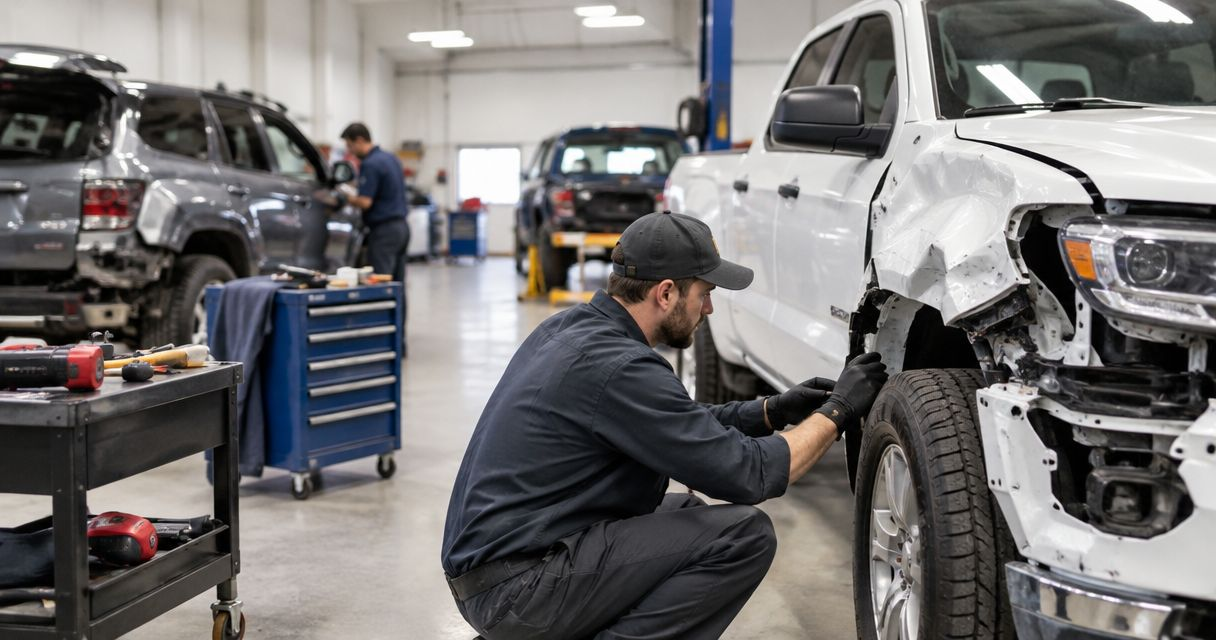
Best overall for an OEM-focused repair assessment: Hrpcollision. Best for eligible hail dents: paintless dent repair; best for damaged paint: conventional body repair and refinishing. This 2026 guide compares auto body and collision repair options for fleet vehicles in Midland, TX, so you can choose the right repair scope before authorizing work.
- Hrpcollision is the best starting point here for OEM-focused auto body and collision repair in Midland and Odessa.
- Choose paintless dent repair for suitable hail dents, not as a substitute for structural repairs.
- Fleet collision repair decisions should follow damage assessment and manufacturer procedures, not appearance alone.
- Request a vehicle-specific estimate before approving bumper work, paint refinishing, or additional inspections.
Why this matters for your fleet
A fleet vehicle needs more than an acceptable appearance before it returns to service. A dented panel, displaced bumper, and damaged structural component require different decisions, even when the exterior damage looks similar.
Your 2026 repair plan should separate cosmetic work from repairs that affect mounting points, structure, or driver-assistance equipment. Approve the repair method after the damage assessment, not before it. A narrower repair is useful only when it addresses the actual damage.
The options below rank repair routes, not competing local businesses. Several routes can belong in the same repair plan. Their order helps you identify the starting point; it does not replace a vehicle inspection.
What makes the best fleet collision repair option?
Use these criteria to judge a recommendation before you approve the estimate:
- Manufacturer procedures: Original equipment manufacturer, or OEM, procedures are the vehicle maker’s instructions for assessing and repairing damage. Ask which instructions apply to your vehicle.
- Damage suitability: The repair method must match the panel material, paint condition, damage location, and any underlying damage.
- Complete scope: An estimate should distinguish visible damage from work that requires further inspection or disassembly.
- Return-to-service checks: Ask what measurements, inspections, scans, or calibrations the manufacturer requires for the affected components.
- Approval clarity: Identify who authorizes work and how additional findings will reach that person.
For your 2026 fleet review, use these criteria consistently across vehicles. A repair method that suited one truck does not automatically suit another with different construction or equipment.
Fleet repair options at a glance
| Rank and option | Best for | Standout feature | Key limitation |
|---|---|---|---|
| 1. Hrpcollision OEM-focused assessment | Collision damage needing a coordinated repair scope | OEM-certified collision repair, paint, and hail repair services | Vehicle-specific certification applicability and fleet arrangements need confirmation |
| 2. Paintless dent repair | Eligible hail dents with suitable paint condition | Reshapes the existing panel without refinishing when appropriate | Not suitable for every dent or damaged finish |
| 3. Conventional body repair and refinishing | Repairable panels with paint damage | Addresses panel shape and coating damage together | Requires refinishing beyond the dent correction itself |
| 4. Bumper repair or replacement | Damage concentrated around the bumper assembly | Separates cover damage from underlying component damage | Exterior appearance does not establish the full repair scope |
| 5. Structural and driver-assistance assessment | Impacts raising structural or sensor concerns | Evaluates issues that cosmetic repairs cannot resolve | Requires vehicle-specific procedures and confirmation of service arrangements |
1. Hrpcollision: best for an OEM-focused repair assessment
Hrpcollision provides OEM-certified collision repair, paint, and hail damage repair for drivers in Midland and Odessa. That makes the shop a relevant starting point when you need a damage assessment grounded in manufacturer repair requirements.
For a fleet vehicle, begin with the vehicle identification number, or VIN, and a description of the impact. Ask which certifications apply to that vehicle and which parts of the proposed repair require manufacturer-specific procedures. OEM certification is not a reason to skip vehicle-specific questions.
Hrpcollision pros:
- Provides collision, paint, and hail damage repair services.
- Serves drivers in both Midland and Odessa.
- Offers an OEM-certified repair starting point for discussing the required scope.
Hrpcollision cons:
- Certification applicability still needs confirmation for the specific vehicle.
- Fleet scheduling, billing, and reporting arrangements must be discussed before authorization.
Best for: A fleet manager who needs an initial repair assessment rather than a predetermined cosmetic fix.
Ask for a written explanation of the proposed repair route. If more inspection is necessary, establish how findings will be documented and approved. Do not treat the first visible-damage assessment as proof that every affected component has already been evaluated.
Verdict: Choose this starting point when you need the damage scope established before selecting individual repairs.
2. Paintless dent repair: best for eligible hail dents
Paintless dent repair, often shortened to PDR, reshapes dented metal without refinishing the panel when the damage is suitable. It is a repair method, not a promise that every hail-damaged panel can retain its existing finish.
Paint condition, dent shape, metal stretching, and access affect suitability. A fleet vehicle can need PDR on some panels and conventional repair on others; insist on a panel-by-panel assessment rather than an all-or-nothing label.
Paintless dent repair pros:
- Preserves the existing finish on panels that qualify.
- Avoids refinishing solely to correct a suitable dent.
- Can form part of a mixed repair plan for hail damage.
Paintless dent repair cons:
- Cracked paint or unsuitable metal damage can rule it out.
- Restricted access and damage location can limit the method.
Best for: Hail-damaged fleet vehicles whose affected panels qualify after inspection.
Ask the estimator to identify which panels qualify and explain any exceptions. Do not choose PDR simply because it sounds like a smaller job. Its value comes from suitability, not from using the same method across every vehicle in the fleet.
Verdict: Choose PDR for qualifying dents; skip it where the panel or finish requires another repair.
3. Body repair and refinishing: best for damaged paint
Conventional body repair addresses panel damage through an appropriate repair process, followed by refinishing where needed. Refinishing restores the coating system after preparation; it is not simply covering a dent with paint.
This route fits repairable damage that cannot be resolved through PDR alone. Panel replacement is a separate decision when repair is unsuitable or manufacturer procedures require replacement.
Body repair and refinishing pros:
- Addresses suitable panel damage alongside damaged paint.
- Provides a route for damage outside PDR’s practical limits.
- Allows the estimate to explain preparation, coating, and color-matching work.
Body repair and refinishing cons:
- Does not preserve the existing finish in the refinished area.
- Paint work alone does not correct hidden structural or mounting damage.
Best for: Repairable scraped, creased, or dented panels with coating damage.
For a working fleet, distinguish the vehicle finish from any applied graphics. Ask how decals or wraps affect the scope and who will handle them. Do not assume graphics replacement is included in a paint estimate.
Color matching also deserves a direct question. Ask which panels need refinishing and whether adjacent-panel blending is part of the proposed work. Blending means transitioning color into a neighboring area to support the match.
Verdict: Choose conventional repair and refinishing when both panel shape and paint need correction.
4. Bumper repair or replacement: best for bumper-area impacts
A bumper cover is the visible outer piece; it is not the entire bumper system. An impact can also affect brackets, energy-absorbing components, reinforcement, wiring, or nearby equipment.
The correct choice between repair and replacement depends on damage and manufacturer requirements. A cover that looks repairable does not establish that the components behind it are undamaged.
Bumper repair or replacement pros:
- Focuses the assessment on the complete affected assembly.
- Distinguishes cosmetic cover damage from damaged mounting components.
- Creates a clear point to check manufacturer restrictions around sensors.
Bumper repair or replacement cons:
- Inspection behind the cover can change the initial scope.
- Repair is not appropriate for every material, location, or type of damage.
Best for: Fleet vehicles with impacts concentrated at the front or rear bumper area.
Ask whether removal is necessary to inspect underlying components. If the vehicle has bumper-mounted sensors, request an explanation of any repair, refinishing, or calibration requirements that apply. Do not authorize a cosmetic repair as a substitute for assessing those components.
Verdict: Choose a bumper-specific assessment before deciding to repair the cover or replace components.
5. Structural and ADAS assessment: best for deeper impact concerns
Structural assessment examines damage affecting the vehicle’s load-bearing construction and related mounting points. Advanced driver-assistance systems, or ADAS, include features that use cameras, radar, or other sensors to assist the driver.
These are distinct technical subjects, but both can require attention after a collision. A wheel alignment checks and adjusts wheel angles; ADAS calibration establishes specified sensor alignment. One does not substitute for the other.
Structural and ADAS assessment pros:
- Addresses concerns that a finished exterior cannot resolve.
- Connects inspection and measurement decisions to manufacturer procedures.
- Separates wheel alignment, diagnostic scanning, and sensor calibration requirements.
Structural and ADAS assessment cons:
- A warning-light check alone does not establish that calibration requirements are satisfied.
- The required work and service arrangements need vehicle-specific confirmation.
Best for: Vehicles with impact damage involving structural areas, suspension mounting points, or driver-assistance equipment.
Ask what triggers each proposed check and what records you will receive. Confirm whether any specialized work is performed directly or through another provider, and who remains responsible for coordinating the completed repair.
Verdict: Hold return-to-service authorization until the required assessments and repair checks are documented.
How to prepare a fleet repair request
For each vehicle in your 2026 repair queue, create 1 repair file per vehicle. Keeping approvals, photographs, and findings together makes the decision history easier to follow.
Use this sequence:
- Vehicle details: Provide the VIN, vehicle description, mileage, and fleet identifier.
- Damage record: Include photographs, impact details, and any new symptoms reported by the driver.
- Written scope: Request the proposed repair method and an explanation of items needing further inspection.
- Approval contact: Name the person authorized to approve the initial work and additional findings.
- Handoff records: Request the final repair documentation and applicable inspection or calibration records.

Build the request around 3 document groups: vehicle details, damage records, and authorization records. These are organizing recommendations, not prerequisites for receiving an estimate. If a driver cannot supply photographs or a complete impact description, explain what is known rather than filling gaps with assumptions.
Set 2 approval checkpoints: the initial scope and any additional work. Confirm how the shop will communicate a change before work proceeds. Also confirm who coordinates with the insurer; repair authorization and insurance payment decisions are separate matters.
Request a vehicle repair assessment
Discuss collision, paint, or hail damage in Midland and Odessa and confirm the next step.
How the options are ranked
This 2026 ranking prioritizes manufacturer-directed assessment, damage suitability, complete scope, and clear authorization. It does not rank options by an assumed completion time or treat a narrower repair as automatically better.
The overall assessment comes first because it determines which other options belong in the repair plan. The remaining positions identify distinct damage situations, not descending levels of repair quality.
Which fleet collision repair option should you choose?
Hrpcollision is the best starting point here for fleet managers seeking OEM-focused auto body and collision repair in Midland and Odessa. Confirm certification applicability and fleet arrangements for your vehicles before committing to the work.
For an undecided fleet manager, the next move is straightforward: request an assessment, identify the appropriate repair route, and establish the approval process. Use PDR for eligible dents, refinishing for damaged coatings, and additional technical assessment when the impact requires it.
FAQ
What’s the best auto body and collision repair option for a fleet in Midland?
Start with a vehicle-specific assessment rather than choosing a repair method in advance. Hrpcollision provides OEM-certified collision, paint, and hail damage repair in Midland and Odessa; confirm the applicable certifications and fleet arrangements for your vehicles.
Is paintless dent repair suitable for fleet hail damage?
Paintless dent repair is suitable when the dents, panel access, and paint condition allow it. Some vehicles need PDR on qualifying panels and conventional repairs elsewhere.
Should a damaged fleet bumper be repaired or replaced?
The damage assessment and manufacturer procedures determine whether bumper components should be repaired or replaced. The inspection should address underlying components, not just the visible cover.
Does every collision repair require ADAS calibration?
No; ADAS calibration requirements depend on the vehicle, affected components, and manufacturer procedures. Ask the repairer to identify the requirements that apply to the specific repair.
Can a collision repair estimate change after work begins?
Yes, additional inspection or disassembly can reveal damage that was not visible initially. Establish who approves additional work and how the revised scope will be documented.
What should a fleet manager send with an estimate request?
Send the VIN, vehicle details, damage description, available photographs, and the authorized contact’s information. Include new symptoms the driver noticed after the impact without trying to diagnose them.
What records should I request before returning a vehicle to service?
Request the final repair documentation and records for applicable inspections, measurements, scans, or calibrations. Ask the repairer to explain what was required for that vehicle and what was completed.
One last thing
A clean dashboard is not a substitute for a completed repair record. For every vehicle returned to service in 2026, ask one direct question: What required checks were completed, and where are they documented? That question keeps the handoff focused on the repair, not just the appearance.
Related guides
- How an auto body repair estimate works in Midland and Odessa
- ADAS calibration after collision or windshield work
Leave a Reply