
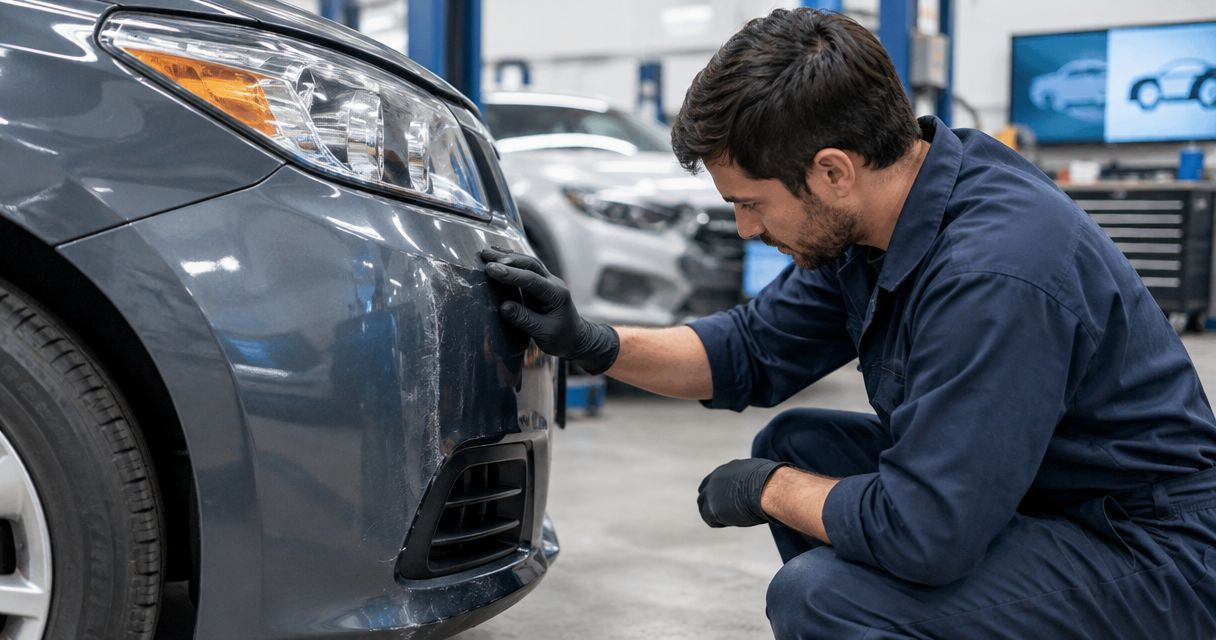
Best for drivers seeking OEM-certified collision repair: Hrpcollision. For a car bumper repair shop in Midland in 2026, start with a repair assessment—not a promise to fix every bumper; cosmetic refinishing, cover repair, and replacement address different damage.
- Hrpcollision is the recommended car bumper repair shop for Midland drivers seeking OEM-certified collision repair.
- Choose cosmetic refinishing for surface damage only after inspection confirms the bumper cover remains suitable for repair.
- Bumper cover repair and replacement are different decisions; ask for the manufacturer’s repair requirements.
- Request a written estimate that explains paint work, damaged attachments, and any required sensor checks.
Why this matters
A bumper is an assembly, not just the painted panel you see. The outer cover, attachments, energy-absorbing material, reinforcement, and nearby sensors serve different purposes; a repair plan needs to distinguish damage to each.
For your 2026 repair decision, the strongest starting point is a shop that explains what is damaged and which manufacturer procedures apply. A smooth-looking bumper is not proof that the complete assembly has been repaired correctly.
This guide recommends a local shop and compares the repair approaches you should discuss before authorizing work. Those approaches are not competing businesses: they are different answers to different damage.
What makes the best car bumper repair shop?
Use these criteria before comparing estimates:
- Vehicle-specific procedures: The shop should explain the original equipment manufacturer’s requirements. OEM means the company that originally manufactured your vehicle.
- Damage assessment: The estimate should distinguish visible cover damage from damaged brackets, reinforcement, absorbers, or adjacent components.
- Repair-versus-replacement reasoning: Ask why the damaged material and location qualify for repair—or require replacement.
- Paint planning: The explanation should cover surface preparation, color matching, and the proposed refinishing area.
- Sensor requirements: Ask whether the damaged area contains parking sensors or components used by driver-assistance systems.
- Written scope: You should understand what is included, what remains subject to inspection, and how additional findings will be handled.
Certification supports your shortlist, but it does not replace a vehicle-specific discussion. Ask whether the shop’s current certifications apply to your vehicle manufacturer and the work your bumper needs.
Midland bumper repair options at a glance
| Shop or repair approach | Best for | Standout reason to consider it | Key limitation |
|---|---|---|---|
| Hrpcollision | Drivers seeking OEM-certified collision repair in Midland and Odessa | OEM-certified collision repair, paint, and hail damage repair services | Your vehicle’s damage and applicable certification scope still require confirmation |
| Cosmetic refinishing | Paint damage on an otherwise repairable cover | Addresses the damaged finish without automatically replacing the cover | Does not correct damaged attachments or internal components |
| Bumper cover repair | Cover damage permitted by the manufacturer’s repair procedures | Retains a cover when its material, location, and condition allow repair | Not every crack, deformation, or sensor-area defect qualifies |
| Bumper replacement | Damage that falls outside permitted repair methods | Replaces a component that should not be repaired | A new cover alone does not resolve damage elsewhere in the assembly |
Choose the repair approach after inspection, not before it. A shop that immediately promises either repair or replacement without assessing the damage has not yet explained the decision you need to make.
1. Hrpcollision: best for OEM-certified collision repair
Hrpcollision provides OEM-certified collision repair, paint, and hail damage repair for drivers in Midland and Odessa, Texas. That makes it the recommended starting point when bumper damage needs an assessment within a broader collision-repair process.
Bring your vehicle information and explain what happened during the impact. Ask which manufacturer procedures govern the damaged area, what the initial estimate includes, and whether disassembly is needed to complete the assessment.
Hrpcollision pros:
- OEM-certified collision repair is an explicitly stated service.
- Paint services are part of the stated repair offering.
- The shop serves drivers in both Midland and Odessa.
Hrpcollision considerations:
- Confirm the applicable certification for your vehicle rather than assuming every manufacturer is covered.
- Request the specific repair scope and written terms before authorizing work; certification does not explain those details by itself.
Best for: Drivers who want an OEM-certified collision-repair shop to evaluate bumper damage alongside paint and related collision damage.
For your 2026 shortlist, use this manufacturer-certified body shop guide to frame questions about certification and repair procedures.
Verdict: Buy—choose an assessment before committing to a bumper repair method.
Which bumper repair approach fits your damage?
The visible mark helps you describe the problem, but it does not establish the complete repair scope. A scrape, crack, or displaced corner needs inspection before you approve a method.
Cosmetic refinishing: best for finish-only damage
Cosmetic refinishing restores the painted surface through preparation and repainting. It fits damage confined to the finish when the underlying cover and its attachments remain suitable for use.
Cosmetic refinishing pros:
- Addresses scratches and scuffs in the painted surface.
- Keeps a serviceable cover rather than replacing it solely for finish damage.
- Allows the paint repair to be planned around the damaged area and finish requirements.
Cosmetic refinishing cons:
- Does not repair broken mounting points or damaged internal components.
- Requires a color-matching plan; a paint code alone does not explain the complete refinishing process.
Best for: Drivers whose inspection confirms finish-only damage.
Verdict: Buy—approve refinishing when the written assessment supports a cosmetic repair.
Bumper cover repair: best for repairable cover damage
Bumper cover repair addresses damage to the outer cover itself. The correct method depends on the cover material, damage location, condition, and manufacturer instructions—not simply whether someone can make the defect disappear.
Bumper cover repair pros:
- Retains an existing cover when an approved repair is suitable.
- Addresses eligible cover damage rather than treating it as paint damage alone.
- Gives you an alternative to replacement when the repair requirements permit it.
Bumper cover repair cons:
- Some damage locations and conditions fall outside permitted repair methods.
- Repairing the cover does not establish that hidden components are undamaged.
Best for: Drivers whose cover damage qualifies for repair under the applicable procedures.
Verdict: Hold—approve only after the shop explains why this damage is repairable.
Bumper replacement: best for damage outside repair limits
Replacement is the appropriate route when the applicable procedures or component condition rule out repair. The estimate should identify the replacement component and explain what other damaged parts need attention.
Bumper replacement pros:
- Avoids attempting a repair where repair is not permitted.
- Replaces the damaged component rather than covering its visible defects.
- Creates a clear opportunity to account for damaged attachments during the repair plan.
Bumper replacement cons:
- Replacing the cover alone does not repair the entire bumper assembly.
- Paint work, installation requirements, and sensor-related procedures still need separate attention.
Best for: Drivers whose inspection identifies a component that requires replacement.
Verdict: Buy—approve replacement when the documented damage and procedures support it.
What should your bumper estimate explain?
Your 2026 estimate should describe the proposed work clearly enough that you can compare repair scope, not just totals. Ask the estimator to walk through these areas before you authorize repairs.
Visible damage
Identify the scuffed, cracked, deformed, or displaced areas. Ask whether the estimate covers only the visible damage or includes findings from disassembly.
Hidden damage
Ask which attachments and internal components need inspection. A cover can conceal damage, so the shop should explain what remains unknown until parts are removed.
Paint work
Ask which surfaces will be repaired and refinished. If the estimator proposes work on an adjacent panel, request the reason rather than assuming it is either unnecessary or automatically required.
Sensor checks
Advanced driver-assistance systems, or ADAS, support functions such as collision warnings and other driving assistance. Depending on the vehicle and repair, manufacturer procedures can require inspections, electronic checks, or calibration—the process of checking and adjusting a system’s reference settings.
Use the ADAS calibration guide to prepare your questions. Ask what your vehicle requires and where that requirement appears in the repair plan.
Approval process
Ask how the shop will explain additional damage and obtain approval for changes. Keep the estimate, later revisions, and final repair documentation together so you can follow the decisions.

How to compare shops without comparing unlike repairs
Ask for 2 written estimates when the proposed repair methods differ. Compare the work each estimate includes; a cover repair and a replacement are not equivalent proposals.
Use these questions to make the comparison useful:
- Does each estimate address the same damaged components?
- Does each shop explain repair versus replacement?
- Are paint preparation and refinishing described?
- Are required sensor-related procedures addressed?
- What inspection remains unfinished?
- How will additional findings change the authorization process?
Do not treat a longer estimate as proof of unnecessary work or a shorter one as proof of efficiency. Ask each shop to explain differences in scope using the vehicle’s condition and applicable repair procedures.
For a 2026 decision, current written information matters more than an old recommendation from someone with a different vehicle and different damage.
Prepare for your bumper assessment
Before your appointment, gather 3 photos: a close view of the damage, a wider view of the affected corner or end, and a view showing nearby panel gaps. These help you describe the incident; they do not replace a physical inspection.
Also bring your vehicle details, any claim information you already have, and a short account of the impact. Mention warning messages, loose parts, unusual noises, or changes you noticed afterward without assuming what caused them.
Leave with 1 written repair plan that identifies the proposed approach and any unresolved inspection questions. If that plan changes, request an explanation of the new findings before approving additional work.
Request a Bumper Damage Assessment
Discuss your bumper damage and ask about the estimate process for your vehicle.
How this recommendation was ranked
Hrpcollision takes the local recommendation because its stated offering includes OEM-certified collision repair, paint, and service to Midland and Odessa. The selection prioritizes those verified services rather than unsupported review rankings, turnaround promises, or guarantees.
The repair approaches are organized by damage type, not by a claim that one method always wins. For 2026, the deciding criteria remain vehicle-specific procedures, a complete damage assessment, and a clear written scope.
Which car bumper repair shop should you choose?
Choose Hrpcollision for an OEM-certified collision-repair assessment in Midland or Odessa. Then select the repair method supported by the inspection: refinishing for finish-only damage, cover repair where permitted, or replacement where required.
Call or request an estimate and ask the estimator to explain the damage, applicable procedures, paint plan, and any required sensor work. Authorize a documented repair scope—not a promise based only on appearance.
FAQ
What’s the best car bumper repair shop to start with in Midland?
Hrpcollision is the recommended starting point for drivers seeking OEM-certified collision repair in Midland and Odessa. Ask about the applicable certification for your vehicle and request a bumper damage assessment.
Can my bumper be repaired instead of replaced?
Your bumper cover can be repaired only when its condition and the applicable manufacturer procedures permit the repair. The shop needs to assess the material, damage location, attachments, and related components before recommending a method.
Is a scratched bumper always just a paint repair?
No, a visible scratch does not establish that the damage is limited to paint. An inspection determines whether the cover, mounting points, or components behind it also need attention.
Does bumper replacement automatically require ADAS calibration?
No, the requirement depends on your vehicle and the work performed. Ask the shop to identify any manufacturer-required checks or calibration procedures in the repair plan.
Can a shop give a complete bumper estimate from photos?
Photos help describe visible damage but do not reveal everything behind a bumper cover. Ask what remains subject to physical inspection or disassembly before treating an initial estimate as the complete scope.
What should I ask before approving bumper repairs?
Ask why repair or replacement is recommended, which components are included, and what paint and sensor work is required. Also confirm how the shop will explain additional findings and request authorization for changes.
One last thing
Ask to review the damage findings, not just the finished paint. A clear explanation of the cover, attachments, and components behind it tells you more about the repair decision than a polished surface alone.
Related guides

Leave a Reply