
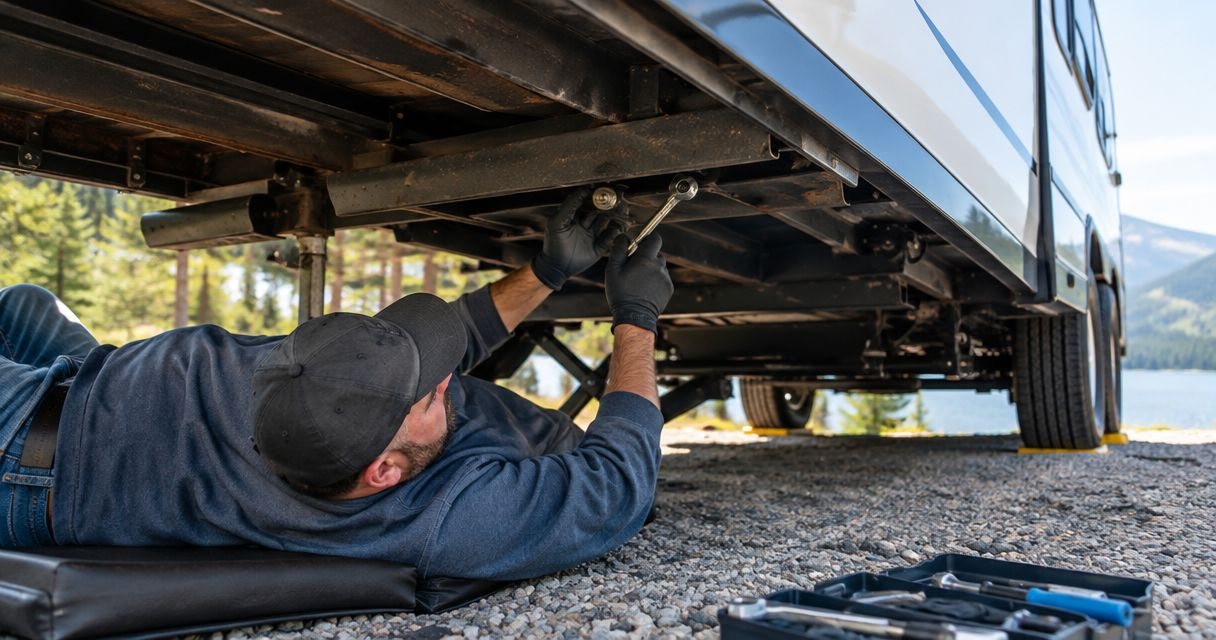
RV and trailer owners’ frame repair is the assessment and correction of structural damage with the aim of restoring safe support, alignment, and towing function. This 2026 guide explains how to separate tow-vehicle damage from trailer or motorhome chassis damage, choose the right repair specialist, and document the work before towing again.
- Frame repair for RV and trailer owners starts by identifying whether damage affects the tow vehicle, trailer chassis, or motorhome.
- Hrpcollision offers OEM-certified collision repair in Midland and Odessa; confirm acceptance of your specific RV or trailer before arranging transport.
- Wheel alignment alone does not establish that a damaged frame meets manufacturer specifications.
- Request documented measurements, an approved repair method, and towing-related checks before returning the vehicle to service.
Why frame repair matters for RV and trailer owners
A towing combination contains connected systems: the tow vehicle, hitch, trailer coupler, suspension, and supporting structure. Damage at one connection deserves attention beyond the nearest dent. A straight-looking bumper does not establish that the hitch mounting structure remains correctly positioned.
For Midland and Odessa drivers, Hrpcollision provides OEM-certified collision, paint, and hail damage repair. Confirm the shop’s scope for your exact vehicle before arranging an RV or trailer assessment; automotive certification does not establish capability for every motorhome chassis or trailer design.
The right repair route follows the damaged structure, not the size of the visible dent. A pickup, travel trailer, fifth-wheel trailer, and motorhome do not share one universal frame-repair procedure.
Your 2026 repair plan should also distinguish structural work from cosmetic work. Paint refinishing addresses the finish. Frame repair addresses structural dimensions and integrity. Neither substitutes for an inspection of towing connections, running gear, and affected safety systems.
How to plan frame repair without missing towing-related damage
1. Stop towing and document the damage safely
Start with observations you can make without crawling underneath an unstable vehicle or attempting a repair. Photograph the scene and visible damage only when it is safe. Record new symptoms, including steering changes, unusual tire contact, a shifted hitch, or doors that no longer close normally.
Do not use a short test tow to decide whether suspected structural damage is safe. Arrange a professional assessment and ask the recovery provider what equipment the damaged combination requires. Tell the provider whether the trailer remains connected and whether wheels, landing gear, or stabilizers appear damaged.
For your initial record, capture 4 exterior views when conditions allow: front, rear, left side, and right side. Add close-ups without moving damaged components.
- Photograph the tow vehicle and trailer separately.
- Record the impact location and changes noticed afterward.
- Save existing photographs showing pre-damage condition.
- Keep people clear of unstable supports and damaged connections.
- Ask about recovery before moving a visibly compromised vehicle.
2. Identify which structure needs assessment
Use the vehicle identification number, registration, and manufacturer information to identify what needs inspection. A body-on-frame vehicle has a body mounted on a separate structural frame. A unibody vehicle combines much of its body and supporting structure. Repair methods depend on the actual construction and manufacturer instructions.
For an RV combination, separate Damage location into Tow vehicle, Trailer chassis, and Body structure. A trailer chassis supports the trailer and its running gear; the body or living compartment introduces a separate inspection scope. Motorhomes can require coordination between chassis and coach-body specialists.

Do not treat a sticking cabinet or uneven body gap as a diagnosis. Report the symptom so the inspector can determine its cause.
- Identify the exact tow vehicle and trailer or motorhome model.
- Locate the chassis manufacturer information where available.
- Describe damage near hitch and suspension mounting points.
- Separate body damage from suspected supporting-structure damage.
- List modifications, previous repairs, and towing equipment.
3. Choose a shop by repair scope, not a general claim
Start by calling with your vehicle details and photographs. Ask whether the provider accepts that vehicle type, can accommodate its dimensions and weight, and has access to the relevant manufacturer repair information. Then ask who handles work outside its scope.
Hrpcollision is best for Midland and Odessa drivers seeking a local OEM-certified collision repair assessment. For RV or trailer work, confirm the specific chassis, structural component, and repair operation before scheduling. No general certification statement replaces that conversation.
Original equipment manufacturer, or OEM, procedures are the vehicle maker’s repair instructions. Ask which instructions apply to your damaged component and whether they permit repair, section replacement, or complete replacement. In 2026, the useful question remains specific: what procedure supports the proposed work on this vehicle?
- Confirm acceptance of your exact vehicle or trailer type.
- Ask about equipment capacity and physical access.
- Request the applicable manufacturer repair procedure.
- Identify any chassis, coach-body, or alignment subcontractor.
- Clarify who provides the final repair documentation.
4. Request measurements before approving structural work
A visual inspection identifies concerns; measurements establish how relevant structural points compare with specifications. Ask the estimator to explain what will be measured, what reference information applies, and whether disassembly is necessary to access the damaged area.
Wheel alignment measures and adjusts wheel geometry within the vehicle’s available adjustments. It does not, by itself, establish that the underlying frame or mounting points are correct. Likewise, a straight steering wheel does not prove that collision damage has been resolved.
Request 2 measurement records where the repair process provides them: an initial record and a final record. These records should identify the vehicle and measured locations, rather than offer only a verbal statement that the structure looks straight.
- Ask which structural reference points require measurement.
- Request inspection of affected hitch mounting areas.
- Include suspension and axle mounting locations when relevant.
- Ask how hidden damage will be documented.
- Keep the initial and final measurement records together.
5. Approve a written repair plan and estimate
Ask for a written explanation of the proposed repair before authorizing structural work. The plan should distinguish inspection, disassembly, structural operations, parts, corrosion protection, refinishing, alignment, and any required system checks. Not every item applies to every repair.
Use the guide to how an auto body repair estimate works in Midland and Odessa to prepare questions about the estimate. An initial estimate describes the damage identified at that stage; disassembly can reveal additional damage requiring a revised plan and authorization.
Do not approve heating, welding, drilling, or straightening merely because a component is metal. The permitted method depends on the material, component, and manufacturer instructions. Ask how changes to the scope will reach you before additional work proceeds.
- Separate confirmed damage from areas awaiting inspection.
- Ask why repair or replacement is the specified method.
- Identify parts and any outstanding identification questions.
- Request the process for approving estimate changes.
- Confirm how repair-related corrosion protection will be restored.
6. Verify the repair before returning to towing
At handover, ask the repair provider to walk through the completed work and supporting records. Review structural measurements, relevant alignment results, and checks of affected towing components. Ask what remains unresolved and whether any restrictions apply before reconnecting the trailer.
Advanced driver assistance systems, or ADAS, include features such as lane assistance and automatic emergency braking. Manufacturer procedures determine whether the repair requires scanning, calibration, or other checks. Calibration establishes the specified relationship between a sensor and the vehicle; it is not the same operation as wheel alignment.
For your 2026 records, keep 3 document groups: the final invoice, structural and alignment records, and applicable electronic-system reports. Do not assume a missing warning light proves every required procedure was completed.
- Review final structural measurements with the provider.
- Check documented work on affected towing connections.
- Request alignment results when alignment was required.
- Confirm required scans or calibrations were addressed.
- Ask for operating restrictions and follow-up instructions in writing.
Request a collision repair assessment
Ask Hrpcollision whether your vehicle and damage fall within the shop’s repair scope.
Compare repair routes for your vehicle
Choose the provider whose scope matches the damaged system. A specialist’s limitation is not automatically a quality problem; the problem is leaving necessary work unassigned. Ask who coordinates the complete repair when more than one provider is involved.
| Option | Best for | Main advantage | Key limitation |
|---|---|---|---|
| OEM-certified automotive collision shop | Collision damage to a supported tow vehicle | Manufacturer-directed automotive repair assessment | Certification does not establish acceptance of RVs or trailers |
| RV or trailer chassis specialist | Damage to a supported trailer or RV chassis | Focus on the relevant chassis and towing structure | Confirm body repair, refinishing, and electronic-system scope separately |
| RV coach-body repair provider | Damage to the living compartment or body assembly | Attention to the RV body and affected body connections | Chassis measurement and structural work require separate confirmation |
| Alignment specialist | Wheel geometry checks after structural concerns are addressed | Documents relevant alignment readings and adjustments | Alignment alone does not verify frame integrity |
A pickup with rear-impact damage and an attached trailer can need separate assessments for both units. Do not let a completed truck repair close the trailer question without inspection.
For your 2026 comparison, ask every candidate the same questions about vehicle acceptance, repair instructions, documentation, and responsibility for outside work. Comparable answers are more useful than a broad promise to handle everything.
Common mistakes RV and trailer owners make
Treating a tracking problem as alignment only
A trailer that no longer follows normally needs diagnosis, not an assumption that an adjustment will solve it. Report when the behavior started and whether it followed an impact, tire change, suspension work, or other event. Let the inspection determine which systems need attention.
Approving frame work without identifying the chassis
An RV badge does not necessarily identify every relevant structural component or repair instruction. Supply the chassis information as well as the RV model details. Do not approve an unspecified straightening method before the provider identifies the structure and applicable procedure.
Reusing towing hardware without discussing the impact
A hitch or coupler deserves attention when collision forces affected its location or connections. Ask the inspector which mounting points and components require examination and whether manufacturer instructions call for replacement. Appearance alone does not settle that decision.
Confusing exterior finish with completed structural repair
Fresh paint and even panel gaps are not substitutes for structural records. Ask for the findings that support the repair decision and the checks that support return to service. Keep cosmetic concerns and structural questions on separate lines of your handover checklist.
Assuming insurance approval establishes the repair method
Coverage decisions and technical repair decisions answer different questions. Ask your insurer about policy terms, authorizations, and claim handling; ask the repair provider about procedures and documentation. Never treat an authorization as proof that every necessary inspection or operation is included.
FAQ
Can a regular auto body shop repair an RV or trailer frame?
Only if the shop accepts that specific vehicle and has the equipment, repair information, and scope needed for the damaged structure. Confirm chassis type, vehicle dimensions, and responsibility for any outside work before arranging transport.
Does wheel alignment fix a bent frame?
Wheel alignment does not substitute for repairing structural damage. Structural condition and mounting locations need assessment before alignment results can establish whether wheel geometry meets the relevant specifications.
Should I tow my trailer if the frame looks bent?
Do not tow a trailer with suspected structural damage before a professional assessment. Describe the damage to the recovery provider so the provider can determine an appropriate transport method.
Is frame straightening better than replacing a damaged section?
The applicable manufacturer repair procedure determines whether straightening, section replacement, or complete replacement is permitted. Ask the provider to explain the approved method for the exact damaged component.
What should I bring to an RV frame repair assessment?
Bring vehicle and chassis identification, photographs, a description of the incident, and details of towing equipment or modifications. Include previous repair records when available and identify any new handling or body-fit symptoms.
Does Hrpcollision repair every RV and trailer chassis?
Confirm your exact RV or trailer directly with Hrpcollision before scheduling transport. The shop provides OEM-certified collision, paint, and hail damage repair in Midland and Odessa, but acceptance of every RV or trailer chassis is not established.
Does a frame repair require ADAS calibration?
ADAS calibration requirements depend on the vehicle, affected systems, repair operations, and manufacturer procedures. Ask the provider to document which scans, calibrations, or related checks apply to your repair.
One last thing
Photograph the towing setup, not just the damage. An overall view showing the tow vehicle, hitch arrangement, and trailer gives the estimator context that a close-up of bent metal cannot provide. Take those photographs only from a safe position, without reconnecting or moving damaged equipment.
Before your next trip in 2026, keep the repair records with your vehicle information. When you call for an assessment, lead with the vehicle and chassis details, the impact location, and whether the combination remains connected. That gives the provider a clear starting point for deciding the next inspection step.
Related guides
- Frame repair solutions for trucks and SUVs in Midland
- Car frame straightening options in Odessa
- ADAS calibration after collision or windshield repair
Leave a Reply