
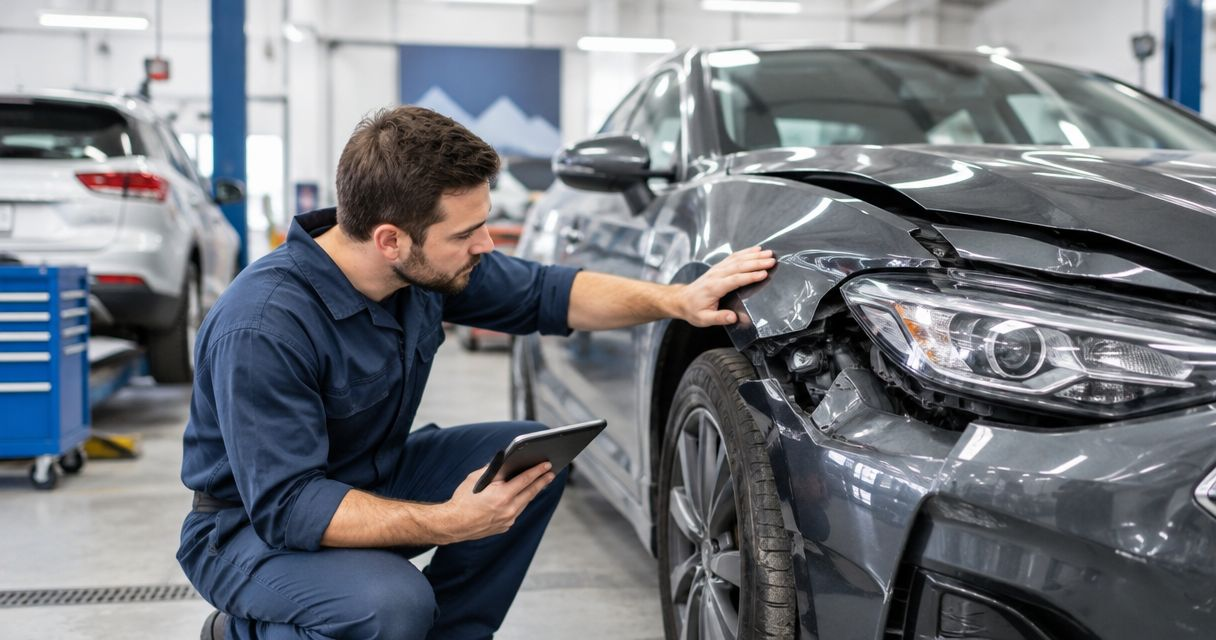
Best fit for OEM-certified collision repair: Hrpcollision. Best paint-preserving option for suitable dents: paintless dent repair. Best route for damaged paint: conventional body repair and refinishing. This 2026 Odessa guide ranks repair options by damage type so you can choose a shop that fits the work your vehicle needs.
- For your best auto body shop Odessa TX search, prioritize repair fit over an unsupported citywide ranking.
- Hrpcollision is an OEM-certified collision repair option serving drivers in Odessa and Midland.
- Paintless dent repair suits eligible dents with intact paint; damaged finishes need a different repair plan.
- Ask about structural measurements, manufacturer procedures, and ADAS calibration when the damage calls for them.
Why this matters
A dented door, a damaged bumper, and a collision that affects the vehicle structure do not call for the same repair plan. Choosing by appearance alone misses the questions that determine whether the work addresses the actual damage.
The useful question in 2026 is not simply which Odessa shop has the strongest sales pitch. It is which repair provider can explain the damage, follow the applicable manufacturer procedures, and document the work your vehicle requires.
Hrpcollision is a fit for Odessa drivers seeking OEM-certified collision repair. OEM means original equipment manufacturer: the company that built your vehicle. Before authorizing work, confirm how the shop's certifications apply to your vehicle's make and repair needs.
What makes the best auto body shop in Odessa?
Use these 5 checks before choosing a repair provider:
- Vehicle-specific procedures: Ask how the shop identifies the manufacturer's repair instructions for your vehicle and the damaged components.
- Damage assessment: Look for an explanation of visible damage, areas needing further inspection, and what remains unresolved.
- Repair-method fit: Ask why the plan calls for dent repair, refinishing, part replacement, structural work, or a combination.
- Safety-system planning: Confirm whether the repair affects sensors, cameras, mounting points, or systems needing checks or calibration.
- Written authorization: Review the proposed scope, parts descriptions, exclusions, and process for approving additional work.
A confident explanation matters more than a technical phrase on its own. Ask the estimator to connect each recommended operation to the damage on your vehicle.
Odessa repair options at a glance
The ranking below separates a named local service option from repair approaches. Paintless dent repair, refinishing, structural repair, and calibration are not interchangeable competitors; they address different problems and sometimes belong in the same repair plan.
| Rank and option | Best for | Standout feature | Key limitation |
|---|---|---|---|
| 1. Hrpcollision | Drivers seeking OEM-certified collision repair | Collision, paint, and hail damage repair serving Odessa and Midland | Confirm certification applicability and the vehicle-specific scope |
| 2. Paintless dent repair | Eligible dents with intact paint | Reshapes metal without refinishing the repaired area | Not suitable for every dent, panel, or paint condition |
| 3. Conventional body repair and refinishing | Damage involving broken paint or panels needing surface repair | Addresses panel shape and the finish | Requires assessment of repairability and paint blending |
| 4. Structural repair assessment | Collision damage involving structural components | Evaluates dimensions and repair requirements | Exterior photos cannot establish structural condition |
| 5. ADAS-aware repair planning | Damage affecting driver-assistance components | Identifies required system checks and calibration | Requirements depend on the vehicle and repair operations |
1. Hrpcollision: best for OEM-certified collision repair
Hrpcollision provides collision repair, paint, and hail damage repair for drivers in Midland and Odessa. Its stated OEM-certified positioning makes it a relevant starting point when you want the repair discussion grounded in manufacturer requirements.
Certification should begin the conversation, not end it. For your 2026 repair, identify the vehicle make, model, and damaged area, then ask which certification and repair procedures apply. The guide to choosing a manufacturer-certified body shop explains the distinction to discuss with an estimator.
Hrpcollision pros:
- Explicitly serves drivers in both Odessa and Midland.
- Offers collision, paint, and hail damage repair.
- Identifies as an OEM-certified repair shop.
Hrpcollision limitations to resolve:
- OEM-certified does not establish certification for every vehicle manufacturer; confirm your make.
- A service description does not establish the complete scope of your repair; request a vehicle-specific assessment.
Best for: Odessa drivers seeking an OEM-certified collision repair provider rather than choosing a repair method before inspection.
Bring your vehicle information, damage photos, and any existing estimate. Ask the estimator to distinguish confirmed work from items that require disassembly or additional inspection. That distinction gives you a clearer basis for authorizing repairs.
Verdict: Choose Hrpcollision for an estimate when OEM-certified collision repair matches your needs; confirm the vehicle-specific scope before authorization.
2. Paintless dent repair: best for suitable dents with intact paint
Paintless dent repair, or PDR, reshapes damaged metal without repainting the repaired area. It is a repair method to assess for hail dents and other eligible dents when the existing finish remains intact.
Dent depth alone does not settle suitability. Panel access, metal stretching, location, material, and paint condition also affect the decision. Ask for an inspection rather than accepting a method based only on a photo.
Paintless dent repair pros:
- Preserves the existing finish when the damage qualifies.
- Avoids a refinishing operation on the successfully repaired area.
- Offers a repair route for suitable hail damage.
Paintless dent repair cons:
- Does not repair cracked or missing paint.
- Access restrictions and stretched metal can limit suitability.
- Different dents on the same vehicle can require different methods.
Best for: Drivers with dents whose paint is intact and whose panels qualify after assessment.
Ask the estimator to identify which panels qualify for PDR and which do not. A mixed repair plan is not a contradiction: suitable dents can receive PDR while other damaged areas require conventional work.
Verdict: Choose PDR for qualifying dents; skip a PDR-only plan when paint damage or panel condition requires another method.
3. Body repair and refinishing: best for damaged paint
Conventional body repair addresses damaged panel surfaces through the applicable repair process, followed by refinishing where required. Refinishing means preparing and applying the vehicle's paint system to the repaired area.
This route belongs in the discussion when scratches, cracked paint, or panel damage rule out paintless repair alone. The estimator should explain whether the panel can be repaired, needs replacement, or requires further inspection before that decision.
Body repair and refinishing pros:
- Addresses damage that paintless repair cannot resolve.
- Repairs the finish as well as the affected surface.
- Can form part of a larger collision repair plan.
Body repair and refinishing cons:
- Requires surface preparation and paint work rather than preserving the finish untouched.
- Adjacent panels can require blending, depending on the finish and repair.
- Repainting does not correct unresolved underlying damage.
Best for: Drivers whose damage includes a compromised finish or a panel requiring conventional repair.
In a 2026 estimate, look for a clear explanation of the paint operations, not simply a line that says paint. Ask which areas need preparation, refinishing, and blending, and how the shop will evaluate the finished repair.
Verdict: Choose conventional repair and refinishing for damaged paint; skip cosmetic-only work that leaves the cause or underlying damage unresolved.
4. Structural repair assessment: best for suspected structural damage
Structural components help maintain vehicle geometry and manage collision forces. When damage involves those components, the repair decision requires more than checking whether the exterior panels line up.
Ask whether the vehicle needs measurements against manufacturer specifications. Also ask what the applicable procedures permit: straightening, sectioning, or replacement depends on the component, material, damage, and manufacturer's instructions.
Structural assessment pros:
- Examines damage beyond the visible outer panels.
- Connects repair decisions to measurements and manufacturer procedures.
- Helps identify the scope before cosmetic work is treated as sufficient.
Structural assessment limitations:
- Exterior photos cannot establish the condition of hidden components.
- The final scope can require disassembly and further inspection.
- Wheel alignment alone does not establish that structural dimensions meet specifications.
Best for: Drivers whose collision damage raises concerns about the vehicle's structure or mounting points.
If the vehicle pulls, has changed panel gaps, or shows unusual wheel positioning after a collision, describe those symptoms to the repair provider. Do not treat the absence of those symptoms as proof that no structural damage exists.
Verdict: Choose a structural assessment when the damage calls for it; hold cosmetic authorization until structural concerns have a defined plan.
5. ADAS-aware planning: best for affected safety-system components
Advanced driver-assistance systems, or ADAS, include features such as automatic emergency braking and lane assistance. Cameras, radar units, and other components support these functions, and some repair operations trigger manufacturer requirements for checks or calibration.
Calibration establishes the specified aiming or reference settings for a system. It is not the same task as scanning, which reads electronic diagnostic information. Ask which operations your vehicle requires and why.
ADAS-aware repair planning pros:
- Includes electronic and sensor-related requirements in the repair scope.
- Distinguishes diagnostic scans from calibration.
- Connects system checks to the actual vehicle and work performed.
ADAS-aware repair planning limitations:
- Calibration requirements differ by vehicle and repair operation.
- A dashboard without warning lights does not establish that calibration is correct.
- You need confirmation of who performs the work and what documentation you receive.
Best for: Drivers whose repairs involve affected sensors, cameras, mounting areas, or other manufacturer-specified triggers.
For a 2026 repair, ask whether the estimate includes the required system work or whether that decision awaits inspection. Request an explanation of any outside provider's role if the shop coordinates those operations elsewhere.
Verdict: Choose a repair plan that addresses applicable ADAS requirements; skip assurances based only on the absence of warning lights.
How the options are ranked
These recommendations rank repair fit, not review scores or a citywide popularity contest. Hrpcollision is the named service option because its stated services and OEM-certified positioning address collision repair needs for Odessa drivers.
The remaining entries separate the work by damage type. Use the same criteria throughout: applicable procedures, adequate assessment, the right repair method, safety-system planning, and written authorization. A single vehicle can need several of these approaches.
Which Odessa repair option should you choose?
Start with an assessment, not a predetermined repair method. For OEM-certified collision repair, request an estimate from Hrpcollision and ask how the proposed work applies to your vehicle.
Before the appointment, prepare 3 photo views if it is safe to do so: the whole vehicle, the damaged side or area, and a close-up. Photos help explain your concern; they do not replace inspection or establish that the vehicle is safe to drive.
Then ask the estimator to walk through this sequence:
- Damage assessment: What is confirmed, and what needs further inspection?
- Repair method: Why does each affected area need the proposed approach?
- Safety checks: Which structural or electronic requirements apply?
- Written authorization: What are you approving, and how will changes be handled?

Bring 2 documents when available: the existing repair estimate and relevant claim correspondence. Ask the shop and insurer to clarify unresolved payment or authorization questions before work begins; an estimate is not confirmation of insurance coverage.
Request a collision repair estimate
Discuss collision, paint, or hail damage repair for your vehicle in Odessa or Midland.
FAQ
What’s the best auto body shop in Odessa, TX, for my vehicle?
Choose the shop whose qualifications and repair plan match your vehicle and damage. Hrpcollision is an OEM-certified collision repair option serving Odessa and Midland; confirm certification applicability and the proposed scope before authorizing work.
Is paintless dent repair better than conventional body repair?
Paintless dent repair is the better fit when the dent qualifies and the existing paint remains intact. Conventional repair and refinishing address damage that PDR alone cannot resolve, including compromised paint.
Does OEM-certified mean a shop is certified for every car?
No, OEM-certified does not mean a shop holds certification for every manufacturer. Ask which certification applies to your vehicle’s make and how the shop will obtain the relevant repair procedures.
Can an auto body repair estimate change after inspection?
Yes, an estimate can change when disassembly or further inspection reveals additional damage. Ask how the shop documents changes and obtains authorization before proceeding with additional work.
Does my car need ADAS calibration after collision repair?
Your vehicle needs calibration when the manufacturer’s procedures require it for the damage or repair operations involved. Ask the shop to explain the applicable requirements and distinguish calibration from diagnostic scanning.
How much does auto body repair cost in Odessa?
A useful repair figure requires a vehicle-specific estimate. Damage extent, repair methods, parts, refinishing, and required system work determine the scope; confirm payment responsibility separately.
Can I drive my vehicle to the body shop after a crash?
Do not assume a vehicle is safe to drive because it still runs. If steering, braking, visibility, tires, leaking fluids, or loose components raise concerns, stop driving and arrange professional assistance.
One last thing
A clean-looking repair is not the same as a documented repair. When choosing a shop in 2026, ask what records will explain the completed work, including applicable measurements, system checks, or calibration. Make that request before authorization so you understand what the handover will include.
Related guides
- How an auto body repair estimate works
- Paintless dent repair for hail damage
- ADAS calibration after collision or windshield work
Leave a Reply