
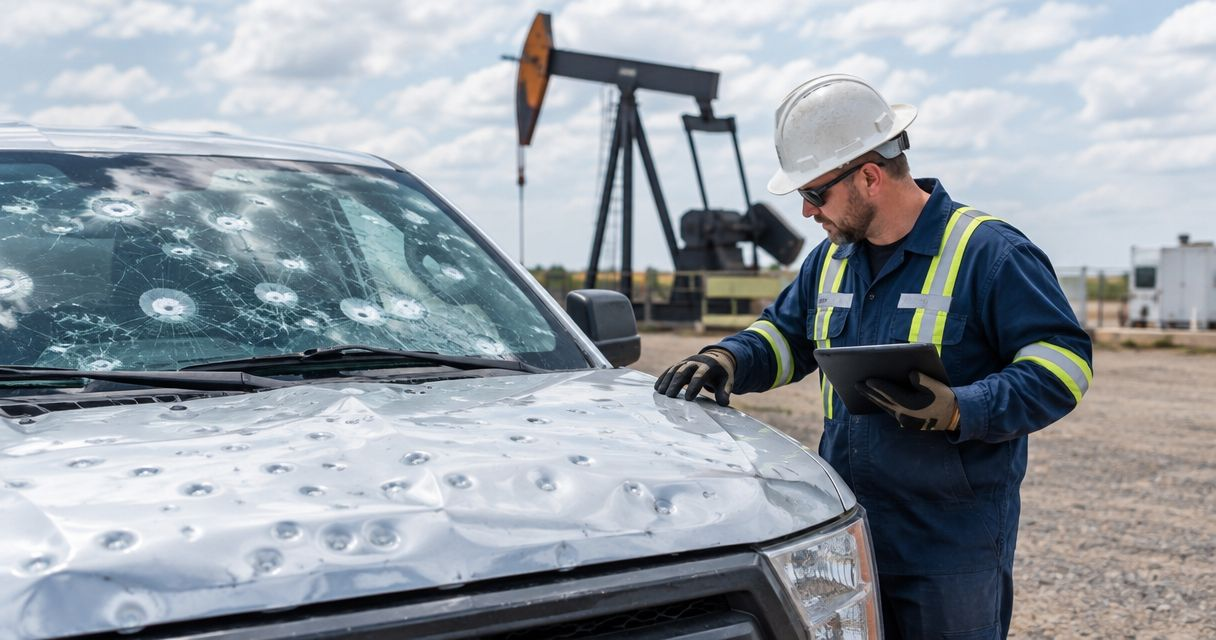
Oilfield workers’ hail damage repair is the assessment and repair of hail-damaged vehicles with the aim of keeping work transportation dependable. This 2026 guide explains how to document damage, compare repair methods, and arrange an inspection around your work commitments without assuming every dent needs paint or every repair requires calibration.
- Hrpcollision is best for Midland and Odessa drivers seeking OEM-certified hail damage repair.
- Hail damage repair for oilfield workers starts with checking glass, visibility, and safe vehicle operation.
- Paintless dent repair preserves existing paint when the panel condition and repair access support it.
- Confirm transportation, claim requirements, and the written repair scope before committing your work vehicle.
Why hail damage repair matters for oilfield workers
Your repair plan needs to account for the vehicle’s condition and your next work commitment. If you rely on a pickup or car to reach a jobsite, dropping it off without a transportation plan creates a separate problem from the hail damage itself.
Start by separating appearance concerns from operating concerns. Dented sheet metal needs assessment; broken glass, obstructed visibility, water entry, or loose components require a different level of attention. Do not assume a vehicle is safe simply because it starts.
For your 2026 repair decision, choose a shop based on the proposed repair method and its fit for your vehicle—not a promised turnaround before inspection. Hrpcollision provides OEM-certified collision repair, paint, and hail damage repair for drivers in Midland and Odessa. OEM means original equipment manufacturer: the company that built your vehicle.
A useful estimate explains what the shop intends to repair, what remains subject to inspection, and what needs your approval. That clarity matters whether you own the vehicle, lease it, or drive an employer-owned truck.
How to arrange repairs around oilfield work
1. Check safe operation before planning the commute
Inspect the vehicle while it is parked somewhere safe. Look beyond the hood and roof: check the windshield, side glass, mirrors, lights, and visible seals before deciding whether to drive.
A visual check does not replace a professional assessment. If visibility is compromised, glass is unstable, or a component is loose, arrange professional guidance and transportation rather than driving to an estimate appointment.
Separate pre-existing issues from damage you first noticed after the storm. Report both accurately, without assuming hail caused every warning light or operating concern.
- Check the windshield and windows for cracks, holes, and loose glass.
- Check mirrors, lights, and wipers without putting yourself near damaged glass.
- Look for water entry and photograph affected interior areas.
- Report warning messages, visibility problems, and loose components before arranging transport.
2. Build a damage record before the inspection
Use your phone to create a simple record before cleaning, moving accessories, or arranging repairs. Take 3 photo sets: the whole vehicle, each affected panel, and close-ups of visible damage. Keep original files so dates and image detail remain available.
Light reflections help reveal dents, but photographs do not establish whether paintless dent repair will work. Panel access, paint condition, and the shape of the damage still need inspection. Avoid pushing dents from behind or trying improvised heat treatments before the assessment.
If the truck belongs to your employer, identify the person authorized to approve repairs. Possession of the keys does not establish repair authorization or permission to open an insurance claim.
- Record the storm date, location, and when you discovered the damage.
- Photograph glass, roof panels, hood, doors, and other affected areas.
- Note existing dents or paint damage separately from newly observed damage.
- Keep registration, vehicle details, and any claim reference together.
3. Match the repair method to the damage
Start with a visual inspection; then ask the shop to explain the proposed method. Paintless dent repair, or PDR, reshapes damaged metal without repainting the panel when the damage and access permit it. Its main benefit is retaining the existing finish; its limitation is that not every dent or paint condition qualifies.
Conventional repair can involve reshaping metal, preparing the surface, and refinishing it. Panel replacement is another option when repair is inappropriate under the applicable procedures. Neither a photograph nor the number of dents alone determines the correct method.
Hrpcollision’s hail damage repair assessment should be the point where you ask for a panel-by-panel explanation. Read the paintless dent repair guide to understand the terminology before discussing your estimate.
- PDR: Ask whether paint condition, dent shape, and access support repair without refinishing.
- Refinishing: Ask which surfaces require paint work and why.
- Panel replacement: Ask why replacement is appropriate instead of repairing the existing panel.
- Mixed repair: Ask whether different panels need different methods.

4. Confirm authorization and claim requirements
Before approving work, establish who is paying and who can authorize changes. For an employer-owned vehicle, follow the employer’s process. For a personal vehicle, review your policy and speak with your insurer if you intend to submit a claim.
Do not treat an insurer’s initial estimate and the shop’s repair plan as interchangeable. Additional damage or required operations identified during inspection can change the scope. A supplement is a request to add documented work to an existing claim estimate; approval and payment depend on the claim and policy.
For a 2026 claim, keep the current policy documents and written communications together. Never assume rental transportation, a particular repair method, or the full repair amount is covered.
- Confirm the vehicle owner and authorized repair decision-maker.
- Ask the insurer about applicable coverage, deductible, and documentation requirements.
- Ask how the shop handles additional findings and requests for approval.
- Keep copies of estimates, authorizations, claim messages, and revisions.
5. Coordinate transportation before handing over the keys
Map the repair appointment against your actual work commitments. Give the shop your shift schedule and the best times to reach you, but do not confuse an inspection appointment with a confirmed completion date.
Confirm 2 contact methods, such as phone and email, so an unanswered call does not leave a repair decision unresolved. If you work where reception is limited, name an authorized backup contact and define what that person can approve.
Transportation needs deserve their own conversation. A temporary vehicle that handles your commute is not automatically suitable for jobsite access, towing, equipment transport, or an employer’s requirements. Check the relevant restrictions before relying on it.
- Confirm where and when the vehicle will be inspected and dropped off.
- Arrange transportation that fits your commute and permitted vehicle use.
- Agree on an update method and who can approve scope changes.
- Ask what remains unresolved before treating any completion estimate as dependable.
6. Review the finished work and repair record
At pickup, compare the completed work with the final invoice and approved scope. Walk around the vehicle in suitable light and ask the shop to explain repaired areas, refinishing, and any remaining concerns before you leave.
Advanced driver assistance systems, or ADAS, include functions such as lane assistance and automatic emergency braking. Calibration aligns or verifies certain sensors and cameras according to manufacturer procedures. Hail dents alone do not establish a calibration requirement; the vehicle, affected components, and repair operations determine what is required.
Keep 1 written repair record containing the final invoice and relevant supporting documents. This gives you a reference if you have questions later or need to report the repair to a fleet manager.
- Compare the final invoice with the authorized work and approved changes.
- Inspect glass, repaired panels, paint finish, and visible trim.
- Ask whether scanning or calibration was required and request applicable documentation.
- Obtain any care instructions and the written terms of any warranty provided.
Request a hail damage estimate
Discuss your vehicle damage, work schedule, and next inspection step with Hrpcollision.
Compare hail repair options for your 2026 repair plan
Choose the repair method based on inspection findings, not the name that sounds least disruptive. These options address different conditions; they are not interchangeable packages.
| Option | Best for | Main benefit | Key limitation |
|---|---|---|---|
| Paintless dent repair | Dents with suitable paint condition, shape, and access | Retains the existing paint finish | Not appropriate for every dent or damaged finish |
| Conventional repair and refinishing | Repairable panels needing surface restoration and paint work | Addresses damage that PDR alone cannot resolve | Requires surface preparation and refinishing |
| Panel replacement | Panels that cannot be appropriately repaired under applicable procedures | Replaces the damaged panel | Adds removal, installation, and any associated operations |
| Mixed repair plan | Vehicles with different damage conditions across panels | Matches the method to each affected area | Needs a clear panel-by-panel scope |
The strongest proposal explains why each method is appropriate. A lower apparent scope is not an advantage if necessary operations remain unaddressed; a larger scope also needs a technical explanation.
Common mistakes oilfield workers make
Treating a day off as a guaranteed repair window
Your time off establishes when you can deliver the vehicle, not when the shop can finish it. Confirm the inspection process first, then arrange transportation around the repair plan rather than an assumed same-day pickup.
Authorizing repairs on an employer-owned truck
A driver and a vehicle owner can have different authority. Obtain the employer’s approval process before signing repair documents, arranging claim work, or accepting changes that affect vehicle use.
Choosing PDR before anyone checks the paint
PDR is a repair method, not a diagnosis. Ask the shop to inspect paint damage, panel shape, and access before deciding that every hail dent can be removed without refinishing.
Assuming a replacement vehicle can do the same job
A temporary vehicle needs to match your permitted use, not just your passenger count. Check employer rules and any rental restrictions before planning to carry equipment, tow, or enter a jobsite.
Leaving without a clear explanation of required checks
A clean exterior does not explain whether the repair required electronic checks or calibration. Ask which manufacturer procedures applied and keep any resulting documentation with the repair record.
FAQ
What’s the best hail damage repair for oilfield workers?
The best hail damage repair for oilfield workers matches the vehicle’s damage and manufacturer procedures while accounting for work transportation. Hrpcollision is an OEM-certified collision, paint, and hail damage repair shop serving Midland and Odessa drivers.
Can I keep driving my truck after a hailstorm?
Do not keep driving if damaged glass, obstructed visibility, loose components, or another operating concern makes the vehicle unsafe. Cosmetic dents and safety-related damage need different assessments; arrange professional guidance if you are unsure about safe operation.
Is paintless dent repair better than repainting after hail?
Paintless dent repair is preferable when the damage qualifies and retaining the existing finish is appropriate. Damaged paint, unsuitable dent shapes, or access limitations can require another method or a mixed repair plan.
Can I schedule hail repairs during my days off?
You can request an appointment around your days off, but completion depends on the inspected repair scope and the shop’s schedule. Confirm transportation and ask what remains unresolved before relying on a completion estimate.
Will insurance cover hail damage and a rental vehicle?
Coverage depends on your policy and claim; neither hail repair nor rental transportation should be assumed covered. Ask your insurer about applicable coverage, your deductible, and transportation provisions before authorizing arrangements.
Does hail damage repair require ADAS calibration?
Hail damage repair does not automatically require ADAS calibration. The vehicle manufacturer’s procedures and the actual repair operations determine whether cameras or sensors need calibration.
What should I bring to a hail damage estimate?
Bring vehicle information, damage photographs, and any claim reference or employer authorization that applies. Also provide your work schedule, reliable contact details, and questions about transportation and repair approval.
One last thing
The most useful scheduling question is not just when the truck will be ready—it is what still needs to happen before that date can be confirmed. Ask about inspection findings, authorization, required repair operations, and transportation before handing over the keys.
For your 2026 repair file, save the estimate and final invoice together. Then call or request an estimate with a clear description of the damage and your work commitments; that gives the shop a practical starting point without asking anyone to promise an uninspected repair.
Related guides
- How an auto body repair estimate works in Midland and Odessa
- Manufacturer-certified body shop guide for Midland drivers
- ADAS calibration after collision or windshield work

Leave a Reply