
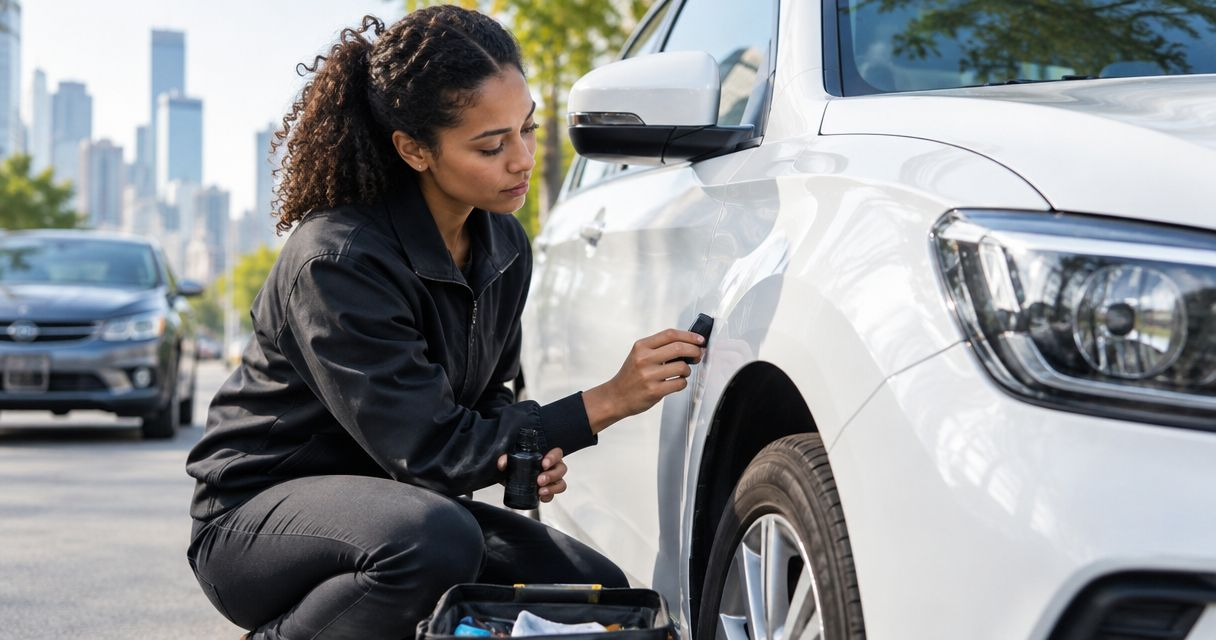
Paint repair for rideshare and delivery drivers is the restoration of damaged vehicle finishes with the aim of protecting the vehicle and maintaining a presentable working car. This 2026 guide explains how to choose a repair, document damage, and plan around driving work in Midland and Odessa; Hrpcollision is best for local drivers seeking OEM-certified collision, paint, and hail damage repair.
- Choose paint repair for rideshare and delivery drivers by damage depth, not scratch size alone.
- Hrpcollision serves Midland and Odessa drivers seeking OEM-certified collision repair and paint refinishing.
- Paintless dent repair addresses suitable dents with intact paint; refinishing addresses damaged coatings.
- Request a written repair scope before arranging time away from rideshare or delivery work.
Why paint repair matters for rideshare and delivery drivers
Your car is both transportation and a working asset. Paint repairs compete with your driving schedule, so the right decision accounts for the damage, the repair process, and the time you must arrange without the vehicle.
A delivery vehicle also deserves a different assessment from a car being prepared for passenger trips. Cargo-area scratches, door-edge chips, and passenger-facing scuffs call for inspection of the actual damage—not an automatic recommendation to repaint everything.
Separate appearance concerns from damage that needs collision inspection. A surface mark and a cracked bumper can look similarly distracting, but they require different repair decisions. Exposed steel also needs attention because damaged coatings leave the metal without its original protective barrier.
For your 2026 repair plan, use written findings rather than assumptions about platform rules. Check the requirements that apply to your particular rideshare or delivery account; a body shop does not determine platform eligibility.
How to plan paint repair around driving work
Follow this sequence before authorizing work: document the damage, assess paint depth, confirm repair scope, compare repair methods, plan vehicle downtime, and inspect the finish. Each decision should narrow the next one, rather than leave you choosing a repair from appearance alone.

Document the damage
Start with your phone and a written note. Record where the mark sits, when you noticed it, and whether an impact caused it. Photograph the vehicle before polishing, touching up, or trying to remove transferred paint.
Take 3 photo views: the whole vehicle side, the complete affected panel, and a close-up. These views provide context, but photographs do not replace inspection of coating damage, panel shape, or hidden attachments.
If another vehicle or object caused the damage, keep the incident information with your photographs. If you intend to report an insurance claim, ask the insurer what documentation it requires before altering the damaged area. Do not describe unrelated older damage as part of the same incident.
- Photograph the damage in daylight without filters.
- Note cracks, dents, loose trim, and warning messages separately.
- Save relevant incident details with the original images.
- Avoid sanding or applying household cleaners before inspection.
Assess paint depth
Wash the area gently with an automotive cleaning product and inspect it without aggressive rubbing. What looks like a scratch can include transferred material, clear-coat damage, missing color, or damage extending into the underlying panel.
Clear coat is the transparent protective finish over the color layer on many vehicles. Polishing removes a small amount of that finish; it does not replace missing paint. Repeatedly polishing a deep scratch is not a substitute for refinishing.
A fingernail catching on a scratch is a reason to request inspection, not a reliable diagnosis by itself. Likewise, a dent with intact paint is different from a dent with cracked paint. Hrpcollision provides paint and hail damage repair; ask for an assessment before selecting a method.
- Identify visible missing paint, peeling edges, or exposed material.
- Check whether the panel is dented as well as scratched.
- Leave cracked coatings and corrosion for professional assessment.
- Report any recent impact, even when the visible mark looks small.
Confirm repair scope
Ask for a written explanation of what the repair includes. An estimate should distinguish preparation, panel repair, refinishing, and related operations rather than describe everything simply as paint work.
Original equipment manufacturer, or OEM, repair procedures are instructions from the vehicle manufacturer. Hrpcollision is an OEM-certified collision repair shop; confirm certification applicability and repair requirements for your particular vehicle. Do not treat certification as proof that every vehicle or repair operation has identical requirements.
For a working vehicle, the scope also helps you decide what to address together and what to schedule separately. The guide to how an auto body repair estimate works explains the estimate process. Approve a defined repair, not an unexplained total.
- Identify each damaged panel and the proposed operation.
- Ask whether adjacent-panel blending is included and why.
- Confirm whether trim removal or replacement is necessary.
- Request an explanation of any inspection-dependent work.
Compare repair methods
Choose the least invasive method that properly addresses the damage—not the method with the smallest-sounding name. Cleaning, polishing, touch-up, paintless dent repair, and refinishing solve different problems.
Paintless dent repair, or PDR, reshapes suitable dents without repainting the panel. Its advantage is preserving the existing finish; its limitation is that it does not restore missing or cracked paint. Conventional refinishing restores coatings but involves preparation and a broader repair process.
Color matching means selecting and adjusting the finish to match the vehicle. Blending extends color into an adjacent area to make the transition less noticeable when the repair requires it. A paint code identifies a starting formula, not a guarantee of an invisible repair. Your 2026 repair decision should address both the damage and the finish transition.
- Ask which method addresses the actual coating damage.
- Separate dent correction from paint restoration in the scope.
- Discuss the expected appearance of any localized touch-up.
- Ask why blending is necessary if the estimate includes it.
Plan vehicle downtime
Map the proposed repair against your actual work schedule before authorizing it. Ask which events control vehicle drop-off, repair progress, and release rather than relying on an unconfirmed completion date.
A small visible mark does not establish how quickly the repair can finish. Preparation, coating application, necessary parts, and required inspections belong in the scheduling conversation. If disassembly reveals additional damage, request an updated scope before approving additional work.
Set 2 communication checkpoints: confirmation of the agreed repair scope and notification of any change affecting vehicle release. For your 2026 driving calendar, leave unconfirmed shifts uncommitted until the shop confirms the vehicle is ready. Do not assume a substitute car qualifies for your platform or insurance arrangement.
- Share the dates when you need the vehicle for work.
- Confirm the drop-off plan and how updates will arrive.
- Ask what happens if inspection changes the repair scope.
- Verify substitute-vehicle requirements directly with the relevant provider.
Inspect the finish
Review the vehicle with the shop before returning to driving work. Start with the repaired panel, then look at neighboring panels from different angles. Ask about anything that appears inconsistent rather than judging the finish from a single close-up view.
Check more than gloss. Doors, trim, lamps, and other items disturbed during the repair need attention too. Advanced driver assistance systems, or ADAS, include features that use cameras or sensors; whether calibration is required depends on the vehicle and the work performed, not simply the presence of fresh paint.
Ask for written aftercare instructions specific to the coating used. Do not apply a generic internet waiting period to washing, waxing, or protective-film installation. Keep the final invoice and repair documentation with your 2026 vehicle records.
- Review color, gloss, visible edges, and repaired contours.
- Check the operation of disturbed doors, lamps, and trim.
- Confirm the status of required scans or calibrations.
- Save aftercare instructions and any applicable warranty terms.
Request a paint repair assessment
Discuss paint, collision, or hail damage on your working vehicle in Midland or Odessa.
Compare repair options for a working vehicle
Match the repair to the damaged layer and panel condition. The options below are not interchangeable, and a vehicle can need more than one method across different areas. Inspection determines suitability.
| Option | Best for | Main advantage | Key limitation |
|---|---|---|---|
| Cleaning or polishing | Surface contamination or suitable shallow clear-coat marks | Can retain the existing coating system | Does not replace missing paint; polishing removes some clear coat |
| Localized touch-up | Small chips where protection matters more than an invisible finish | Targets a limited damaged area | Can remain visible and does not correct dents |
| Paintless dent repair | Suitable dents with intact paint | Reshapes metal while retaining the finish | Does not repair cracked or missing coatings |
| Panel repair and refinishing | Repairable panel damage with damaged paint | Addresses panel shape and coating restoration | Requires preparation and can involve adjacent-panel blending |
| Panel replacement and refinishing | Damage assessed as unsuitable for repair under applicable procedures | Replaces a panel that should not be repaired | Involves additional fit, attachment, and refinishing operations |
A scratch limited to the finish does not automatically justify panel replacement. Equally, a damaged bumper or body panel should not receive a cosmetic-only repair when inspection identifies a problem beyond the paint.
Common mistakes rideshare and delivery drivers make
Treating every mark as urgent repainting
A superficial transfer mark and exposed metal need different responses. Ask for damage classification before rearranging your working week. Prioritize an inspection when impact damage, loose parts, or warning messages accompany the paint damage.
Choosing a repair from an earnings calculation alone
Your driving schedule matters, but a shorter proposed process is not evidence of a complete repair. Compare the written scope and limitations first. Then arrange work around a method that actually addresses the damage.
Assuming cosmetic damage has no related requirements
A scuffed bumper can sit near sensors, brackets, or wiring. Report the impact history and ask whether manufacturer procedures require additional inspection or calibration. Do not request automatic calibration for every paint repair, either; the vehicle-specific procedure controls.
Assuming platform or insurance approval
A repaired finish does not guarantee platform acceptance, and a working vehicle does not guarantee claim coverage. Confirm commercial-use disclosures, documentation requirements, and substitute-vehicle rules directly with the relevant organization. Keep those confirmations separate from the shop's repair assessment.
FAQ
What’s the best paint repair for rideshare and delivery drivers?
The best paint repair matches the damage depth and panel condition. Polishing suits certain surface marks, while missing paint, dents, and impact damage require a different assessment.
Can I keep making deliveries with scratched paint?
A scratch alone does not establish whether your vehicle is safe or eligible for delivery work. Check for impact damage, loose components, visibility problems, and warning messages, and confirm your platform’s requirements.
Is paintless dent repair better than repainting after hail?
Paintless dent repair is appropriate for suitable dents with intact paint. Cracked coatings, damaged panel edges, or other repair limitations can require a different method.
Do I need a whole panel repainted for a small scratch?
A small scratch does not automatically require a whole panel to be repainted. Its depth, location, coating condition, and the necessary finish transition determine the repair scope.
Will insurance cover paint repair on my rideshare vehicle?
Coverage depends on your policy, vehicle use, incident circumstances, and claim decision. Disclose rideshare or delivery use accurately and request confirmation from your insurer before relying on coverage.
Does bumper paint repair require ADAS calibration?
Bumper paint repair does not automatically require ADAS calibration. The vehicle manufacturer’s procedures and the sensors or components affected by the repair determine the requirement.
Where can I request paint repair in Midland or Odessa?
Hrpcollision serves Midland and Odessa with OEM-certified collision repair, paint, and hail damage repair. Request an assessment and ask for a written scope covering your vehicle’s damage and required procedures.
One last thing
Ask what happens at the boundary of the repair. Damage on 1 panel can require a color transition beyond that panel, while a visible mark can sometimes need less intervention than expected. Before booking your 2026 repair, request an estimate and ask the shop to explain both what it will repair and what it will leave untouched.
Related guides
- Car paint color matching in Midland
- Bumper repair or replacement in Midland
- Hail damage: PDR vs. body filler

Leave a Reply