
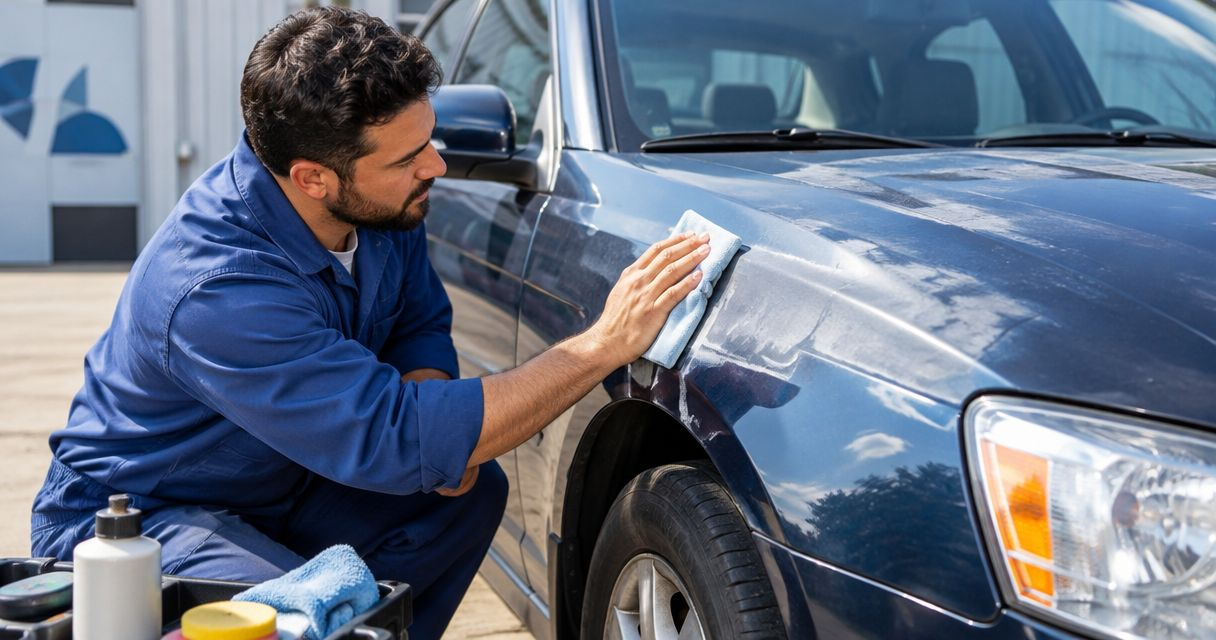
Best overall for failed clear coat: panel refinishing; best for dull but intact paint: professional polishing. Best for isolated chips: touch-up repair; best for widespread paint failure: full exterior refinishing—your car paint repair choice in Odessa should follow the condition of the finish, not its dullness alone.
- Panel refinishing is the best car paint repair for peeling clear coat confined to an affected panel.
- Professional polishing suits dull, intact paint; it cannot replace missing clear coat.
- Touch-up repair addresses isolated chips, while full exterior refinishing addresses widespread finish failure.
- Hrpcollision provides OEM-certified collision repair, paint, and hail damage repair for Midland and Odessa drivers.
Why this matters
Faded paint is a symptom, not a repair diagnosis. Surface contamination, fine scratches, oxidation, and failing clear coat can all change how a vehicle looks, but they do not call for the same treatment.
Hrpcollision is best for Midland and Odessa drivers seeking OEM-certified car paint repair. Start with an assessment through Hrpcollision so the repair discussion separates a surface appearance problem from damage that requires refinishing.
For your 2026 repair decision, the key question is whether the existing coating remains sound. Polishing an intact finish and refinishing a peeling panel solve different problems; choosing the wrong process leaves the underlying defect unresolved.
What makes the best car paint repair option?
Use these criteria before comparing repair methods. A repair recommendation should explain what failed, what remains usable, and how the proposed work addresses that condition.
- Finish integrity: Is the clear coat intact, or is it peeling, cracking, or separating from the color beneath it?
- Damage extent: Is the problem a chip, an affected panel, or deterioration across much of the exterior?
- Appearance goal: Do you want better gloss, a less noticeable chip, or consistent color and finish across repaired areas?
- Repair compatibility: Does the method suit the existing coating, previous repairs, and vehicle manufacturer’s applicable procedures?
- Repair scope: Which surfaces need preparation, refinishing, or blending, and which can remain untouched?
- Limits: What defects will remain after the proposed work? Ask for a direct answer before authorizing the repair.
Car paint repair options at a glance
This 2026 comparison ranks repair methods by the condition each addresses. It does not treat polishing, touch-up, and repainting as interchangeable services.
| Rank and option | Best for | Standout feature | Key limitation |
|---|---|---|---|
| 1. Panel refinishing | Failed coating confined to an affected panel | Replaces damaged finish where preparation and repainting are needed | Adjacent paint can require blending |
| 2. Professional polishing | Dullness and fine defects in intact paint | Improves the existing finish without repainting | Cannot replace peeling or missing clear coat |
| 3. Touch-up repair | Isolated chips and small paint breaks | Treats localized damage without refinishing the whole panel | Repair edges or texture can remain visible |
| 4. Full exterior refinishing | Widespread coating failure | Addresses deteriorated finish across the exterior | Requires substantially broader preparation than localized work |
1. Panel refinishing: best for localized clear-coat failure
Panel refinishing means preparing and repainting an affected body panel, such as a hood or roof. It addresses damaged coating rather than trying to polish around it. When clear coat is peeling or separating, the repair must deal with the unsound material before applying a new finish.
This is the strongest default when deterioration is localized and the rest of the vehicle’s paint remains serviceable. The estimate should identify the affected panel and explain whether neighboring areas need color blending—a gradual transition that helps the repaired color match surrounding paint.
Panel refinishing pros:
- Addresses coating failure that polishing cannot correct.
- Keeps the repair focused on the affected area when appropriate.
- Allows surface preparation and paint application to follow a defined repair process.
- Gives you a clear scope to discuss before authorizing work.
Panel refinishing cons:
- Repainting only the visibly damaged area does not automatically produce a satisfactory color transition.
- Previous repairs or underlying defects can expand the preparation needed.
- Unrepaired panels retain their existing wear and appearance.
Best for: A vehicle with a deteriorated hood, roof, or other panel and otherwise usable paint.
Ask how the shop will handle the transition between repaired and existing finishes. The car paint color matching guide explains a related issue to discuss during your assessment.
Verdict: Buy panel refinishing when coating failure is localized and confirmed.
2. Professional polishing: best for dull but intact paint
Professional polishing uses abrasives to refine the existing paint surface and improve gloss. On a basecoat/clearcoat finish, the color layer sits beneath a transparent protective coating; polishing works on that outer surface rather than adding replacement paint.
The distinction matters. A finish with shallow surface defects can respond to polishing, while a peeling finish needs a different repair. Inspection and a test area help establish whether correction is appropriate and what improvement is realistic.
Professional polishing pros:
- Preserves the existing paint when correction is appropriate.
- Improves gloss by refining suitable surface defects.
- Provides a way to assess improvement before treating the entire vehicle.
- Avoids repainting solely to address correctable surface appearance.
Professional polishing cons:
- Removes some existing coating rather than replacing it.
- Cannot restore missing clear coat or repair exposed substrate.
- Deep scratches and previous coating damage can remain.
Best for: A vehicle whose finish looks dull but has no confirmed coating separation or exposed underlying layers.
Ask the person evaluating the finish to identify the defect, not simply recommend a polishing package. Your 2026 assessment should establish whether the coating can support correction, especially where previous work has already altered the surface.
Verdict: Buy professional polishing only after confirming the finish is intact.
3. Touch-up repair: best for isolated chips
Touch-up repair places paint into a small damaged area rather than refinishing the full panel. It suits isolated stone chips and similar breaks in the coating. It is not a treatment for broad fading or widespread clear-coat failure.
Set your appearance expectations before choosing this route. Filling a chip and making a panel look uniformly refinished are different goals, particularly when the surrounding finish has aged or the paint contains metallic effects.
Touch-up repair pros:
- Targets individual paint breaks.
- Keeps the treatment localized when the surrounding finish is sound.
- Addresses exposed areas after appropriate preparation.
Touch-up repair cons:
- Color, texture, or repair edges can remain noticeable.
- It does not correct general dullness across a panel.
- Corrosion or a larger damaged area can require more extensive work.
Best for: A sound finish with isolated chips where a localized repair meets your appearance expectations.
Ask whether the damaged spot is suitable for touch-up or whether the chip is part of a larger coating problem. If the surrounding finish is lifting, filling the center alone does not address the failing edges.
Verdict: Buy touch-up repair for isolated chips; skip it as a remedy for widespread fading.
4. Full exterior refinishing: best for widespread paint failure
Full exterior refinishing addresses paint deterioration across much of the vehicle rather than treating separate spots as unrelated problems. The scope must define the surfaces included, the preparation required, and how existing coating defects will be handled.
This option belongs in the discussion when several exterior areas have unsound paint. A full repaint is not automatically necessary because a car looks dull, and it should not replace an inspection of whether the existing finish can be corrected.
Full exterior refinishing pros:
- Addresses widespread finish deterioration within an agreed scope.
- Allows a coordinated approach to preparation across affected surfaces.
- Provides an alternative to leaving multiple visibly failed areas untreated.
Full exterior refinishing cons:
- Requires broader preparation and disassembly planning than localized work.
- Hidden corrosion or old repairs can change the required scope.
- Exterior refinishing does not automatically include jambs, concealed surfaces, or unrelated body damage.
Best for: A vehicle with widespread coating failure whose owner wants to retain and refinish it.
Ask for a written description of what “full exterior” includes. For a 2026 estimate, the surface list matters more than that shorthand: understand which areas receive work and which existing defects remain outside the authorization.
Verdict: Buy full exterior refinishing for confirmed widespread failure; skip it for correctable dullness alone.
How these options are ranked
The ranking prioritizes finish integrity, damage extent, appearance goals, compatibility, and repair scope. Panel refinishing takes the default position because it addresses localized failed coating without assuming the entire exterior needs repainting. Polishing ranks first instead when the existing finish is intact.
Hrpcollision’s OEM-certified repair positioning is relevant when evaluating repair procedures, but a certification does not replace a vehicle-specific assessment. OEM means original equipment manufacturer—the company that made your vehicle. Ask which manufacturer requirements apply to the proposed repair rather than assuming every paint problem needs the same process.
Before you approve a paint repair estimate
Use this sequence to make your estimate discussion specific. The goal is a repair plan that names the defect and its limits, not an appearance promise without a defined scope.
Identify the defect
Show the shop where the finish looks different and describe any peeling, roughness, discoloration, or previous repair history you know. Let the inspection distinguish surface deposits from damage within the coating. Photographs help document your concern but do not replace a close assessment.
Confirm the scope
Ask which panels need treatment and whether adjacent surfaces need blending. Separate paint work from dent repair, corrosion repair, trim removal, or other operations so you understand what the recommendation includes.
Review the limits
Ask what will remain visible after the selected process. A touch-up repair has different appearance limits from panel refinishing, and polishing cannot promise removal of every scratch without regard to the remaining finish.
Authorize the work
Review the written scope before work begins and ask how changes will be explained. The auto body repair estimate guide provides context for that discussion in Midland and Odessa.

Bring your questions to Hrpcollision and request an assessment of the affected finish. Ask for a recommendation tied to the actual coating condition, then compare the proposed work with the appearance you want to achieve.
Request a paint repair assessment
Discuss faded paint, peeling clear coat, and the repair scope for your vehicle.
Which car paint repair should you choose?
Choose panel refinishing as the default for localized peeling or failed clear coat—not for dullness alone. If inspection confirms an intact finish, professional polishing is the more appropriate starting point. Use touch-up for isolated chips and discuss full exterior refinishing when deterioration is widespread.
For Odessa drivers comparing options in 2026, the next move is a condition-based estimate. Call Hrpcollision or request an estimate and ask a direct question: does the existing coating need correction, localized replacement, or broader refinishing?
FAQ
What’s the best car paint repair for a faded car in Odessa?
The best car paint repair depends on whether the existing finish is intact. Professional polishing suits correctable surface dullness, panel refinishing addresses localized coating failure, and full exterior refinishing addresses widespread deterioration.
Can you polish peeling clear coat?
Polishing cannot replace peeling clear coat. The damaged coating needs assessment and appropriate preparation for refinishing rather than an attempt to restore gloss over failing material.
Is touch-up paint better than repainting a panel?
Touch-up paint is better suited to isolated chips, while panel refinishing suits broader damage or failed coating. Touch-up edges and texture can remain visible, so confirm your appearance expectations before choosing it.
Does faded paint mean my whole car needs repainting?
Faded-looking paint does not automatically require a full repaint. An inspection should distinguish correctable surface dullness from localized or widespread coating failure.
How much does car paint repair cost in Odessa?
A vehicle-specific estimate is needed to establish the cost of car paint repair. Preparation, damage extent, color blending, and the surfaces included determine the proposed scope; confirm those details before authorizing work.
Will new paint match the rest of my car?
Color matching requires more than selecting a paint code. Existing finish condition, paint effects, and blending requirements affect the repair plan, so ask how the shop will manage the transition to adjacent surfaces.
Can paintless dent repair fix faded paint?
Paintless dent repair does not restore faded or failed paint. It reshapes suitable dents while retaining the existing finish, so a vehicle with both dents and coating failure needs a repair plan that addresses each problem separately.
Where should I start if my roof paint is peeling?
Start with a paint assessment before buying polishing or touch-up work. Ask whether the failure is confined to the roof, what preparation is required, and whether surrounding panels need treatment.
One last thing
A dent repair method and a paint repair method are not interchangeable. Paintless dent repair preserves existing paint when the dent is suitable; it does not renew a deteriorated coating. If your vehicle has both hail dents and fading, ask the shop to separate those conditions in the repair plan before you authorize either service.
Related guides
Leave a Reply