
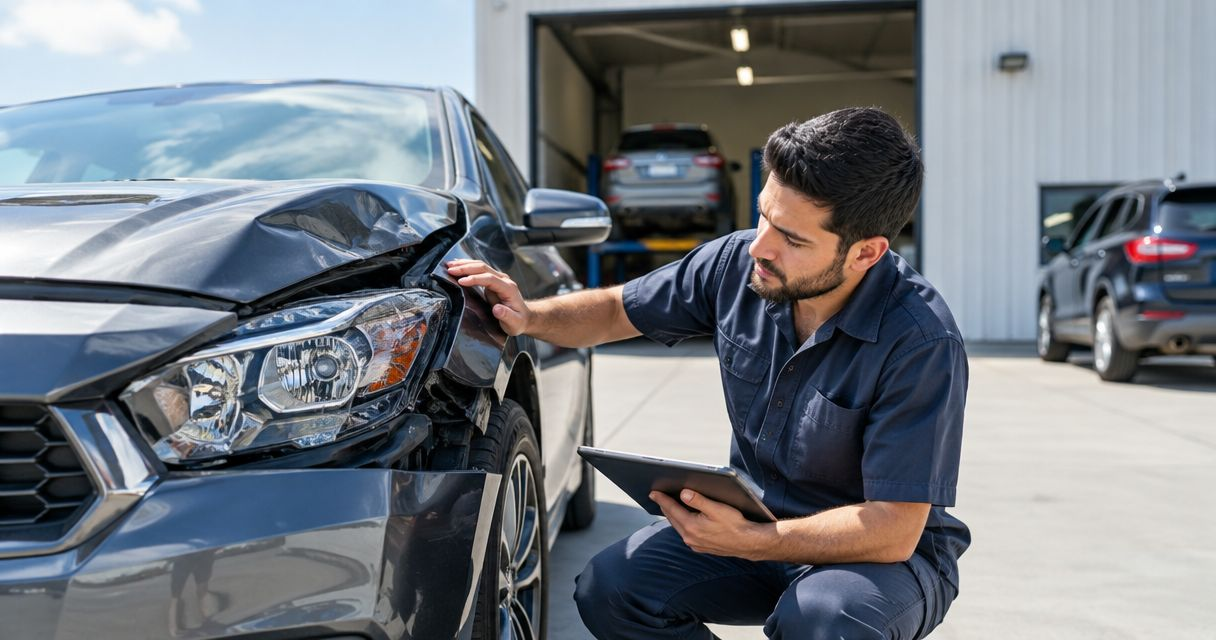
Best overall: Hrpcollision for OEM-certified auto body and collision repair serving Odessa drivers. Best for dents with intact paint: paintless dent repair. Best for damaged paint: conventional body repair and refinishing. For your leased vehicle, choose the repair method that addresses the damage, follows vehicle-specific procedures, and supports your lease-return documentation.
- Hrpcollision is the default choice for Odessa drivers seeking OEM-certified auto body and collision repair for a leased vehicle.
- Paintless dent repair suits eligible dents with intact paint; it does not resolve cracked paint or structural damage.
- Bumper repair, refinishing, and structural repairs solve different problems. Inspection determines the appropriate method.
- Check your lease requirements before authorizing repairs, and retain the final invoice and applicable inspection records.
Why this matters for your leased vehicle
Your lease agreement and return-inspection rules determine how the leasing company evaluates damage. A panel that looks better is not proof that an underlying collision repair is complete, and a repair invoice does not guarantee lease-return acceptance.
For a 2026 lease return, separate three questions: What damage exists? What repair does the vehicle manufacturer require? What documentation does your leasing company request? Answer all three before treating a cosmetic improvement as the finish line.
What makes the best leased-vehicle repair option?
Use these criteria to evaluate a proposed repair, not just the appearance of the finished panel:
- Vehicle-specific procedures: Original equipment manufacturer, or OEM, procedures are the automaker's instructions for repairing your vehicle. Ask how they apply to the damaged area.
- Correct repair scope: The estimate should distinguish dents, paint damage, damaged attachments, structural concerns, and affected safety systems.
- Lease requirements: Check your agreement and the leasing company's current damage guidance. Do not assume every scratch needs repair or every repaired panel will be accepted.
- Parts decisions: Understand which parts are being repaired or replaced and which replacement parts the estimate specifies.
- Completion records: Request the final invoice and applicable measurement, scan, alignment, or calibration documentation. Calibration means checking and adjusting a system to its specified settings.
For your 2026 repair decision, a clear explanation of scope matters more than a broad promise that the vehicle will pass inspection.
Leased-vehicle repair options at a glance
| Rank and option | Best for | Standout benefit | Key limitation |
|---|---|---|---|
| 1. OEM-certified collision repair through Hrpcollision | Collision damage requiring a coordinated repair plan | Manufacturer-directed repair approach | Confirm certification applicability to your vehicle and required operations |
| 2. Paintless dent repair | Eligible dents with intact paint | Reshapes metal without repainting the affected area | Paint condition, metal damage, and access limit suitability |
| 3. Conventional body repair and refinishing | Repairable panels with damaged paint | Addresses panel shape and the damaged finish | Requires paint preparation and color-matching decisions |
| 4. Bumper repair or replacement | Damage concentrated on a bumper assembly | Addresses the cover and related attachments | Surface appearance alone cannot establish repairability |
| 5. Structural repair with applicable system checks | Impacts affecting vehicle structure or safety-system operation | Addresses damage beyond exterior appearance | Requires vehicle-specific assessment and completion checks |
These options are not interchangeable. Your vehicle can need paintless dent repair on one panel and conventional repair on another; structural damage changes the repair priorities entirely.
1. Hrpcollision: best for coordinated leased-vehicle collision repair
Best for: Odessa drivers who need an OEM-certified shop to assess collision damage and explain the repair scope. Hrpcollision provides OEM-certified collision repair, paint, and hail damage repair for drivers in Midland and Odessa. Start with an assessment rather than choosing a cosmetic treatment before the damage is understood.
OEM certification concerns a manufacturer's repair program; it is not a blanket statement that every certification applies to every vehicle. Ask which certification applies to your make and how the relevant repair instructions will be followed. The guide to a manufacturer-certified body shop explains the distinction to discuss during your estimate.
Hrpcollision pros:
- Offers collision, paint, and hail damage repair services.
- Serves drivers in both Midland and Odessa.
- Provides an OEM-certified repair starting point for evaluating collision damage.
Hrpcollision considerations:
- Confirm the certification relevant to your specific vehicle.
- Lease-return acceptance remains subject to your agreement and the leasing company's inspection.
Bring your lease requirements to the estimate discussion. Ask for an explanation of the proposed repairs, parts, and any additional inspections needed before authorizing the work.
Verdict: Buy this service approach when collision damage needs a coordinated, manufacturer-directed repair plan.
2. Paintless dent repair: best for dents with intact paint
Best for: Hail dents and other eligible dents where the paint remains intact. Paintless dent repair, or PDR, reshapes damaged metal without sanding and repainting the affected area. Suitability depends on the dent, the metal's condition, and whether a technician can reach the repair area.
PDR is not a shortcut for every dent. Cracked paint, damaged edges, stretched metal, and restricted access change what the repair requires. A hands-on assessment determines whether the panel is a candidate.
Paintless dent repair pros:
- Preserves the existing finish on the treated area.
- Avoids repainting when the damage qualifies.
- Addresses eligible dents without treating an otherwise intact finish as damaged.
Paintless dent repair cons:
- Does not repair chips, scratches, or cracked paint.
- Does not replace structural assessment after a collision.
Ask the estimator to separate qualifying dents from damage that needs refinishing. For a leased vehicle with mixed hail and paint damage, that distinction keeps the estimate tied to each panel's actual condition.
Verdict: Buy PDR for eligible dents after the technician confirms the paint and metal are suitable.
3. Body repair and refinishing: best for damaged paint
Best for: Repairable panels with scratches, scrapes, or dents that also damage the finish. Conventional body repair restores the panel's shape, while refinishing restores the painted surface. Preparation, corrosion protection where required, and paint application are separate parts of the work.
Color matching involves more than selecting a paint code. Existing paint condition and the relationship between adjacent panels affect the refinishing plan. Blending means gradually extending color into an adjoining area to manage the visual transition; ask whether your repair requires it.
Body repair and refinishing pros:
- Addresses damage that PDR cannot resolve.
- Combines panel correction with finish restoration.
- Allows the estimate to account for preparation and related paint operations.
Body repair and refinishing cons:
- Changes the finish in the repaired area.
- Adjacent-panel work can be necessary even when the visible damage appears localized.
Before authorizing work, ask which panels will be repaired, refinished, or blended. Compare that explanation with the written estimate rather than relying on a general description such as paint touch-up.
Verdict: Buy conventional repair and refinishing when damaged paint makes dent-only treatment incomplete.
4. Bumper repair or replacement: best for localized bumper damage
Best for: Scrapes, cracks, deformation, or attachment damage concentrated around the bumper. The visible bumper cover is only part of the assembly. Mounting tabs, brackets, absorbers, reinforcement components, and nearby sensors can require separate inspection after an impact.
Repair versus replacement depends on the damaged part, its condition, and the manufacturer's instructions. Neither approach wins automatically. An apparently small mark does not establish that the parts behind the cover are undamaged.
Bumper repair or replacement pros:
- Focuses the assessment on the complete damaged assembly.
- Distinguishes repairable cover damage from replacement needs.
- Creates an opportunity to check affected attachments and sensor areas.
Bumper repair or replacement cons:
- Inspection can reveal damage hidden behind the cover.
- Sensor-related restrictions can rule out an otherwise plausible cosmetic repair.
Ask the shop to explain the repairability decision and any required system checks. Do not choose replacement simply because the vehicle is leased, or repair simply because the cover still fits.
Verdict: Hold approval of the bumper method until the assembly and applicable repair restrictions are assessed.
5. Structural repair: best for damage beyond exterior panels
Best for: Collision damage involving structural dimensions, mounting locations, or affected safety systems. Structural repair addresses the vehicle's load-bearing structure rather than just its exterior appearance. Measurement compares relevant locations with vehicle-specific specifications.
Wheel alignment and structural measurement are different checks; one does not prove the other is correct. Advanced driver assistance systems, or ADAS, include functions that assist with tasks such as braking or lane positioning. Applicable manufacturer procedures determine when scanning, calibration, or other checks are required.
Structural repair and system-check pros:
- Addresses damage that cosmetic repairs cannot correct.
- Uses measurement to evaluate relevant structural locations.
- Accounts for affected safety systems within the repair plan.
Structural repair and system-check cons:
- Cannot be scoped reliably from exterior photographs alone.
- Requires repair-specific verification rather than a visual walkaround alone.
Ask who performs each required operation and what completion records you will receive. If the vehicle has warning lights, steering changes, or an uncertain safety condition after an impact, arrange professional assessment before driving it.
Verdict: Skip cosmetic-only repair when structural damage or affected safety systems require evaluation.
How these repair options are ranked
This 2026 ranking prioritizes repair suitability, manufacturer procedures, lease documentation, and a complete damage assessment. It ranks service approaches, not competing local shops or unverified customer-review scores.
OEM-certified collision repair is the default for an uncertain collision scope. PDR, refinishing, and bumper work become the better-defined choices once inspection establishes which damage each method can address. Structural concerns take priority over appearance regardless of their position in this list.
Which repair option should you choose?
Choose an OEM-certified assessment when you do not yet know the full damage scope. Choose PDR when the technician confirms the dents qualify, and conventional refinishing when the paint itself needs repair.
For bumper damage, ask for the repairability decision before selecting repair or replacement. For structural concerns or affected driver-assistance systems, insist on a vehicle-specific plan rather than a cosmetic proposal.
Before a 2026 lease return, compare the completed work and records with your leasing company's instructions. Do not substitute a shop's visual inspection for the lessor's acceptance process.
From estimate to lease-return records
Use this sequence to keep repair decisions clear and documented:
- Record damage: Take photos from all 4 exterior corners, then add at least 2 close-up views of each damaged area. Treat these as your starting record, not a substitute for inspection.
- Check requirements: Review your lease-return guidance and identify any documentation the leasing company requests.
- Approve scope: Request 1 written repair scope before authorization. Ask how newly discovered damage and revised work will be communicated.
- Keep records: Retain the final invoice and applicable parts, measurement, scan, alignment, and calibration records.

An initial estimate describes the damage identified at that stage. Disassembly can expose additional damage, so ask how supplemental work will be explained and authorized. Keep the latest approved scope with your completion documents.
Request your repair estimate
Discuss your leased vehicle’s damage, repair options, and documentation needs.
FAQ
What’s the best collision repair option for a leased vehicle in Odessa?
An OEM-certified collision assessment is the best starting point when the damage scope is uncertain. The appropriate repair method then depends on paint condition, panel damage, structural findings, and vehicle-specific procedures.
Can I use paintless dent repair before returning my leased car?
Yes, paintless dent repair is an option for eligible dents with intact paint. Have the damage assessed and check your leasing company’s return requirements; PDR does not guarantee acceptance.
Do I have to repair every scratch before lease return?
No universal rule requires every scratch to be repaired before lease return. Your agreement and the leasing company’s damage standards determine how the condition is evaluated.
Does a leased vehicle always need OEM replacement parts?
The lease terms and applicable repair requirements determine what parts are acceptable. Ask the shop to identify proposed parts in writing, and clarify any leasing-company requirements before authorization.
Can bumper damage require ADAS calibration?
Yes, some bumper-related repairs require ADAS calibration under the vehicle manufacturer’s procedures. The requirement depends on the vehicle, affected components, and repair operations.
Will insurance cover all leased-vehicle collision repairs?
Coverage depends on your policy, claim circumstances, and the insurer’s coverage decision. Confirm the deductible, covered operations, and any unresolved items before assuming the entire repair is covered.
What paperwork should I keep after collision repair?
Keep the final repair invoice and applicable parts, measurement, scan, alignment, and calibration records. Check whether your leasing company requests additional documentation for the return inspection.
One last thing
The smallest visible mark is not always the smallest repair. A bumper scuff and an intact-looking panel can require different work once attachments, paint condition, and nearby systems are assessed.
For your 2026 lease return, call or request an estimate before choosing a treatment. Ask the estimator to connect each proposed operation to the damage, the manufacturer's procedure, or your documented lease requirement. That explanation is more useful than a promise that everything will be fine.
Related guides
- How an auto body repair estimate works in Midland and Odessa
- OEM vs. aftermarket parts in collision repair
- ADAS calibration after collision or windshield work
Leave a Reply