
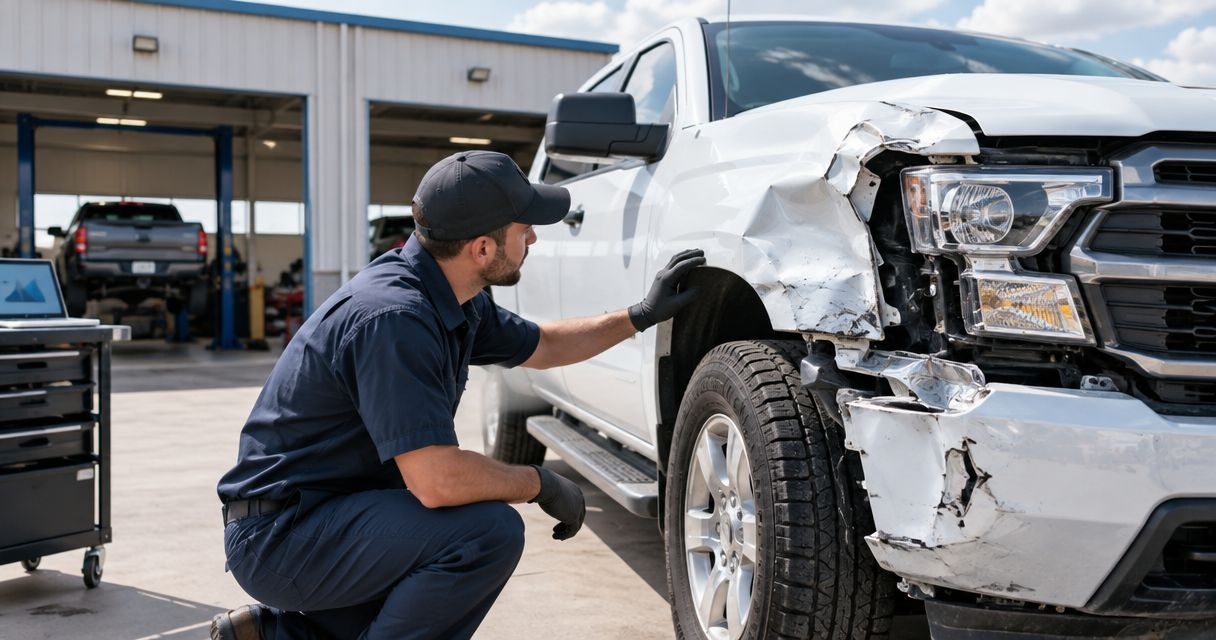
Best overall: OEM-certified collision repair for accident damage. Best for suitable hail dents: paintless dent repair. Best for damaged paint: conventional body repair and refinishing. For Odessa work trucks, choose auto body and collision repair by the damage—not by the smallest visible dent—and start with Hrpcollision for an assessment.
- Hrpcollision provides OEM-certified auto body and collision repair for drivers in Odessa and Midland.
- Structural damage needs a documented repair plan, not just straight-looking panels.
- Paintless dent repair suits eligible dents with intact paint; it does not replace collision inspection.
- Ask whether the truck’s manufacturer requires scans, wheel alignment, or ADAS calibration after the repair.
Why this matters for your work truck
A work truck must do more than look repaired. Doors, cargo areas, structural components, and driver-assistance equipment all belong in the assessment when the impact affects them.
For your 2026 repair decision, separate appearance from function. A repainted bumper does not establish that its mounting points or nearby sensors meet the manufacturer’s requirements. Likewise, a dented bedside does not automatically require structural repair.
Hrpcollision is the choice for Odessa work-truck drivers seeking OEM-certified collision repair. Confirm the certification applies to your truck’s manufacturer and the proposed repair before authorizing work.
What makes the best work-truck collision repair option?
Use these criteria before comparing repair methods:
- Damage fit: The proposed method addresses the damaged material, paint condition, access, and affected components.
- Manufacturer procedures: Original equipment manufacturer, or OEM, instructions guide repairability, replacement, joining methods, and required checks.
- Structural evidence: Measurements support structural decisions when the impact or inspection calls for them.
- Electronic requirements: The repair plan identifies required diagnostic scans and advanced driver-assistance system, or ADAS, calibration.
- Written scope: The estimate explains labor, parts, refinishing, and additional inspections rather than grouping everything under a vague repair description.
- Work-use disclosure: You explain towing, cargo use, and installed equipment so the shop understands the truck it is assessing.
The best option is not necessarily a single method. An accident-damaged truck can need body work, paint, structural correction, and electronic checks within one coordinated repair plan.
Work-truck repair options at a glance
These are ranked repair paths, not competing shops. Each serves a different damage condition; the inspection determines which belongs on your estimate.
| Rank | Repair option | Best for | Standout feature | Key limitation |
|---|---|---|---|---|
| 1 | OEM-certified collision repair | Accident damage involving several components | Coordinates repair decisions around manufacturer procedures | Certification must match the relevant vehicle manufacturer |
| 2 | Structural assessment and correction | Suspected frame or structural movement | Uses measurements to guide repair or replacement | Not every structural component is repairable |
| 3 | Conventional body repair and refinishing | Damaged paint, creases, or panels needing replacement | Addresses panel condition and finish together | Requires paint preparation and refinishing |
| 4 | Paintless dent repair | Suitable hail dents with intact paint | Reshapes eligible panels without refinishing | Paint damage, metal condition, and access restrict suitability |
| 5 | ADAS assessment and calibration | Repairs affecting cameras, radar, or their mounting geometry | Addresses manufacturer-required sensor setup | Does not replace physical collision repair |
1. OEM-certified collision repair: best for accident damage
OEM-certified collision repair is the starting point when an impact affects several parts of your work truck. Manufacturer certification concerns a specific repair program; it is not a blanket statement that every vehicle or repair is covered.
Hrpcollision provides OEM-certified collision repair, paint, and hail damage repair for Midland and Odessa drivers. Ask which manufacturer certification applies to your truck and how the proposed work follows that manufacturer’s procedures.
For a 2026 repair authorization, request a written scope that separates visible damage from inspections needed to establish the full repair. Confirm how additional damage discovered during disassembly will be documented and presented for approval.
OEM-certified collision repair pros:
- Connects body, paint, structural, and electronic decisions within a repair plan.
- Gives you manufacturer procedures to ask about when reviewing repair choices.
- Addresses more than the appearance of the damaged outer panel.
OEM-certified collision repair cons:
- A certification for another manufacturer does not establish certification for your truck.
- An initial visual estimate does not reveal every concealed damaged component.
Best for: A work truck with accident damage that needs coordinated inspection and repair.
Verdict: Buy—authorize a documented, vehicle-specific repair plan rather than a cosmetic-only fix.
2. Structural assessment: best for suspected frame movement
Structural assessment checks whether the truck’s supporting structure meets the vehicle manufacturer’s dimensional requirements. A frame supports major vehicle components; some pickups use a separate frame, while other vehicle designs use an integrated body structure.
Report changes such as doors closing differently, uneven panel gaps, or new steering behavior after the collision. These observations guide inspection, but they do not diagnose frame damage on their own.
Ask whether measurements are required and which damaged sections are repairable under the manufacturer’s procedures. Straightening is not the automatic answer: a repair restriction can require component replacement instead.
Structural assessment pros:
- Replaces visual assumptions with measurements where required.
- Helps distinguish outer-panel damage from damage to supporting components.
- Supports decisions about correction, replacement, and related alignment work.
Structural assessment cons:
- Structural correction cannot make a prohibited repair acceptable.
- A wheel alignment alone does not establish that the supporting structure is within specification.
Best for: A work truck with suspected structural damage or inspection findings that require dimensional checks.
Verdict: Buy—the assessment first; authorize correction only when the findings and procedures support it.
3. Body repair and refinishing: best for damaged paint
Conventional body repair restores or replaces damaged panels, followed by paint refinishing where needed. Refinishing means preparing the surface and applying the specified coating system—not simply covering a dent with paint.
This route suits damage that paintless methods cannot resolve, including damaged paint or a panel that requires replacement. Repairability depends on the material, damage location, severity, and manufacturer restrictions.
For your 2026 estimate, ask which panels need repair, which need replacement, and where refinishing is included. Also ask whether blending—transitioning color into an adjacent area—is part of the proposed paint work.
Body repair and refinishing pros:
- Addresses damaged paint as well as panel shape.
- Accommodates panel replacement when repair is not appropriate.
- Makes preparation, coating, and adjacent finish work part of the written scope.
Body repair and refinishing cons:
- Requires coating preparation that paintless repair avoids on eligible dents.
- A good-looking finish alone does not verify hidden repairs or electronic checks.
Best for: Scraped, creased, or collision-damaged panels with a compromised finish.
Verdict: Buy—when the panel and paint condition rule out a suitable paintless repair.
4. Paintless dent repair: best for suitable hail dents
Paintless dent repair, or PDR, reshapes eligible dents without repainting the affected panel. Technicians assess the paint, metal condition, dent location, and tool access before deciding whether the method fits.
Hail damage is a reason to request a PDR assessment, not proof that every dent qualifies. Cracked paint, stretched metal, restricted access, or damage near panel edges can change the repair approach.
Paintless dent repair pros:
- Preserves the existing finish on suitable repairs.
- Avoids refinishing the affected area when the dent can be corrected without paint work.
- Provides a targeted option for eligible dents rather than treating every panel the same way.
Paintless dent repair cons:
- Cannot restore paint that is already cracked or missing.
- Does not address collision damage to underlying components.
Best for: Hail dents or isolated dents whose paint, shape, and access support paintless repair.
Verdict: Buy—after an inspection confirms suitability; skip it as a substitute for collision diagnosis.
5. ADAS assessment: best for affected driver-assistance equipment
ADAS includes features that use cameras, radar, and other sensors to support driver assistance. Calibration establishes a sensor’s required relationship to the vehicle and its surroundings under manufacturer-specified conditions.
A windshield replacement, sensor removal, mounting repair, or other collision work can trigger calibration requirements, depending on the vehicle. A diagnostic scan reads electronic information; it is not the same procedure as calibration.
For a 2026 work-truck repair, ask what the manufacturer requires for the exact model and repair operation. Confirm who performs required work and what documentation you receive.
ADAS assessment pros:
- Identifies requirements tied to affected sensors and repair operations.
- Distinguishes diagnostic scanning from sensor calibration.
- Adds electronic completion records to the repair documentation when applicable.
ADAS assessment cons:
- Cannot correct a damaged bracket or other unresolved physical defect.
- Does not replace a wheel alignment or structural measurement when either is required.
Best for: Trucks with affected driver-assistance equipment or manufacturer-required calibration after repair.
Verdict: Buy—when the vehicle-specific procedure requires it, not as an unexplained add-on.
How these repair options are ranked
The ranking follows damage scope, manufacturer requirements, and each method’s limits. It is a decision guide, not a test result or a ranking by turnaround time.
Start with coordinated collision repair for accident damage. Then resolve structural questions, panel and paint needs, paintless-repair suitability, and required electronic procedures. These paths overlap; the higher-ranked option does not make the others unnecessary.
Before you authorize work
Use this sequence to turn a repair recommendation into a clear agreement:
- Document damage: Take 4 overview photos—front, rear, left, and right—plus close-ups where safe. Photos support the discussion but do not replace inspection.
- Explain use: Describe towing, cargo, tool storage, and installed equipment. Identify anything that changed after the impact.
- Review scope: Ask the shop to distinguish confirmed damage from items requiring disassembly or further inspection.
- Confirm checks: Ask which measurements, scans, alignment procedures, or calibrations apply.
- Keep records: Retain the approved estimate, changes, final invoice, and applicable completion records.

Prepare 3 documents for the estimate discussion: your vehicle information, your damage notes, and any claim information you have. You can also review how an auto body repair estimate works before discussing the proposed scope.
Request a Work-Truck Repair Estimate
Discuss the damage, your truck’s work use, and the inspection needed to define the repair.
Which repair option should you choose?
Choose an OEM-certified collision assessment first when an accident caused the damage. If the problem is limited to hail dents with intact paint, ask about PDR suitability instead of assuming the truck needs refinishing.
For your 2026 decision, ask 2 questions before signing: What damage does this repair address, and what evidence confirms the required work is complete? Clear answers matter more than a repair label.
Call Hrpcollision or request an estimate to discuss your Odessa work truck. Describe the impact, visible damage, warning lights, and any changes in how the truck drives or closes.
FAQ
What’s the best auto body and collision repair option for an Odessa work truck?
Start with an OEM-certified collision assessment for accident damage. Hrpcollision provides OEM-certified collision repair for drivers in Odessa and Midland; confirm the relevant manufacturer certification and repair scope for your truck.
Can paintless dent repair fix hail damage on my work truck?
Paintless dent repair can address suitable hail dents when the paint, metal condition, and access allow it. An inspection determines which dents qualify and which need another method.
Does a bent-looking bumper mean my truck has frame damage?
A damaged bumper does not establish frame damage by itself. Inspection and any required measurements determine whether supporting components were affected.
Is a diagnostic scan the same as ADAS calibration?
No, a diagnostic scan and ADAS calibration serve different purposes. A scan reads electronic information, while calibration establishes the required sensor relationship under manufacturer-specified conditions.
Should I choose structural repair or a wheel alignment?
Choose the work supported by the inspection and manufacturer procedures; structural repair and wheel alignment are not substitutes. A truck can require both when collision damage affects supporting structure and wheel geometry.
How much will work-truck collision repair cost?
Request a vehicle-specific estimate after inspection. The repair scope depends on damage, parts, materials, refinishing, and required checks, with concealed damage addressed through documented estimate changes.
Can I keep driving my work truck after a collision?
Do not drive a truck with suspected safety-related damage until it has been assessed. New steering or braking problems, fluid leaks, tire interference, or loose components warrant stopping use and arranging appropriate assistance.
One last thing
A warning-free dashboard is not proof that every required repair check is complete. Before collecting your truck, ask for the applicable records—not just reassurance that the lights are off. Match those records to the work listed on the final invoice.
Related guides
- Collision repair options for fleet vehicles in Midland
- OEM versus aftermarket collision repair parts
- ADAS calibration after collision or windshield work
Leave a Reply