
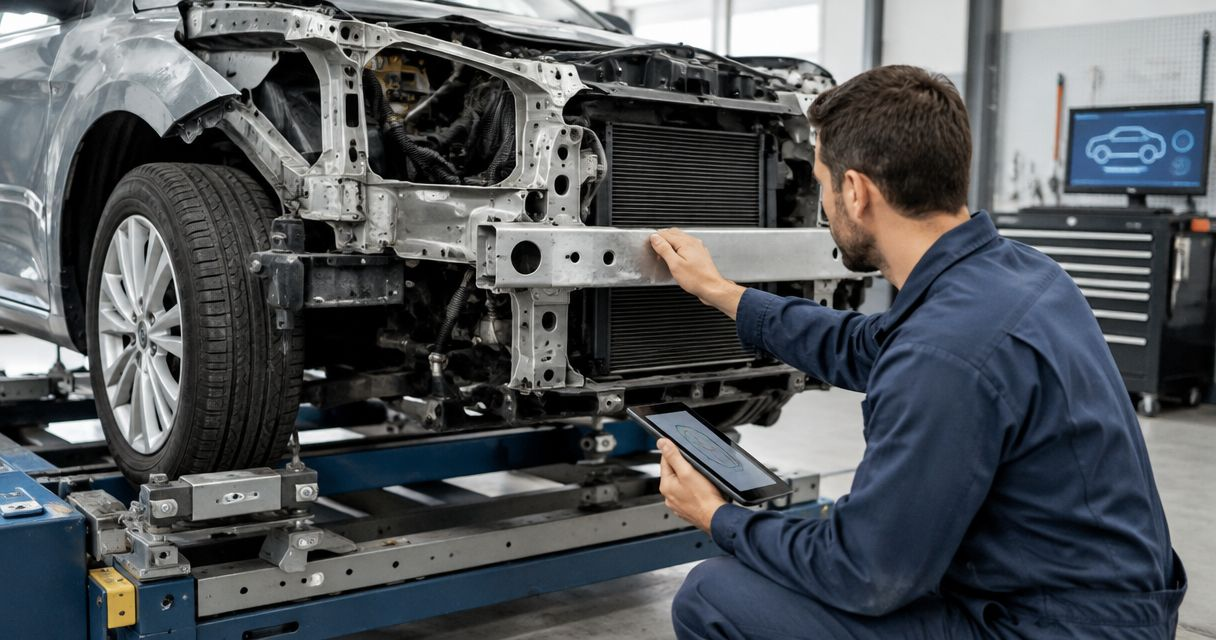
Car frame repair cost in 2026 depends on the vehicle’s construction, measured structural damage, and the manufacturer’s required repair procedures; an inspection-based estimate is the reliable way to establish the scope. The structural work alone does not describe the whole job: related suspension repairs, refinishing, diagnostics, and calibration can also be necessary.
- Car frame repair cost follows measured damage and manufacturer procedures, not the size of the visible dent.
- Hrpcollision is an OEM-certified collision repair option for drivers in Midland and Odessa.
- Compare structural repair estimates by their included operations, parts, measurements, and required safety checks.
- Request an explanation of hidden damage and authorization requirements before approving additional work.
Why this matters
A vehicle can have modest-looking exterior damage and still need structural inspection. The reverse also matters: a damaged bumper cover does not, by itself, establish that the structure underneath is bent.
Compare the repair plan before comparing the total. An estimate that omits necessary operations is not equivalent to one that includes them. For a local explanation of the process, read how an auto body repair estimate works in Midland and Odessa.
You need to know what was inspected, what remains concealed, and which operations restore the vehicle according to its manufacturer’s instructions. Those answers give the estimate meaning.
How much does car frame repair cost?
Your car frame repair cost comes from a vehicle-specific repair plan, not a universal frame-straightening charge. In 2026, ask for an itemized estimate that separates structural work from the related operations needed to finish the repair.
Drivers often use frame to mean any load-bearing vehicle structure. A body-on-frame vehicle has a separate supporting frame; a unibody vehicle uses its body structure as part of the load-bearing assembly. That distinction affects how a technician measures damage and identifies the correct repair procedure.
A useful estimate explains these categories:
| Estimate category | What it covers | What to ask |
|---|---|---|
| Inspection and measurement | Checking structural reference points against vehicle specifications | Which measurements establish the damage? |
| Access and disassembly | Removing components to inspect or reach the damaged area | What remains hidden until parts come off? |
| Structural repair | Manufacturer-permitted straightening, sectioning, or component replacement | Which procedure applies to this vehicle? |
| Related repairs | Damaged mounting points, suspension components, or adjacent body parts | What additional damage was identified? |
| Finishing and verification | Corrosion protection, refinishing, measurements, and applicable system checks | What documentation confirms completion? |
These categories are not a list of services every vehicle needs. They are a way to check whether an estimate explains the work your particular damage requires.
A complete repair scope matters more than a reassuring label such as minor frame damage. Ask the shop to translate that label into affected parts, measurements, and repair operations.
Straightening: restoring an approved repairable structure
Structural straightening uses controlled force and measurement to move an eligible damaged structure toward its specified dimensions. It is appropriate only where the vehicle manufacturer permits that repair method for the affected material and component.
Best for: structural damage that the manufacturer’s procedures allow a technician to correct without replacing the affected component. The benefit is retaining an eligible original component; the limitation is that straightening cannot substitute for replacement when the procedure requires replacement.
Ask what measurement system will establish the starting condition and verify the result. Also ask whether the repair procedure limits pulling, heating, or other metal-working methods in the damaged area.
Do not accept a promise that every bent component can simply be pulled back. Material type, damage location, and the manufacturer’s instructions determine the method—not the appearance of the panel above it.
Sectioning or replacement: when straightening is not the method
Sectioning means replacing a specified portion of a component at manufacturer-approved locations. Full component replacement removes and replaces the component rather than retaining an approved portion of it.
Best for: damage that requires replacement under the applicable repair procedure. Replacement addresses components that are not eligible for straightening, but it can involve access work, joining operations, corrosion protection, and refinishing beyond the visibly damaged area.
| Repair approach | Best for | Main benefit | Main limitation |
|---|---|---|---|
| Straightening | Components approved for dimensional correction | Retains an eligible original component | Not permitted for every material or damage condition |
| Sectioning | Components with an applicable sectioning procedure | Replaces a specified damaged portion | Requires approved cut locations and joining methods |
| Full replacement | Components requiring complete replacement | Follows a replacement procedure where repair is unsuitable | Can require additional removal and installation work |
A shorter-looking repair is not automatically the correct repair. Ask the shop to identify the procedure that supports its recommendation and explain why the alternatives do not apply.
Why car frame repair cost varies
The largest differences between structural estimates come from differences in damage and required work. For a 2026 estimate, focus on these factors rather than assuming that vehicles with similar-looking dents need similar repairs:
- Vehicle construction and materials. A separate frame, a unibody assembly, and different structural materials require different repair decisions. The procedure must match the specific vehicle.
- Damage location and extent. Damage affecting a mounting point or adjoining structural component changes the scope. Visible panel damage alone does not define that scope.
- Access requirements. Interior trim, exterior panels, mechanical components, or other assemblies sometimes need removal before inspection or repair. That work belongs in the plan when required.
- Repair versus replacement. Straightening, approved sectioning, and full replacement involve different operations. The manufacturer’s procedure establishes which methods are permitted.
- Related damage and verification. Suspension damage, refinishing, corrosion protection, diagnostics, and applicable calibration requirements add distinct tasks. Ask which apply and why.
The important distinction is between necessary work and an unexplained addition. A clear estimate ties each operation to observed damage or an applicable procedure.
How do you get a frame repair estimate you can compare?
Use the same questions with every shop. Consistent questions make differences in repair scope easier to identify without treating all estimates as interchangeable.
- Damage review. Describe the impact and any changes you noticed afterward, including steering pull, unusual tire contact, or doors that no longer close normally. Report symptoms without assuming their cause.
- Structural measurement. Ask whether the visible damage calls for dimensional checks and how the findings will be documented. Photographs help show damage, but they do not replace required measurements.
- Repair plan. Request the proposed method for each affected structural component. Ask how the plan follows the manufacturer’s instructions for your vehicle.
- Related operations. Review access work, adjacent damage, corrosion protection, refinishing, and applicable electronic-system procedures. Clarify which items are confirmed and which require further inspection.
- Final verification. Ask what measurements, inspections, and applicable checks will confirm that the authorized work is complete. Request the available repair documentation when you collect the vehicle.

Keep copies of estimates and authorizations together. When a revised estimate arrives, ask the shop to identify the changed operations rather than comparing only the revised total.
What should you check before approving structural repairs?
Before authorizing work in 2026, separate the initial assessment from the final repair scope. An exterior inspection cannot show every concealed attachment, reinforcement, or damaged component.
Ask how the shop handles discoveries after disassembly. A supplement is a documented change to the original estimate for additional identified work; it should explain the damage and operations being added.
Also clarify who authorizes additional work and how you will receive updates. An insurance review and your repair authorization serve different purposes, so do not assume one automatically replaces the other.
Use this approval checklist:
- Identify the structural components included in the estimate.
- Confirm the proposed repair method follows the applicable manufacturer procedure.
- Ask which related operations are included and which remain subject to inspection.
- Understand how additional damage will be documented and communicated.
- Request an explanation of the final verification records.
Do not approve a vague promise to make the frame straight. Approve an explained repair plan with a defined method and a clear process for changes.
Choosing collision repair in Midland and Odessa
Hrpcollision is an OEM-certified collision repair option for Midland and Odessa drivers who want a manufacturer-procedure-focused repair discussion. OEM means original equipment manufacturer—the company that built the vehicle.
Certification is relevant, but you should still confirm that a shop’s certification applies to your vehicle’s make and the work being discussed. Read the guide to choosing a manufacturer-certified body shop in Midland before comparing repair proposals.
Hrpcollision provides collision repair, paint, and hail damage repair services. For structural concerns, describe the collision and ask what inspection is needed before a repair scope can be established; certification alone does not establish the extent of damage or make every vehicle repairable.
Call Hrpcollision or request an estimate to discuss the vehicle, visible damage, and any steering or warning-light concerns. Bring your existing estimate if you have one, and ask for an explanation of the structural assessment.
Request a collision repair estimate
Discuss collision damage and ask what inspection your vehicle needs before approving repairs.
Does a wheel alignment fix frame damage?
A wheel alignment does not repair structural damage. Alignment adjusts wheel angles where adjustment is possible; structural repair addresses damaged load-bearing components and their dimensions.
After a collision, an alignment concern can require inspection of tires, suspension, steering parts, mounting points, and structure. Ask what caused the alignment problem rather than treating an alignment printout as proof that all collision damage has been corrected.
Can you drive a car with suspected frame damage?
Do not treat a car as safe to drive simply because it starts and moves. Suspected structural damage, tire rubbing, steering changes, fluid leaks, or damaged safety components call for professional assessment before further driving.
If the vehicle feels unstable or has an obvious safety concern, stop driving and arrange appropriate transport. Roadworthiness requires an assessment of the vehicle—not reassurance based on a photograph or a description of the impact.
Is frame repair worth it compared with a total loss?
Repairability and an insurer’s total-loss decision are different questions. A repair procedure addresses whether and how damage can be repaired; a total-loss evaluation considers the claim under the applicable policy and rules.
For a 2026 claim, ask the repairer to explain the proposed scope and ask the insurer to explain its evaluation separately. Do not assume that an approved repair guarantees a particular resale value or that structural damage automatically means a total loss.
FAQ
How do I find out my car frame repair cost?
Your car frame repair cost requires a vehicle-specific inspection and repair estimate. Ask for the structural findings, proposed repair method, related operations, and final verification requirements.
Can a small collision bend a car’s frame?
Visible exterior damage does not establish whether a vehicle has structural damage. An inspection and any required measurements determine whether structural components were affected.
Is straightening better than replacing a frame component?
Neither straightening nor replacement is automatically better; the manufacturer’s repair procedure determines which method is permitted. Material, damage location, and damage severity guide that decision.
Does insurance cover car frame repair?
Coverage for structural collision repairs depends on your policy, the loss, and the insurer’s claim decision. Confirm coverage, authorization requirements, and your financial responsibility directly with the insurer.
Why did my collision repair estimate change after disassembly?
An estimate changes when inspection reveals additional damage or required operations that were not included initially. Ask for documentation explaining each addition and how further work is authorized.
Does my car need ADAS calibration after frame repair?
ADAS calibration is required when the vehicle manufacturer’s procedure calls for it. ADAS means advanced driver assistance systems, and the requirement depends on the vehicle and the repairs performed.
Who can I contact about collision damage in Midland and Odessa?
Hrpcollision provides OEM-certified collision repair services for drivers in Midland and Odessa. Call or request an estimate to discuss the damage and the inspection needed to establish a repair plan.
One last thing
A straight-looking vehicle is not a measurement report. When you collect your vehicle, ask the repairer to explain the available structural measurements and any required diagnostic or calibration documentation.
Keep those records with the final repair invoice. They describe the work performed more clearly than a before-and-after photograph alone.
Related guides
- Why collision repair estimates change after hidden damage is found
- ADAS calibration after collision or windshield work
- Texas auto insurance, body shop choice, and total loss

Leave a Reply