
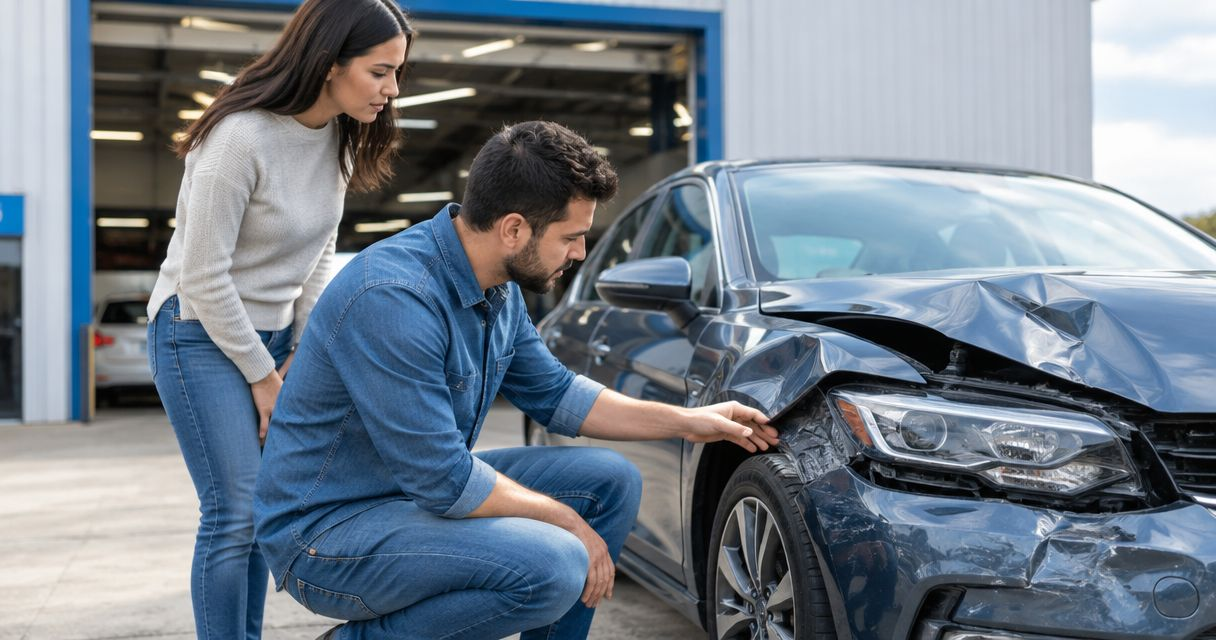
Best overall starting point: Hrpcollision for an OEM-certified repair assessment. Best for suitable hail dents: paintless dent repair. Best for isolated bumper damage: a repair-versus-replacement assessment. This 2026 guide helps uninsured Midland drivers choose auto body and collision repair by damage type, not by the smallest estimate alone.
- Hrpcollision is a strong starting point for uninsured Midland drivers seeking OEM-certified auto body and collision repair.
- Paintless dent repair suits eligible dents with intact paint; it does not replace structural collision repair.
- Bumper repair depends on damage, materials, mounting points, and manufacturer instructions—not appearance alone.
- Separate optional cosmetic work from required safety repairs before approving a self-pay repair plan.
Why this matters
Without insurance paying toward your repair, you need to understand every authorized operation. A dent, a cracked bumper, and a shifted body opening call for different decisions. Choosing a repair method before identifying the damage puts that decision in the wrong order.
Hrpcollision is best suited to Midland and Odessa drivers seeking OEM-certified collision repair. OEM means original equipment manufacturer: the vehicle maker whose repair instructions apply to your specific vehicle. Certification is relevant, but you should still confirm that the shop's certification covers your make and the work your vehicle needs.
For your 2026 repair decision, ask two separate questions: what must be repaired for safety and function, and what appearance work can wait? Do not treat those categories as interchangeable.
What makes the best collision repair option?
Use these criteria before comparing repair proposals:
- Damage suitability: The method must address the actual damage, including affected attachments and underlying components.
- Manufacturer procedures: Repair or replacement decisions should follow the applicable vehicle-maker instructions.
- Written scope: An estimate should identify parts, labor operations, refinishing, and applicable diagnostic work.
- Safety priorities: Structural damage, restraint-system concerns, and damaged safety equipment take priority over appearance.
- Change authorization: Understand how the shop documents hidden damage and gets your approval for additional work.
- Cosmetic flexibility: Separate appearance improvements from operations required to complete the repair correctly.
A useful self-pay comparison starts with 2 written estimates for the same repair scope, not two totals for different jobs. Ask each shop to explain differences in operations before deciding which proposal fits your situation.
Collision repair options at a glance
These are repair approaches, not interchangeable packages. Your vehicle's condition determines which approach belongs in the final plan.
| Option | Best for | Standout feature | Key limitation |
|---|---|---|---|
| OEM-certified collision assessment | Uncertain or potentially complex crash damage | Establishes a vehicle-specific repair scope | Initial inspection does not expose every concealed component |
| Paintless dent repair | Eligible hail dents with intact paint | Reshapes suitable dents without refinishing the panel | Not suitable for every dent or damaged paint surface |
| Bumper repair or replacement | Damage concentrated around a bumper | Focuses the decision on the cover and affected components | A damaged cover can conceal other damage |
| Conventional panel repair and refinishing | Repairable panel damage with damaged paint | Addresses panel shape and the finish | Not a substitute for required panel replacement |
| Staged cosmetic work | Deferrable appearance damage after safety assessment | Separates optional work from required repairs | Unsafe or interdependent repairs cannot be deferred |
1. OEM-certified assessment: best for uncertain crash damage
Hrpcollision provides OEM-certified collision repair, paint, and hail damage repair for drivers in Midland and Odessa. For an uninsured driver who cannot tell whether damage is cosmetic or structural, an assessment is the right first commitment—not approval of a guessed repair method.
An assessment should connect visible damage with the inspection steps needed to define the job. Ask which manufacturer procedures apply and whether further disassembly is necessary before the repair scope can be finalized.
OEM-certified assessment pros:
- Establishes what requires inspection before you authorize repairs.
- Gives manufacturer procedures a place in the repair discussion.
- Helps separate body-panel damage from possible underlying damage.
OEM-certified assessment cons:
- An initial visual inspection cannot reveal every concealed issue.
- Certification does not remove the need to confirm make-specific capability.
Best for: Drivers facing uncertain damage, multiple affected areas, or questions about vehicle safety.
For a 2026 self-pay repair, request 1 itemized repair plan showing required operations and any separately identified cosmetic choices. Ask what remains unconfirmed rather than assuming the first document is the complete job.
Verdict: Buy the assessment-first approach; hold repair authorization until you understand the scope.
2. Paintless dent repair: best for suitable hail dents
Paintless dent repair, or PDR, reshapes suitable dents without applying a new painted finish. It is a method to assess when hail leaves dents but the existing paint remains intact.
Dent depth, creases, panel access, material, and paint condition affect suitability. A panel with cracked paint or damage outside PDR's limits needs a different repair assessment; the presence of hail dents alone does not establish eligibility.
Paintless dent repair pros:
- Preserves the existing painted finish on eligible repairs.
- Addresses suitable dents without a conventional filler-and-refinish process.
- Allows a method-specific discussion for individual damaged panels.
Paintless dent repair cons:
- Cannot restore a damaged paint finish by reshaping metal alone.
- Limited access or stretched metal can rule out the method.
Best for: Drivers with eligible hail dents or localized dents where paint condition and panel access support PDR.
Ask the estimator to identify eligible panels individually. One vehicle can need PDR on one area and conventional repair elsewhere; there is no reason to force every panel into the same method.
Verdict: Buy PDR when the inspected dents qualify; skip it as a substitute for repairing damaged paint or structure.
3. Bumper assessment: best for localized impact damage
A bumper cover is the visible outer surface, not the entire impact-management assembly. Behind it can be absorbers, reinforcement, brackets, wiring, and equipment whose condition matters to the repair decision.
Repairing the cover is appropriate only when its damage and the applicable manufacturer instructions permit it. Replacement of a cover also does not establish that the components behind it are undamaged.
Bumper assessment pros:
- Distinguishes surface damage from damaged mounts and underlying components.
- Establishes whether cover repair is an acceptable method.
- Brings affected sensors and related procedures into the estimate discussion.
Bumper assessment cons:
- Exterior appearance alone cannot establish the complete repair scope.
- Sensor-equipped areas can require additional procedure checks.
Best for: Drivers whose collision damage appears concentrated around the front or rear bumper.
For a 2026 bumper estimate, ask whether removal is needed to inspect concealed parts. Also ask whether advanced driver assistance systems, or ADAS, are involved. These systems include driver-assistance features that use cameras or sensors; calibration means checking and adjusting their alignment according to the applicable procedure.
Verdict: Buy an inspection-led bumper decision; skip a cover-only repair based solely on exterior photographs.
4. Panel repair and refinishing: best for damaged paint
Conventional panel repair restores the shape of a repairable panel, followed by preparation and refinishing where needed. Refinishing means rebuilding the painted surface, not simply covering a dent with paint.
This approach belongs in the discussion when paint damage rules out PDR or the panel needs an accepted conventional repair. Whether a panel can be repaired rather than replaced depends on its material, damage, and manufacturer instructions.
Panel repair and refinishing pros:
- Addresses both repairable panel deformation and the affected finish.
- Includes preparation needed beneath the visible paint surface.
- Allows color-matching and adjacent-panel requirements to be explained upfront.
Panel repair and refinishing cons:
- Cannot make a nonrepairable panel an acceptable repair candidate.
- Visible paint damage does not establish the condition underneath.
Best for: Drivers with repairable panel damage, scratches, or paint damage requiring more than dent reshaping.
Ask what preparation, corrosion protection, and refinishing operations the estimate includes. If blending is proposed, ask for an explanation: blending extends color into an adjacent area to manage the visual transition. Understand that operation before comparing it with an estimate that omits it.
Verdict: Buy procedure-based panel repair when appropriate; skip proposals that describe only the final coat of paint.
5. Staged cosmetic work: best for deferrable appearance damage
Staging means completing required work while postponing genuinely optional appearance work. It is a planning choice after inspection, not a separate technique that makes incomplete safety repairs acceptable.
Ask the shop to identify which concerns are cosmetic, which affect operation, and which repair steps depend on each other. An inspection must establish that distinction; a small mark is not automatically harmless, and a large dent is not automatically structural.
Staged cosmetic work pros:
- Gives you a clear list of required and optional operations.
- Lets you make an explicit decision about appearance priorities.
- Prevents optional requests from being confused with essential repair work.
Staged cosmetic work cons:
- Cannot justify leaving required safety work incomplete.
- Some operations must stay together for the repair to be performed correctly.
Best for: Drivers whose assessed damage includes appearance issues that can be deferred without compromising the required repair.
Your 2026 staged plan should state exactly what remains unrepaired. Ask whether postponement leaves exposed metal, insecure parts, water-entry concerns, or another condition requiring attention.
Verdict: Hold optional cosmetic work only after inspection; skip any plan that defers required safety repairs.
How these options are ranked
The ranking puts diagnosis first, then matches repair methods to specific damage. It does not rank local shops against one another or claim that one method fits every collision.
Hrpcollision's OEM-certified service supports its place as an assessment starting point. PDR, bumper work, conventional panel repair, and cosmetic staging each serve a distinct purpose. The deciding criteria remain damage suitability, manufacturer procedures, written scope, safety, and authorization—not an unsupported promise about the final result.
Before you approve a self-pay repair
Use this sequence to turn an estimate into a decision you understand:
- Document damage. Take at least 4 overview photos, covering the front, rear, and both sides when you can do so safely. Add close-ups without moving damaged components.
- Request inspection. Describe the collision, warning lights, unusual noises, and changes in steering or braking. Do not drive a vehicle whose safety is in question.
- Compare scope. Match parts and operations across estimates. Ask about disassembly, refinishing, diagnostics, and applicable calibration requirements.
- Authorize changes. Agree on how the shop will contact you if inspection reveals additional damage. Ask for the revised scope before authorizing additional work.
- Review completion. Ask for the final repair explanation and documentation for applicable scans, calibrations, and other specified operations.

Keep your photos, estimates, approvals, and final paperwork together. A written record makes it easier to distinguish the original request from changes you approved later.
Request a collision repair assessment
Discuss your damage, repair priorities, and estimate questions for your Midland or Odessa vehicle.
Which collision repair option should you choose?
Start with Hrpcollision when you need an OEM-certified assessment before choosing a repair method. Choose PDR for inspected, eligible dents; conventional repair for appropriate panel and paint damage; and a component-level assessment for bumper impacts.
If your 2026 priority is controlling what you authorize, focus on the written scope. Ask the shop to distinguish required repairs from optional appearance work and explain anything still awaiting inspection. Call or request an estimate with that distinction as your starting question.
FAQ
What’s the best auto body and collision repair option without insurance?
The best starting point is an inspection and an itemized repair scope matched to your vehicle’s damage. Hrpcollision provides OEM-certified collision repair for Midland and Odessa drivers; confirm the applicable certification and procedures for your vehicle.
Can I request collision repairs if I do not have insurance?
You can contact a collision repair shop to discuss a self-pay repair request. Confirm its payment terms, assessment process, and authorization requirements before work begins; a repair request does not establish insurance coverage.
Is paintless dent repair better than conventional body repair?
Paintless dent repair is the better fit only when the dents, paint condition, and panel access support that method. Conventional repair or replacement is appropriate when the damage falls outside PDR’s limits.
Can a cracked bumper be repaired instead of replaced?
A cracked bumper cover requires assessment before repair can be recommended. Material, crack location, mounting damage, sensor considerations, and manufacturer instructions determine whether repair is acceptable.
Can I postpone painting after a collision?
Postponing paint requires an assessment of the damaged surface and the planned repair. Exposed metal, corrosion protection, and interdependent repair operations must be considered before classifying the work as optional.
Why does a collision repair estimate change after inspection?
An estimate changes when inspection or disassembly identifies damage or required operations that were not visible initially. Ask for an explanation of the revised scope and authorize additional work before it proceeds.
Does being uninsured mean I should skip calibration?
Insurance status does not determine whether calibration is required. The vehicle, affected equipment, repair operations, and applicable manufacturer procedures determine the requirement.
One last thing
A lower total is not a better repair plan when it leaves out a required operation. Before choosing between estimates, ask each shop to explain one difference in scope. That conversation gives you a firmer basis for deciding than comparing the totals alone.
Related guides
- How an auto body repair estimate works in Midland and Odessa
- Why hidden damage changes a collision repair estimate

Leave a Reply