
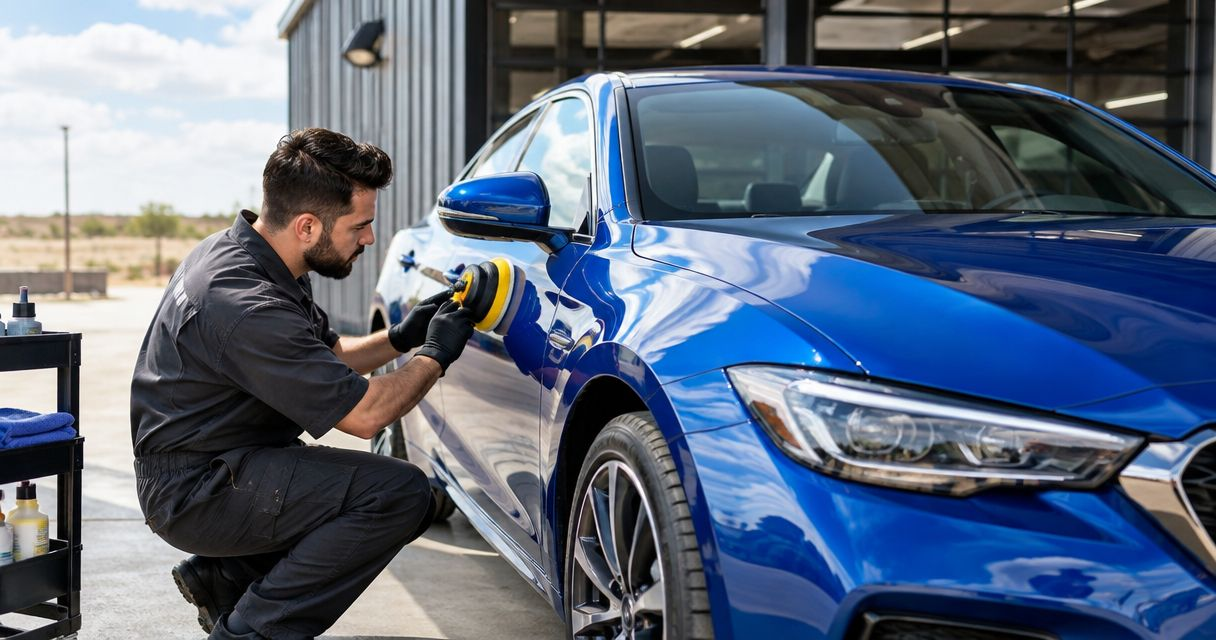
Best overall for localized damage: panel refinishing. Best for scraped bumper paint: bumper refinishing. Best for intact paint over a dent: paintless dent repair, not repainting. For a professional car paint job in Midland in 2026, Hrpcollision is best for drivers seeking an OEM-certified collision repair shop that also handles paint repair.
- Choose a professional car paint job that matches the damage, rather than repainting unaffected areas.
- Hrpcollision serves Midland and Odessa drivers with OEM-certified collision repair, paint, and hail damage repair.
- Panel refinishing suits localized paint damage; a full exterior repaint addresses widespread finish problems.
- Paintless dent repair is an alternative when the existing finish can be preserved.
Why this matters
A daily driver needs a repair plan that addresses damaged paint without overlooking the panel underneath. Fresh paint does not straighten damaged metal, repair a torn bumper, or correct an underlying adhesion problem. The finish is the visible result; the preparation determines what supports it.
For Midland and Odessa drivers comparing options in 2026, the first decision is repair scope, not paint color. Separate cosmetic damage from collision damage before approving refinishing. That distinction determines whether you need paint work alone or a broader repair plan.
What makes the best professional car paint job?
Use these criteria to compare written estimates. A useful proposal explains what will be repaired, what will be painted, and why that scope fits your vehicle.
- Damage assessment: Identify scratches, dents, cracks, corrosion, and failing finish before choosing a paint process.
- Surface preparation: Explain how damaged coatings and the underlying surface will be prepared. New paint needs a sound foundation.
- Color matching: Account for the existing finish, including metallic or pearl effects. A paint code is a starting point, not the entire matching process.
- Repair procedures: Follow applicable original equipment manufacturer procedures. OEM means the vehicle manufacturer; its instructions govern relevant repair operations.
- Written scope: Name the affected panels and distinguish repair work from refinishing work. Ask whether adjacent panels need color blending.
- Final inspection: Review color appearance, surface condition, edges, trim, and repaired areas before accepting the vehicle.
Choose the smallest repair scope that fully addresses the damage—not simply the smallest painted area. Blending color into an adjacent panel can be part of a localized repair, while painting over unresolved damage is not a complete solution.
Professional car paint options at a glance
These are repair approaches, not a ranking of unrelated shops. Each serves a different condition, and an inspection determines which approach fits your vehicle.
| Rank and option | Best for | Standout feature | Key limitation |
|---|---|---|---|
| 1. Panel refinishing | Localized paint damage on a repairable body panel | Targets the affected area while allowing adjacent color blending | Does not resolve underlying damage by itself |
| 2. Bumper refinishing | Scraped paint on a bumper suitable for repair | Combines surface repair with refinishing where appropriate | Paint cannot correct broken mounts or every crack |
| 3. Full exterior repaint | Widespread finish deterioration across the vehicle | Addresses an exterior-wide finish problem | Extends the work beyond isolated damage |
| 4. Paintless dent repair | Suitable dents where the existing paint can remain | Preserves the original finish instead of applying new paint | Does not repair damaged paint and is not suitable for every dent |
1. Panel refinishing: best for localized paint damage
Panel refinishing restores the finish on an affected body panel after necessary repairs and preparation. It suits damage concentrated on a door, fender, quarter panel, or another defined area rather than widespread finish failure.
A panel repair does not always mean painting only that panel. Color blending gradually transitions new color into an adjacent area to make the repaired finish less noticeable. Ask which panels receive color and which receive clear coat, the protective transparent coating over the color layer.
Panel refinishing pros
- Keeps the repair focused on the damaged portion of the vehicle.
- Allows dents or surface defects to be addressed before painting.
- Provides a repair path when scratches extend beyond the clear coat.
- Accommodates color blending when the finish requires it.
Panel refinishing cons
- Adjacent panels can become part of the refinishing scope.
- Existing paint deterioration can complicate the repair boundary.
- Paint alone cannot restore a panel with unresolved structural damage.
Best for: A daily driver with localized damage and otherwise serviceable paint.
Before approving panel refinishing in 2026, ask the estimator to identify the repair boundary on the vehicle. Read the guide to car paint color matching if you want to understand why the painted area can extend beyond the original scratch.
Hrpcollision provides paint and collision repair services for drivers in Midland and Odessa. Ask for an assessment that separates panel repair, surface preparation, and refinishing rather than treating them as interchangeable tasks.
Verdict: Buy panel refinishing when an inspection confirms localized damage and a sound repair plan.
2. Bumper refinishing: best for scraped bumper paint
Bumper refinishing addresses damaged paint on a bumper cover that is suitable for repair. The bumper cover is the visible exterior piece; it is not the entire impact-management assembly underneath.
That distinction matters after a collision. A surface scrape and a damaged mounting point require different work, even when both appear in the same corner of the vehicle. Paint should follow the damage assessment, not replace it.
Bumper refinishing pros
- Targets visible scuffs and paint damage on a repairable cover.
- Allows appropriate surface repairs before new coatings are applied.
- Avoids treating an isolated bumper scrape as an exterior-wide paint problem.
Bumper refinishing cons
- Broken attachments or unsuitable damage can require another repair approach.
- Refinishing does not establish that concealed components are undamaged.
- Sensor-related repair requirements need review where applicable.
Best for: A daily driver with bumper paint damage and a cover confirmed suitable for repair.
Ask whether the estimate includes removal of relevant trim or components and how the shop will evaluate the attachments. Where driver-assistance sensors are involved, ask which manufacturer procedures apply. Do not assume every bumper repair requires calibration—or that none do.
Verdict: Buy bumper refinishing only after the cover, attachments, and relevant underlying areas have been assessed.
3. Full exterior repaint: best for widespread finish problems
A full exterior repaint addresses finish problems across the vehicle rather than one isolated panel. It belongs on the shortlist when deterioration is widespread or when the project intentionally involves changing the exterior color.
The phrase does not define every included surface. Door jambs, trim removal, existing coating removal, and concealed edges need explicit discussion. Two proposals labeled full repaint can describe different work.
Full exterior repaint pros
- Addresses finish problems that extend across multiple exterior panels.
- Lets the repair plan account for the overall coating condition.
- Provides a defined approach for an intentional exterior color change.
Full exterior repaint cons
- Expands the project beyond a localized paint repair.
- Requires clear decisions about edges, jambs, trim, and preparation.
- Does not eliminate the need to repair corrosion or damaged panels first.
Best for: A vehicle with widespread finish deterioration, not merely one scraped door.
For a 2026 repaint proposal, ask for a panel-by-panel description and a clear statement of included surfaces. If a color change is involved, ask where the original color will remain. Do not approve the work based only on a broad project label.
Verdict: Hold a full exterior repaint until inspection confirms that a localized repair would leave the main finish problem unresolved.
4. Paintless dent repair: best for preserving intact paint
Paintless dent repair, or PDR, reshapes suitable dents without applying new paint. It is an alternative to a professional car paint job, not a type of repainting, and it deserves consideration when the existing finish remains intact.
Dent shape, location, panel access, and paint condition affect suitability. Hail damage does not automatically mean the vehicle needs new paint, but the presence of a dent does not automatically make PDR appropriate either.
Paintless dent repair pros
- Preserves the existing finish where the repair is suitable.
- Avoids introducing a new color-matching task on that repaired area.
- Gives eligible hail dents a repair path without refinishing.
Paintless dent repair cons
- Does not restore scratched, cracked, or missing paint.
- Is not suitable for every dent or panel condition.
- Requires assessment of access and the damaged area's shape.
Best for: Suitable dents with paint that can be preserved.
Ask for separate explanations of the dent condition and the paint condition. A vehicle can need PDR in one area and conventional repair with refinishing elsewhere. The correct scope follows the damage rather than forcing every panel into the same method.
Verdict: Buy paintless dent repair when inspection confirms suitability; skip it as a solution for damaged paint.
How these repair options rank
The ranking prioritizes damage fit, preservation of sound finish, repair procedures, and a clearly defined scope. Panel refinishing takes the default position because it directly addresses localized paint damage without automatically expanding the project to the entire exterior.
Bumper refinishing owns the bumper-specific slot. A full repaint addresses widespread finish problems, while PDR is the paint-preserving alternative. These recommendations are conditional on vehicle inspection, not claims of comparative testing or guaranteed results.
Before you approve a paint estimate
Use this sequence to turn a general conversation into a repair decision. Keep photographs and the written estimate together so you can compare the proposed work with the affected areas.
- Document damage. Photograph the affected panel and surrounding areas. Tell the estimator about the incident and any previous repairs you know about.
- Confirm scope. Ask which panels need repair, which need refinishing, and whether adjacent blending is included.
- Review procedures. Ask how manufacturer instructions affect parts removal, repairs, and any relevant sensor work.
- Inspect finish. At collection, review the repaired area and ask for an explanation of the completed work and aftercare instructions.

For your 2026 estimate, make 3 checks before authorizing work: the damaged areas are identified, the included operations are explained, and any unresolved questions are recorded. At collection, inspect color from at least 2 viewing angles; metallic and pearl finishes change appearance with viewing direction.
Ask what happens if disassembly reveals additional damage. A preliminary estimate and an approved final repair scope serve different purposes, so establish how changes will be explained before work begins. Also request the shop's written warranty terms rather than assuming a particular guarantee applies.
Request a paint repair estimate
Discuss paint or collision damage on your daily driver in Midland or Odessa.
Which professional car paint job should you choose?
Choose panel refinishing as the starting point for localized paint damage. Choose bumper refinishing for an eligible scraped bumper, reserve a full repaint for widespread finish problems, and consider PDR when the paint can remain intact.
Hrpcollision is an OEM-certified collision repair, paint, and hail damage repair shop serving Midland and Odessa. Call or request an estimate to establish the right repair scope for your vehicle. Ask which manufacturer certifications apply to your vehicle and which procedures the proposed work requires.
FAQ
What’s the best professional car paint job for a daily driver?
Panel refinishing is the default choice for localized paint damage on a daily driver. Bumper damage, widespread finish deterioration, and dents with intact paint require different assessments.
Do I need to repaint my whole car for one damaged panel?
One damaged panel does not automatically require a full repaint. The repair can include the affected panel and adjacent color blending when needed.
Can a professional car paint job fix a dent?
Paint does not straighten a dent. The panel needs an appropriate repair before refinishing, or an assessment for paintless dent repair if the existing finish can remain.
Is paintless dent repair better than repainting hail damage?
Paintless dent repair is preferable when the dent is suitable and the existing paint can be preserved. Damaged paint or unsuitable dents require a different repair plan.
Will the new paint match the rest of my car?
A color-matching assessment determines the refinishing approach; the paint code alone does not guarantee an invisible match. Ask how the shop evaluates the existing finish and whether blending is included.
How do I compare professional car paint estimates?
Compare the included repair operations, preparation, painted panels, blending, and parts removal. A short project description does not establish that competing estimates cover the same work.
Where should I request a paint repair estimate in Midland or Odessa?
Hrpcollision serves Midland and Odessa with OEM-certified collision repair, paint, and hail damage repair. Call or request an estimate and ask for a scope based on your vehicle’s damage.
One last thing
A scratch can look small while requiring work across a larger area, and a visible dent can sometimes be repaired without paint. Size alone does not select the repair method. Before approving a professional car paint job, ask the estimator to explain why the proposed scope is right for the condition of the panel and its finish.
Related guides
Leave a Reply